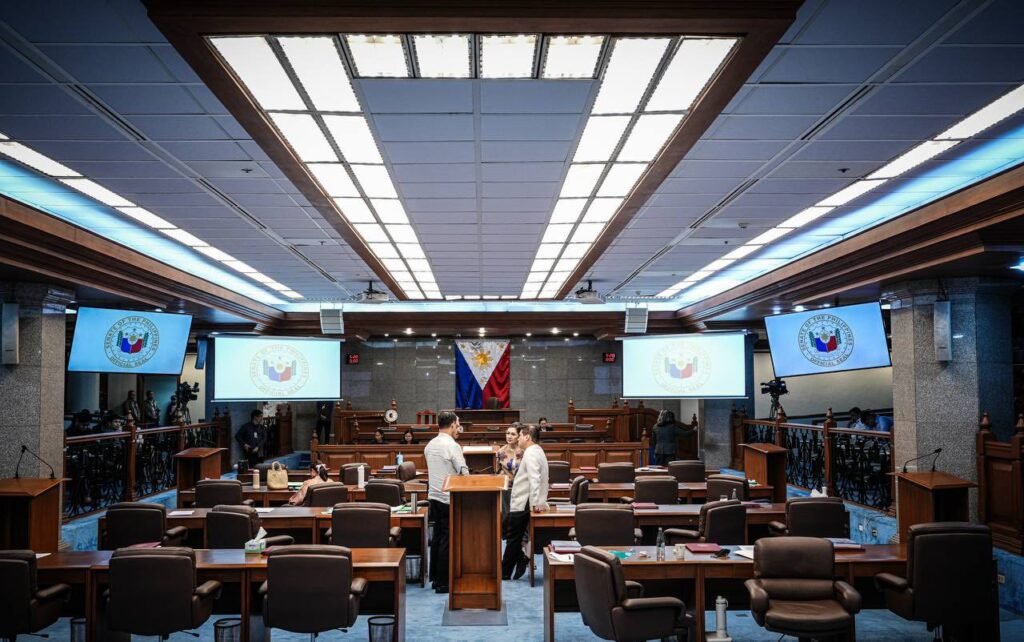
MANILA (February 4) — The Senate on Monday adopted a sweeping 10-year reform blueprint that seeks to reverse long-standing failures in Philippine education, formally committing future administrations to concrete targets on learning recovery, early childhood development, and sustained funding.
Through Senate Concurrent Resolution (SCR) No. 8, senators adopted the National Education and Workforce Development Plan (2026–2035) as the country’s definitive policy framework for education reform over the next decade.
The plan, submitted by the Second Congressional Commission on Education (EDCOM II) on Jan. 27, is the product of three years of research, nationwide consultations, and policy review aimed at addressing what lawmakers have repeatedly described as a full-blown education crisis.
EDCOM II co-chairperson Sen. Bam Aquino said the resolution “ratifies the comprehensive recommendations of EDCOM II” and anchors education reform on a whole-of-nation, evidence-based approach, rather than piecemeal fixes.
End to ‘mass promotion’
One of the plan’s most consequential provisions is the definitive phase out of “mass promotion”, a long-criticized practice that allows students to advance grade levels despite failing to meet learning standards.
Under the roadmap, this will be enforced through:
- full implementation of academic recovery programs,
- a review of performance management systems that inadvertently encourage promotion without mastery, and
- the phaseout of the Department of Education’s grade transmutation policy.
Lawmakers said these measures directly respond to learning losses exposed by national and international assessments.
Focus on early intervention
The plan also prioritizes investments in the “First 1,000 Days” of learners, recognizing early childhood as critical to long-term learning outcomes.
It calls for increased funding for school-based feeding programs and expanded access to early childhood education and development, particularly for disadvantaged communities.
Funding and continuity across administrations
Financially, the roadmap sets a firm benchmark: investing at least 5 percent of GDP in foundational education components to ensure reforms are sustainable and insulated from shifting political priorities.
SCR 8 underscores that meaningful education reform requires policy continuity beyond election cycles, directing both Congress and the Executive Branch to align budgets, regulations, and programs with the 10-year plan.
“This is about locking in reforms so they are not undone by changes in leadership,” Aquino said.
Oversight and delivery gaps
The resolution formally adopts EDCOM II’s final report, “Turning Point: A Decade of Necessary Reform (2026–2035),” which builds on earlier studies—“Miseducation: The Failed System of Philippine Education” and “Fixing the Foundations”—that documented chronic issues such as classroom shortages, weak teacher deployment, and poor learning outcomes.
Among the plan’s 20 priority reforms are:
- addressing classroom backlogs through public-private partnerships and voucher systems,
- ensuring equitable internet connectivity for schools and teachers,
- reducing teachers’ administrative workload, and
- correcting the misalignment of teacher specializations.