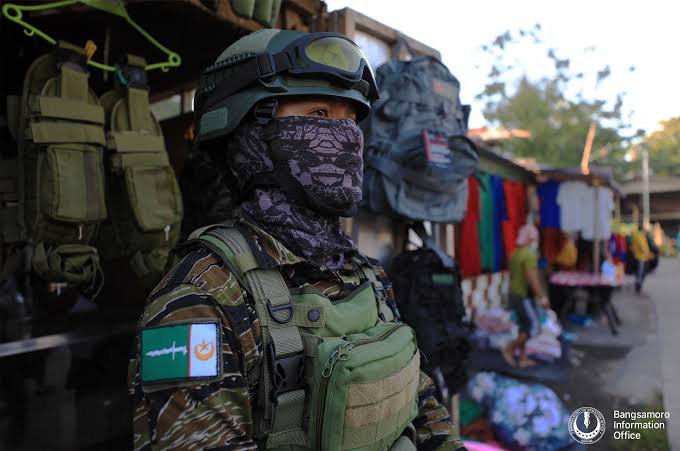
File photo Bangsamoro Autonomous Region in Muslim Mindanao
COTABATO CITY (October 14) — About 14,000 Moro Islamic Liberation Front (MILF) combatants covered by the peace agreement’s final decommissioning phase remain awaiting the process, prompting a Bangsamoro civic coalition to urge President Ferdinand Marcos Jr. to meet MILF Chairman Al Haj Murad Ebrahim before the regional parliament opens on October 30.
The Amana coalition said the proposed meeting could help resolve outstanding issues, advance a final exit agreement and move the peace process toward completing the transition of former combatants to civilian life.
“Fifty years. Twenty months. One meeting,” said Sultan Alim Saad Amate, the coalition’s convenor.
Amana said Murad requested a meeting with Marcos in a letter dated October 1. The coalition also said no new batch of MILF combatants had undergone decommissioning since July 2024.
The 14,000 figure refers to combatants covered by the unfinished final phase of the decommissioning program, not all MILF members or fighters. Decommissioning is a key component of the Bangsamoro peace agreement, intended to move combatants out of armed formations and support their transition to civilian life.
The final phase has remained unresolved amid disagreements over the implementation of socioeconomic commitments. The government and the MILF must still settle the terms of a proposed exit agreement and the steps needed to complete the process.
Amana traced the long road to peace to the 1976 Tripoli Agreement, signed during the administration of Marcos’ father, the late president Ferdinand Marcos Sr.
“Father opened. Son can close,” Amate said.
The appeal comes as the Bangsamoro government prepares for a new parliamentary term following the September 14 regional elections.
In March 2025, Marcos appointed Abdulraof Macacua, a former MILF chief of staff, as interim chief minister, replacing Murad. Macacua now leads the Bangsamoro Federalist Party, while Murad remains chairman of the MILF.
Amate argued that the change in regional leadership had not diminished Murad’s importance to the peace process.
“The seat moved. The command stayed,” he said.
Since the elections, Marcos has met with Macacua and leaders of the Bangsamoro Grand Coalition, including Basilan Gov. Mujiv Hataman, former Sulu governor Sakur Tan, Lanao del Sur Gov. Mamintal Adiong Jr. and Sulu Vice Gov. Abdusakur Tan.
Amana said Murad had yet to receive a meeting with the President.
“The table is set. One chair is empty,” Amate said.
The coalition also endorsed the United Bangsamoro Justice Party’s proposal for a “rainbow coalition” government bringing together the MILF, Moro National Liberation Front, other elected parties, Indigenous Peoples and settlers.
The MILF-founded United Bangsamoro Justice Party won 30 seats in the September elections, including all six elected sectoral seats, according to Amana. The proposed coalition would seek to unite different political and community groups in governing the region.
“Many colors, one Bangsamoro,” said Maulana Mamutuk, Amana’s co-convenor.
Mamutuk also cited a September Social Weather Stations survey showing Marcos’ national net satisfaction rating at minus 11, while his rating in Mindanao remained positive.
“Mindanao moved first. Now, Malacañang,” he said.
Amana wants Marcos to meet Murad before October 30, but the central issue extends beyond securing a meeting. The government and the MILF must agree on concrete steps to complete the final decommissioning phase and resolve the outstanding commitments tied to the peace agreement.
For the thousands of combatants still awaiting decommissioning, the key question is when the process will resume and what arrangements will support their transition to civilian life.