CAGAYAN DE ORO CITY (January 9) — For many Filipinos in Mindanao, justice has long been something encountered late—after land has been lost, homes demolished, wages unpaid, or relatives jailed without counsel.
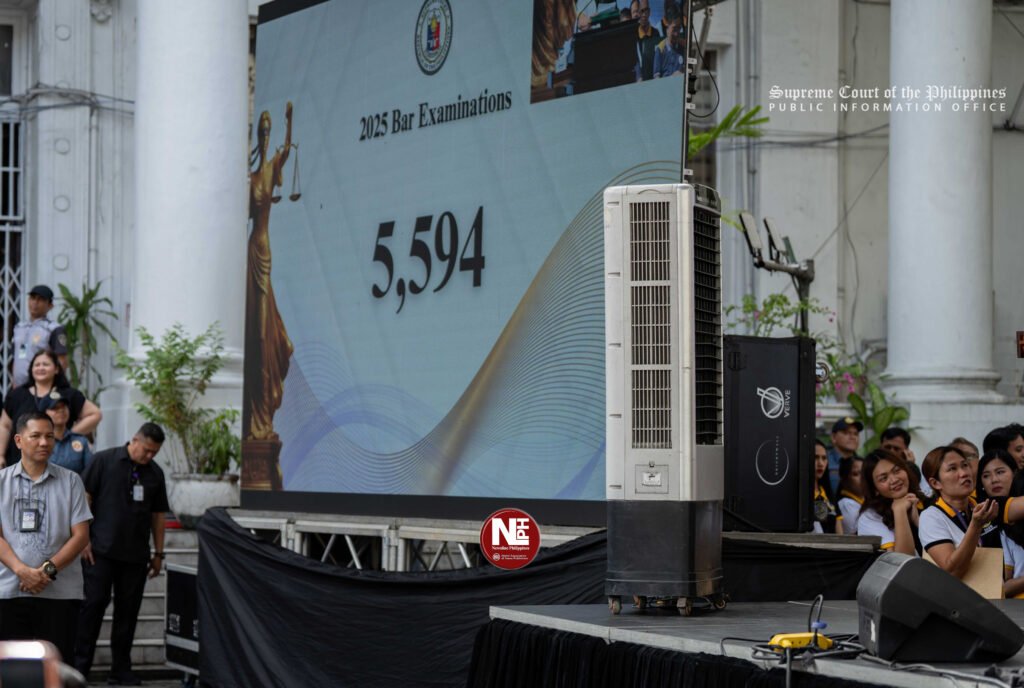
Against this backdrop, the release of the 2025 Bar Examination results, which produced 5,594 new lawyers nationwide, carries significance far beyond professional milestones.
For the island’s poorest communities, the new cohort of lawyers represents something concrete: more doors to justice that were previously closed.
With a 48.98 percent passing rate, the 2025 bar passers enter the profession at a time when the justice system is under pressure to reach people historically left at its margins—farm workers, fisherfolk, indigenous peoples, urban poor families, and conflict-affected communities.
Justice gap in Mindanao
Mindanao continues to face some of the country’s highest poverty rates, with entire provinces struggling with limited access to lawyers, courts, and legal aid. In parts of Bukidnon, farmers face land disputes and agrarian conflicts without legal guidance.
In Zamboanga City, urban poor families confront demolition, eviction, and labor disputes. In BARMM, years of conflict and underinvestment have left communities with too few lawyers serving vast, rural populations.
Legal aid offices are often understaffed, and private legal services remain out of reach for families surviving on daily wages.
“This is where new lawyers matter most,” said a legal aid volunteer in Northern Mindanao. “Not in corporate boardrooms, but in barangays where people don’t even know their rights.”
Mandatory legal aid: a direct lifeline
A major shift benefiting Mindanao’s poor is the implementation of the Unified Legal Aid Service (ULAS) Rules, which took effect in early 2025.
Under ULAS, all lawyers—including new bar passers—are required to render at least 60 hours of free legal aid every three years to indigent litigants.
For Mindanao, this translates into thousands of additional hours of free legal representation—for bail applications, labor complaints, land conflicts, domestic violence cases, and access to social services.
For families who previously had to choose between hiring a lawyer and buying food, ULAS is not a policy abstraction—it is access to justice without cost.
Digital reforms reach far-flung areas
The 2025 bar passers are also the first generation trained entirely under a digitalized and regionalized bar examination system, a reform led by the Supreme Court (SC).
This matters deeply for Mindanao. Lawyers who are comfortable with e-filing, remote hearings, and online legal processes can serve clients in remote towns—such as island barangays in Surigao or upland communities in Lanao—without requiring costly travel to urban centers.
These reforms align with the judiciary’s Strategic Plan for Judicial Innovations (SPJI) 2022–2027, which aims to reduce court congestion and make justice more accessible, especially outside Metro Manila.
For indigent litigants, digital access can mean faster hearings, fewer missed workdays, and lower transportation costs—small changes that carry life-changing consequences.
Ethics and accountability where it matters most
The new lawyers are also the first fully formed under the Code of Professional Responsibility and Accountability (CPRA) and the revised Lawyer’s Oath, which explicitly commits lawyers to ensuring greater and equitable access to justice.
In Mindanao, where mistrust of institutions runs deep due to historical neglect and abuse, ethical lawyering is essential. Lawyers who take seriously their duty to serve—not exploit—the poor can help rebuild confidence in courts, prosecutors, and public defenders.
“This oath matters here,” said a community organizer in Cotabato. “People are tired of feeling powerless. A lawyer who listens can change that.”
Beyond passing the bar
The true impact of the 2025 bar results will not be measured by passing rates alone, but by where these lawyers choose to serve—and whom they choose to represent.
If even a fraction of the new lawyers commit to legal aid, public defense, and community lawyering in Mindanao, the effects could be profound: fewer detainees languishing without counsel, fewer families displaced without due process, and more citizens empowered to assert their rights.
For the poorest of the poor, the 2025 bar passers are not just new professionals. They are potential bridges to justice—and proof that the law, at its best, can reach even the most forgotten corners of the country.