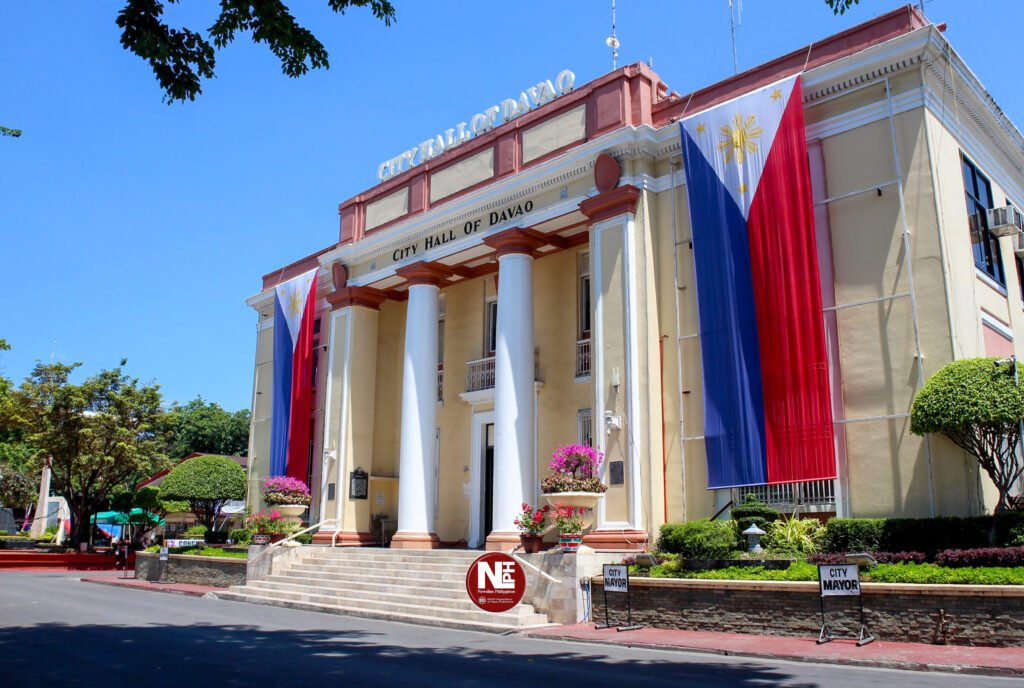
DAVAO CITY (January 3) — In 2025, Davao confronted a rare and unflinching reckoning. Political dynasties were challenged, security gaps were exposed, and disasters revealed governance failures—while ordinary residents bore the consequences.
From arrests at The Hague to earthquakes at home, the events of 2025 illuminated persistent questions: Who holds power, who enforces accountability, and who pays the cost when institutions fail?
The arrest that shook a city
On March 11, former president Rodrigo Duterte was arrested at Ninoy Aquino International Airport and sent to the International Criminal Court in The Hague.
For decades, Duterte’s dominance in Davao had seemed untouchable. That assumption collapsed overnight.
“We grew up believing nothing could touch him,” said Maria Santos, 58, a longtime barangay leader in Buhangin. “Now, I see that laws can reach even the highest office. But I also worry—who will speak for us if politicians only answer to themselves?”
While the former president’s legal team prepares for a January 2026 fitness hearing, the arrest has forced the city to confront a long-avoided truth: political legacy and public accountability are rarely aligned.
Impeachment undone, accountability deferred
Political turbulence spread to Manila when Vice President Sara Duterte was impeached on Feb. 5, only for the Supreme Court of the Philippines to nullify it in July, citing procedural violations.
“It feels like a game we’re watching from the sidelines,” said Jonel Amparo, a jeepney driver in Davao City. “The leaders fight in courtrooms, but my family still struggles with traffic, crime, and the rising cost of living. Who’s really accountable?”
The legal victory did little to alter perceptions of entrenched power. With the constitutional ban expiring on Feb. 6, 2026, citizens know the confrontation is far from over.
Terror abroad, blind spots at home
In December, a Hanukkah festival shooting in Bondi Beach, Sydney, killed 15 people. Australian authorities confirmed that the perpetrators had stayed in Davao for nearly a month.
“When I heard they were here, I panicked,” said Althea Villanueva, a hotel receptionist in Davao City. “We didn’t notice anything suspicious. It makes you wonder how safe our city really is when dangerous people can move in and out without anyone noticing.”
Brig. Gen. Leon Victor Rosete launched backtracking operations, yet the incident revived questions about intelligence oversight, border monitoring, and urban security in Mindanao.
‘NPA-free’ declarations: Peace on paper?
On June 18, the 10th Infantry Division declared its area free of active New People’s Army combatants.
“The soldiers say the NPA is gone, but our barangay still faces land disputes and poverty,” said Pedro Caballero, a farmer in Agusan del Sur. “We didn’t feel the peace. If anything, it’s like the problem has just gone underground, waiting to return.”
Declarations of victory, analysts warn, often mask structural grievances that continue to fuel unrest.
Governance failures in plain sight
Local administration missteps compounded frustrations.
- Liquor violations: On Dec. 28, decoy operations led to 74 citations along Cabaguio Avenue. Residents say bars have long flouted regulations with little enforcement.
“We’ve complained about illegal operations for years,” said barangay official Rosalie Gomez. “The citations are welcome, but why did it take decades to act?”
- Coastal Road controversy: Segment B of the Davao City Coastal Road opened Dec. 19 despite safety concerns, creating traffic chaos.
“We’ve been stuck in line for hours, and there’s no one to answer for this,” said taxi driver Rodel Mantilla. “Development is supposed to make life easier. Here, it made it worse.”
The October doublet: Nature exposes vulnerability
Two powerful earthquakes—magnitude 7.4 and 6.8—struck on Oct. 10, killing 10, injuring over 1,000, damaging ₱2.26 billion, and affecting nearly 40,000 homes.
“We lost everything in seconds,” said Maricar Dela Cruz, who lives in a partially collapsed home in Davao del Sur. “Officials tell us to rebuild, but there’s no support. Who’s accountable for the people?”
The disaster underscored persistent gaps in preparedness, building enforcement, and disaster response.
By year’s end, Davao faced a stark reality: entrenched power structures, weak oversight, and governance failures left citizens vulnerable to political games, security lapses, and natural calamities.“We survived 2025, but we need leaders who answer to us, not themselves,” Maria Santos said. “Otherwise, the next crisis will hit even harder.”