DAVAO CITY — With two remaining years in office, President Rodrigo Duterte wants increased collaboration with lawmakers for the quick passage of major legislative measures aimed at improving the lives of Filipinos that includes the revival of the country’s death penalty law.
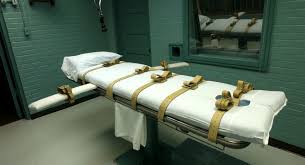
In his 5th State of the Nation Address (SONA) on Monday, Duterte urged Congress “I reiterate the swift passage of a law reviving death penalty by lethal injection for crimes specified under the Comprehensive Dangerous Drugs Act of 2002”.
When Duterte mentioned the death penalty proposal there was silence among the attendees, as he continued “This law will not only help us deter criminality but will also save our children from the dangers posed by the illegal and dangerous drugs”.
North Cotabato Second District Congressman Rudy S. Caoagdan, a pro-life advocate in an interview with Newsline said, “If the President wants it, maybe, we should first revisit the existing laws how convicted persons who committed heinous are being punished. I am not saying I am totally against it, but personally, there is a need to revisit the existing laws”.
Caoagdan who comes from a district where 70percent of the population are Roman Catholics said “I will listen to my people and weigh my options before I will cast my vote, after all, I am a supporter of all meritorious endeavors off the President”.
In 1993, then-President Fidel Ramos signed Republic Act 7659 allowing the death penalty in the Philippines.
Added to the RA 7659, is Republic Act 8177, specifically designated lethal injection as the mode of carrying out capital punishment. This was imposed in 1999 by then-President Joseph Estrada, followed by a moratorium until the passage of RA 9346.
Under the law , persons who committed the following heinous crimes will be meter with death penalty:
- Treason
- Piracy in general and mutiny on the high seas in Philippine waters
- Qualified piracy
- Qualified bribery
- Parricide
- Murder
- Infanticide
- Kidnapping and serious illegal detention
- Robbery with violence against or intimidation of persons
- Destructive arson
- Rape
- Importation, distribution, manufacturing, and possession of illegal drugs
On February 5, 1999, the country implemented the death penalty on Leo Echegaray Nationality. He was the first Filipino to be meted the death penalty.
But in 2006, those who committed heinous crimes were meted lesser penalty-reclusion perpetua, after President Gloria Macapagal-Arroyo abolished the death penalty through the passage of RA 9436.
Reclusion perpetua provides imprisonment of at least 20 years and a day up to a maximum of 40 years, after which a prisoner can be eligible for parole, unless otherwise specified.
The Commission on Human Rights (CHR) said reinstating the death penalty is a breach of international law as the Philippines is a party to the International Covenant on Civil and Political Rights.
Some rights groups claim, the death penalty is not a deterrent to a crime, as many of those who commit it.
Duterte has repeatedly said, he wants the death penalty revived to penalize drug traffickers who continuously victimize young FIlipinos.-Editha Z. Caduaya/Newsline.ph