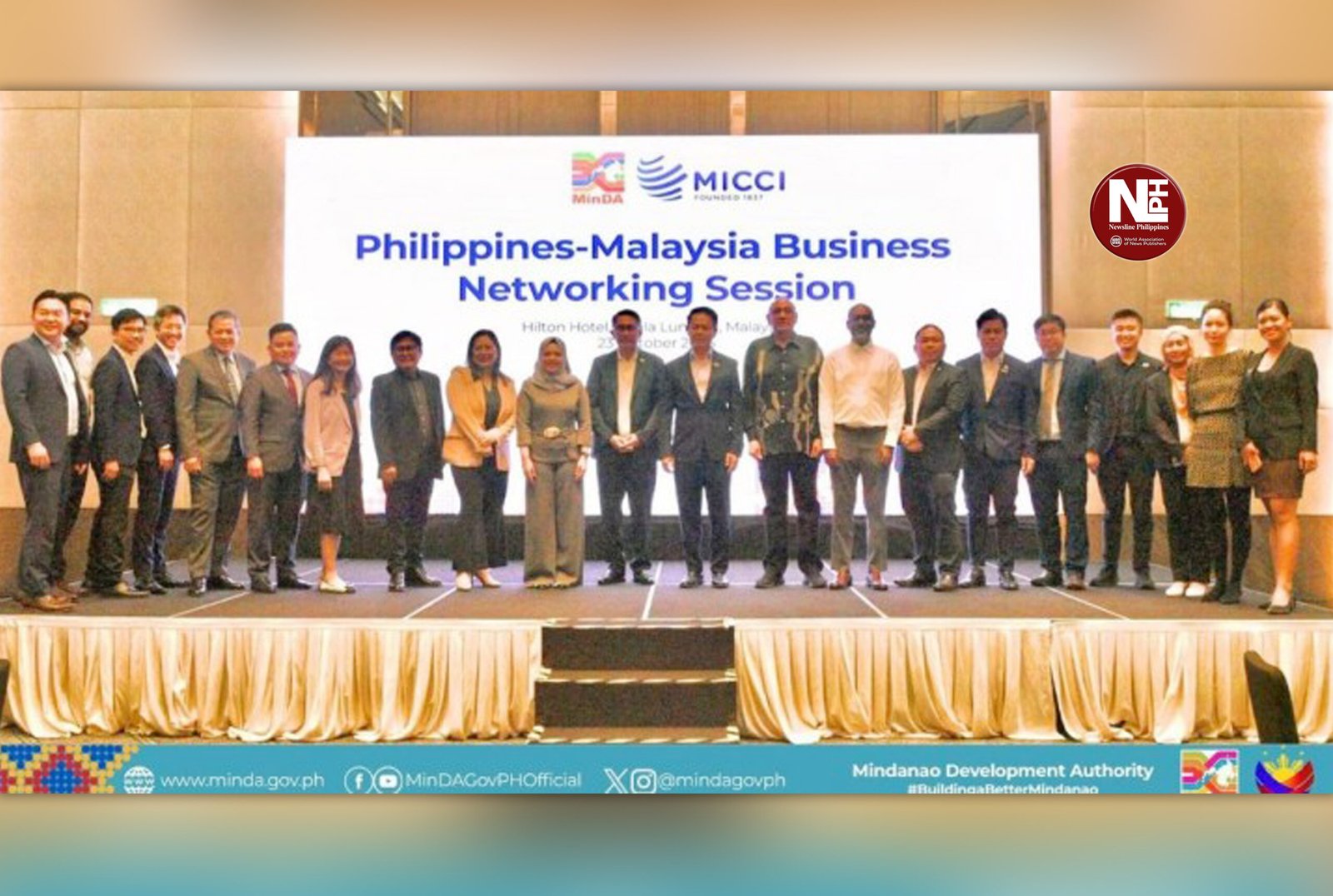
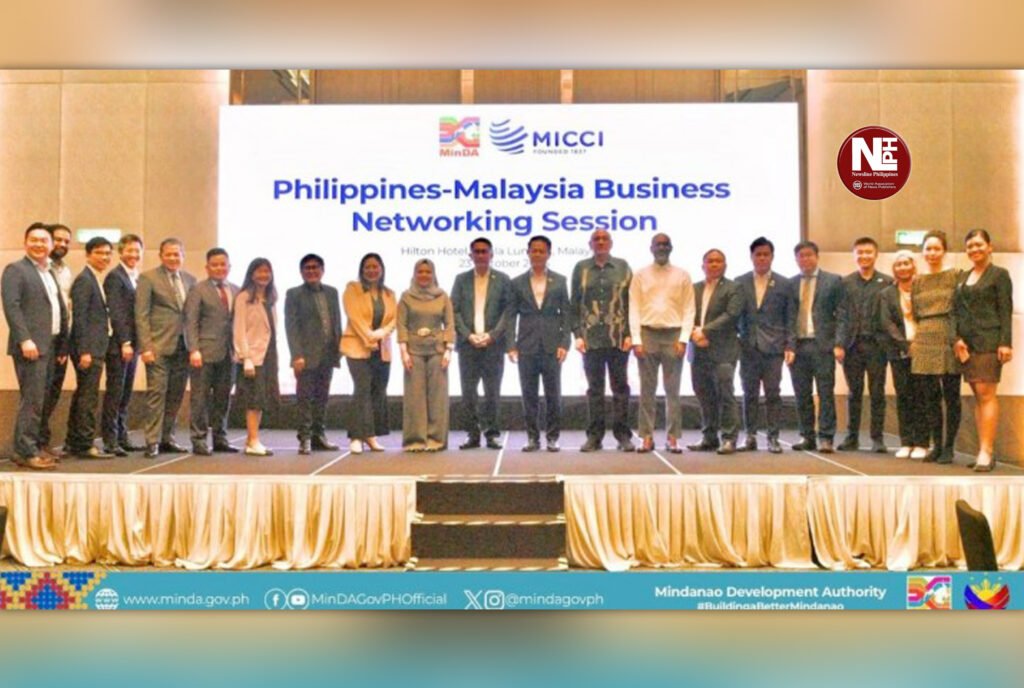
DAVAO CITY (October 27) — Malaysian business leaders are setting their sights on Mindanao as the next frontier for regional trade and investment, following a high-level networking mission organized by the Mindanao Development Authority (MinDA) in Kuala Lumpur last week.
Mindanao showcases investment potential
Held on October 23 at the Hilton Kuala Lumpur, the Philippines–Malaysia Business Networking Session gathered top Malaysian executives eager to explore opportunities in agribusiness, infrastructure, renewable energy, tourism, and halal industries under the Brunei Darussalam–Indonesia–Malaysia–Philippines East ASEAN Growth Area (BIMP-EAGA) framework.
“Our unified message for this mission is clear: Mindanao is open for business,” said MinDA Secretary Leo Tereso Magno, noting that the island is ready to welcome foreign partners in key growth sectors.
He was joined by Minister Farserina Mohammad of the BARMM Ministry of Trade, Investments, and Tourism (MTIT) and Atty. Karen Mae Baydo, assistant COO of TIEZA, to present Mindanao’s strategic investment zones and tourism opportunities.
Malaysia sees strong potential
Kelvin Kee, representing the Malaysian International Chamber of Commerce and Industry, lauded Mindanao’s expanding economic base and growing role in regional trade.
“We see tremendous potential for collaboration between Malaysian and Philippine enterprises, especially in agribusiness, halal trade, renewable energy, tourism, and logistics,” Kee said.
He added that Malaysia’s advanced halal ecosystem and logistics infrastructure align naturally with Mindanao’s agricultural strength and emerging manufacturing hubs.
A region ripe for growth
Known as the Philippines’ food basket, Mindanao contributes 36% of the country’s farmland and 42% of its total food trade, giving it a strong comparative advantage in food processing and agri-based industries.
The investment mission forms part of the Marcos administration’s push to position Mindanao as a key hub for international investment and regional integration, consistent with the President’s Agenda for Prosperity and Transformative Development.
“We’re strengthening partnerships that will help Mindanao integrate more deeply into the ASEAN economy,” Magno said, emphasizing inclusive growth and sustainable development.