
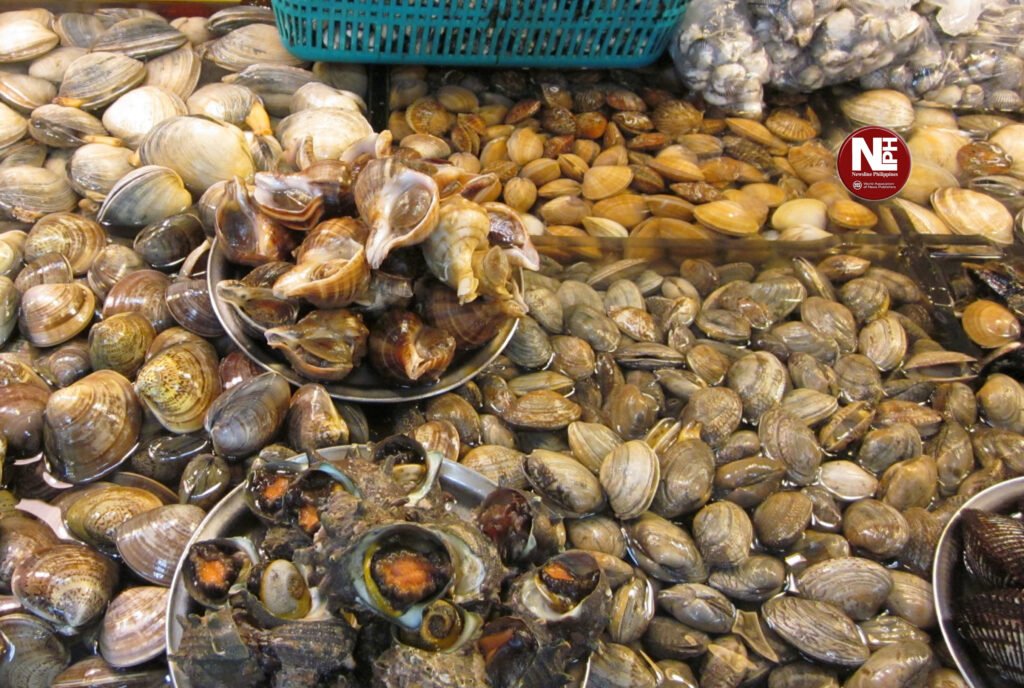
SAN FRANCISCO, Agusan del Sur (October 30) — The Bureau of Fisheries and Aquatic Resources in Caraga (BFAR-13) has again raised a red tide warning over Lianga Bay in Surigao del Sur after laboratory tests confirmed toxic levels of paralytic shellfish poison (PSP).
In its Oct. 25 advisory, BFAR reported toxin levels ranging from 113 to 286.7 micrograms per 100 grams of shellfish meat collected from Barobo town—well beyond the safe limit. The agency banned the harvesting, selling, and consumption of shellfish and Acetes (“alamang”) from the bay until further notice.
Fish, squid, shrimp, and crabs remain safe to eat if properly cleaned and cooked, BFAR added.
Lianga Bay has faced repeated red tide events in recent years, with similar outbreaks recorded in 2022 and 2024. Experts from the University of the Philippines Marine Science Institute attribute the recurrence to nutrient buildup, weak water circulation, and algal blooms fueled by agricultural runoff and poor bay flushing.
Local fishers in Barobo and nearby towns continue to incur losses with each shellfish ban. BFAR said regular monitoring will continue until toxin levels return to safe limits.