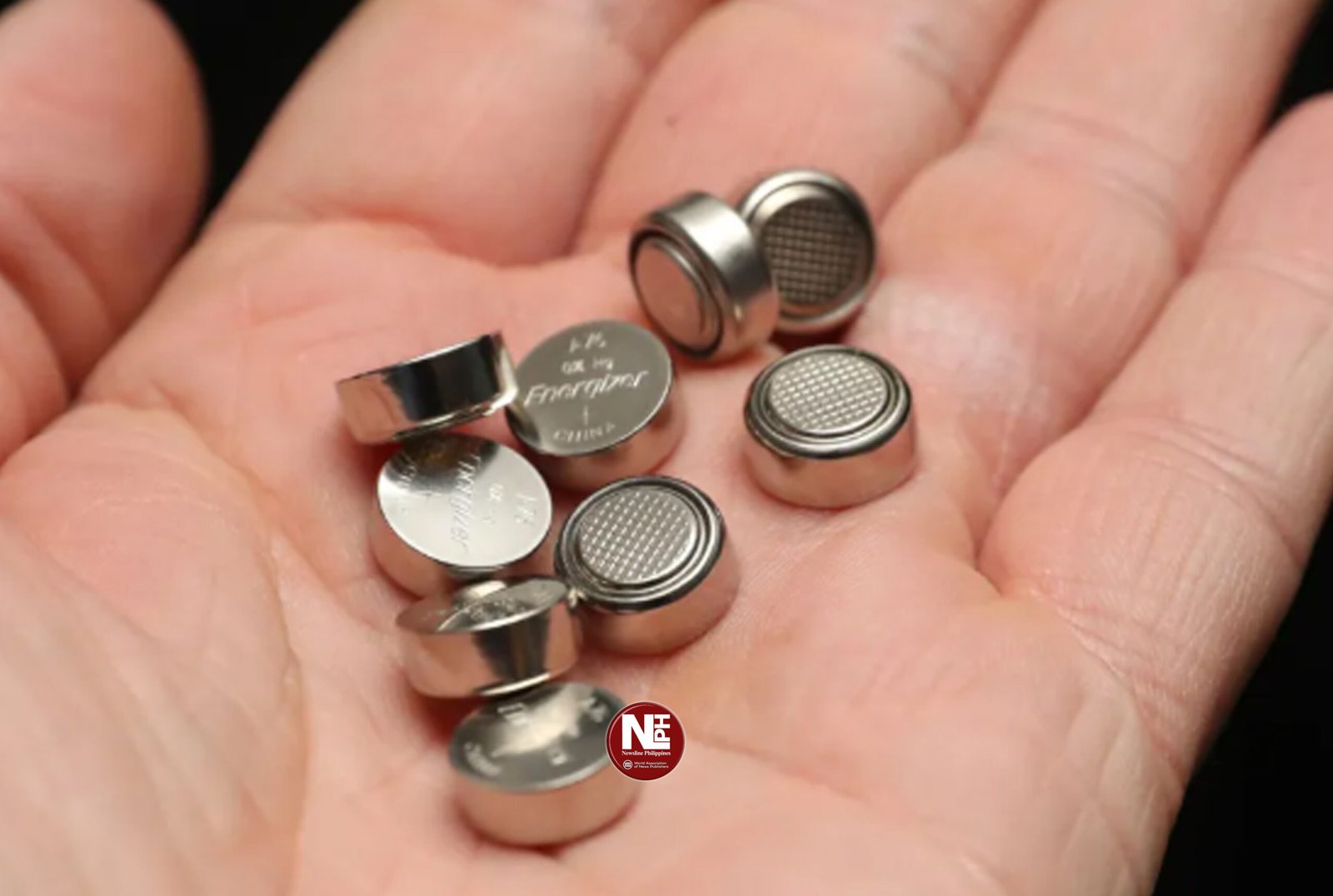
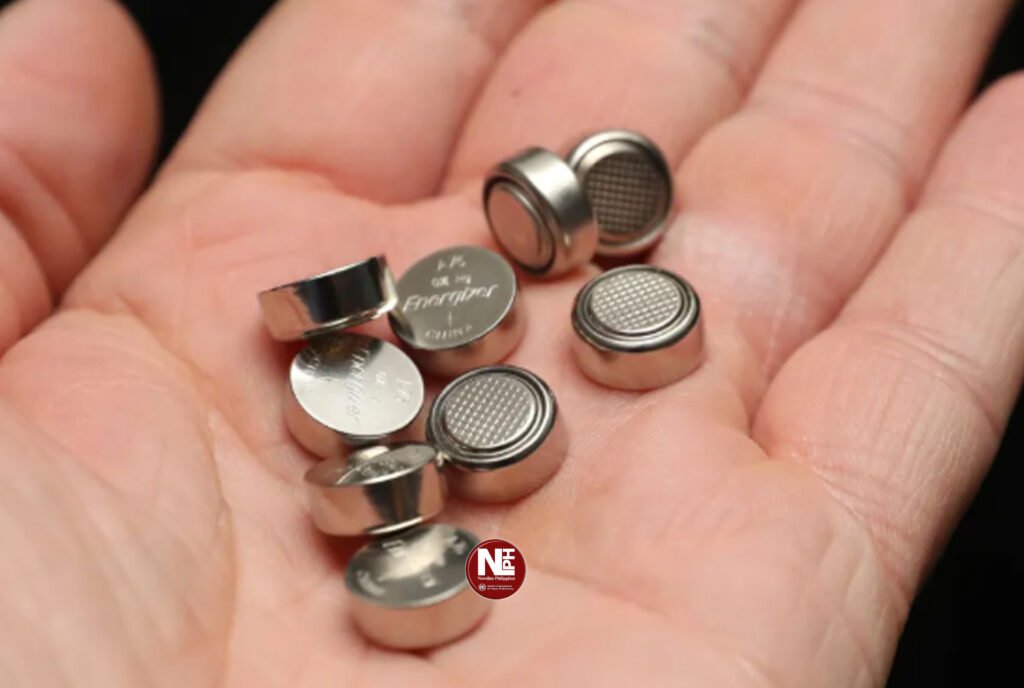
MANILA (December 2) – As families gear up for Christmas gift-giving, an environmental health group is sounding the alarm on the hidden dangers of button batteries in children’s toys, warning parents that a battery the size of a coin can cause life-threatening injuries within minutes.
The EcoWaste Coalition issued the alert after spotting PHP50–PHP75 light-up toys in Quiapo lacking hazard warnings and labels required under the Toy and Game Safety Labeling Act (RA 10620). These toys, often bought as stocking stuffers, are popular among children — but can be deadly if a battery is swallowed or inserted into the nose or ears.
“Parents must keep button batteries out of children’s sight and reach at all times,” the group stressed.
A small battery, a big emergency
Button batteries are commonly found in toys, hair clips, watches, calculators, thermometers, and other household items. When swallowed, they can burn through a child’s throat or esophagus; when inserted into the nose or ears, they can damage tissue, cause hearing loss, or even facial nerve paralysis.
The Food and Drug Administration warns that symptoms include gagging, drooling, coughing, vomiting, chest or abdominal pain, and difficulty breathing. For nasal or ear insertion, red flags include bleeding, foul discharge, and irritation.
A community safety reminder
EcoWaste urged parents to avoid toys with loose batteries, skip unregistered or unlabeled products, and choose items with screwed-down battery compartments. They also advised keeping both new and used batteries out of reach, and not replacing batteries in front of children.
Used batteries should never be thrown in regular trash and must be brought to e-waste drop-off points to prevent environmental contamination.
In case of ingestion or insertion, families are urged to immediately seek help from the National Poison Management and Control Center (NPMCC). The NPMCC reported that button battery ingestion ranked among the top 10 causes of pediatric poisoning in 2023.
With the holiday season in full swing, advocates remind communities that a few pesos saved on a toy can cost far more in medical emergencies — making vigilance the best gift parents can give their children.