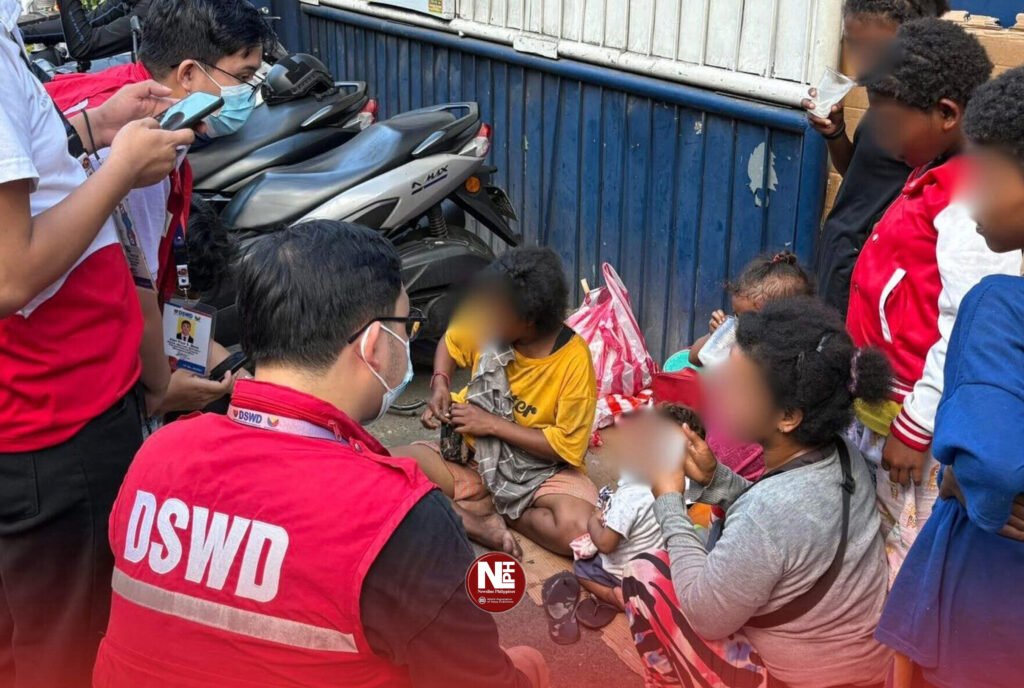
MANILA(December 23) — The government has reiterated its zero tolerance for child exploitation following the abduction of a one-year-old child who was used for street begging, an incident that prompted swift intervention from the Department of Social Welfare and Development (DSWD).
The child was taken on December 10 from Barangay San Bartolome in Quezon City and later recovered safely in Navotas City after concerned citizens recognized the toddler from a social media post and alerted authorities.
“Abducting a child is a grave and unacceptable act, and the Department strongly condemns any form of exploitation of children,” said DSWD Assistant Secretary and spokesperson Irene Dumlao.
She urged parents and guardians to remain vigilant and never entrust children to strangers under any circumstances.
Police arrested a 20-year-old suspect who admitted to using the child for begging. Authorities confirmed that claims of the child being exchanged for food were false.
Family living on the streets
Social workers found that the child’s parents had been sleeping and begging on the streets since September after the father lost his job as a construction worker.
Following the child’s recovery, the family temporarily relocated to Barangay Fortune, Marikina City, where they are staying with the maternal grandmother.
The family has since been enrolled in the Pag-abot Program, a government initiative designed to assist homeless and street-dwelling families.
An initial assessment confirmed that the household qualifies under the program’s criteria. A second round of evaluation is now underway to determine appropriate interventions, including livelihood assistance or employment facilitation, taking into account the father’s construction experience.
“The Department stands ready to provide the necessary support to ensure that this family does not return to the streets and is given a fair opportunity to rebuild stability and security,” Dumlao said.
Strengthening protection for children
Pag-abot has been institutionalized as a flagship government program through Executive Order No. 52, creating a unified platform for delivering social protection, shelter, and livelihood services to vulnerable children and families in street situations.
The DSWD said the case underscores both the dangers faced by children living on the streets and the importance of coordinated community action, social protection programs, and public vigilance in preventing child exploitation.
For authorities, the message is clear: child exploitation will be met with accountability, and families at risk will be met with support—before tragedy strikes again.