Bengali men dominate Dhaka flower market as gender roles quietly evolve

Date:

Share post:

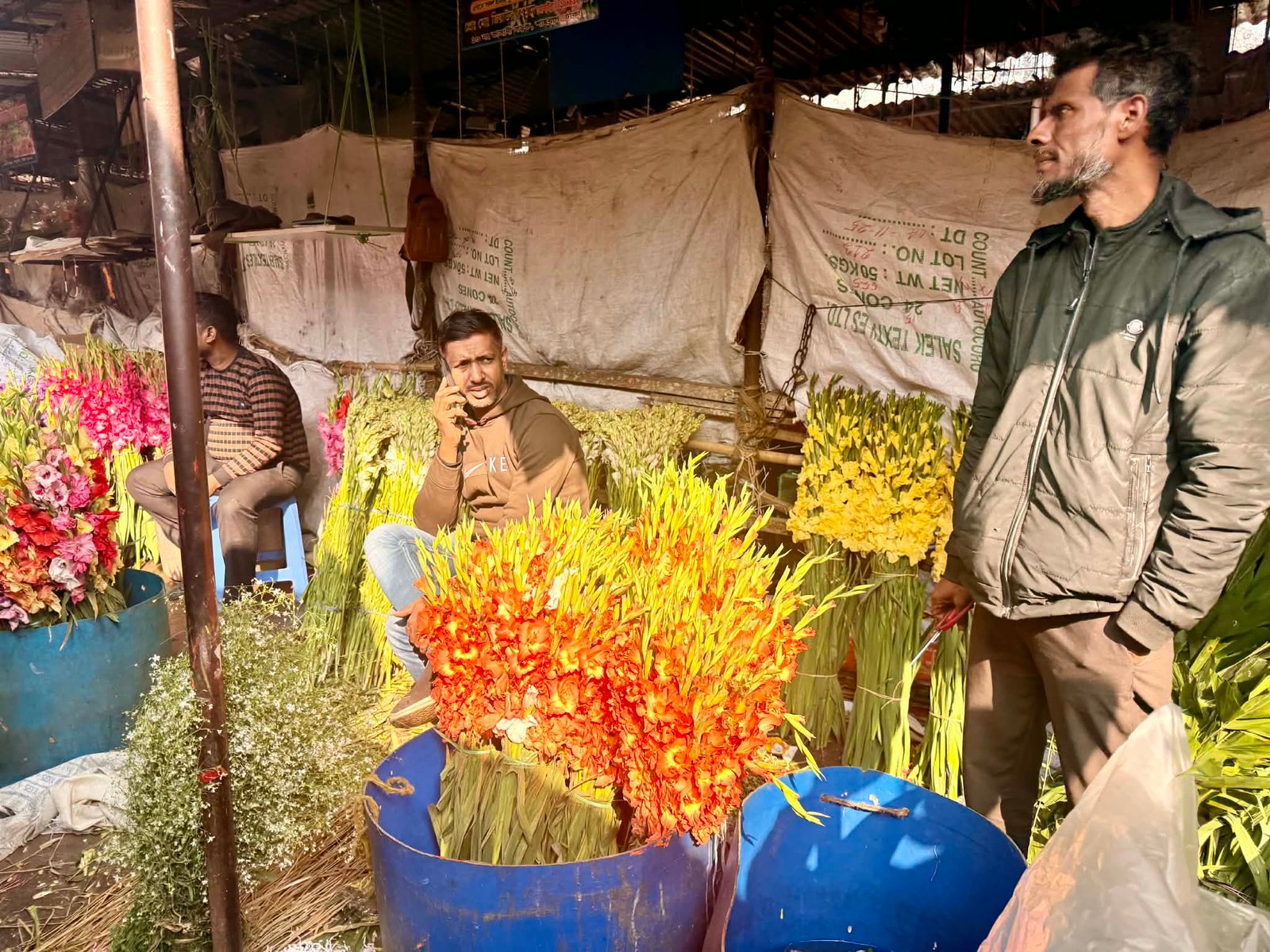
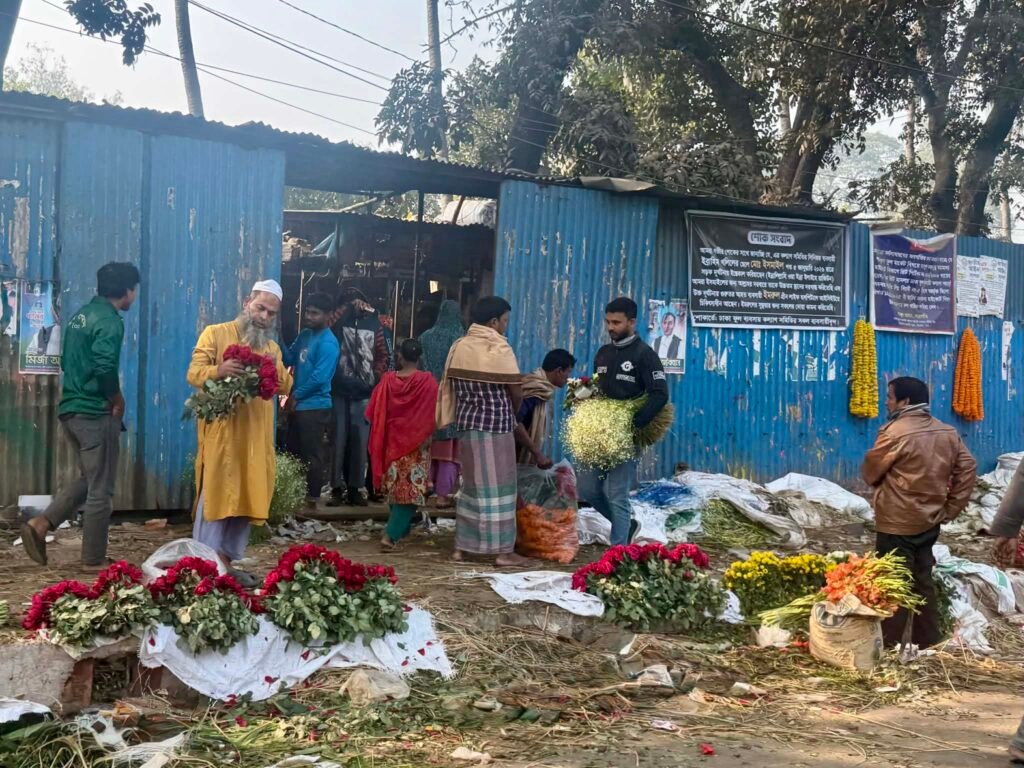
DHAKA, Bangladesh (January 17) — On a cold Friday morning in Dhaka, amid political uncertainty and economic fragility, life unfolds quietly along the flower-lined streets of the capital. Men stand behind makeshift stalls, negotiating prices and handing out bouquets, while women sit nearby, carefully wrapping each stem sold. It is an everyday scene, unassuming, practical, and deeply telling of a society in transition.

The visit to the flower market was part of a city tour organized by the Bangladesh Tourism Council, in coordination with the Dhaka International Film Festival, welcoming foreign guests and delegates from across the world. For many of us, the flower market became more than a tourist stop, it was a window into the resilience, labor dynamics, and quiet dignity of the Bengali people.

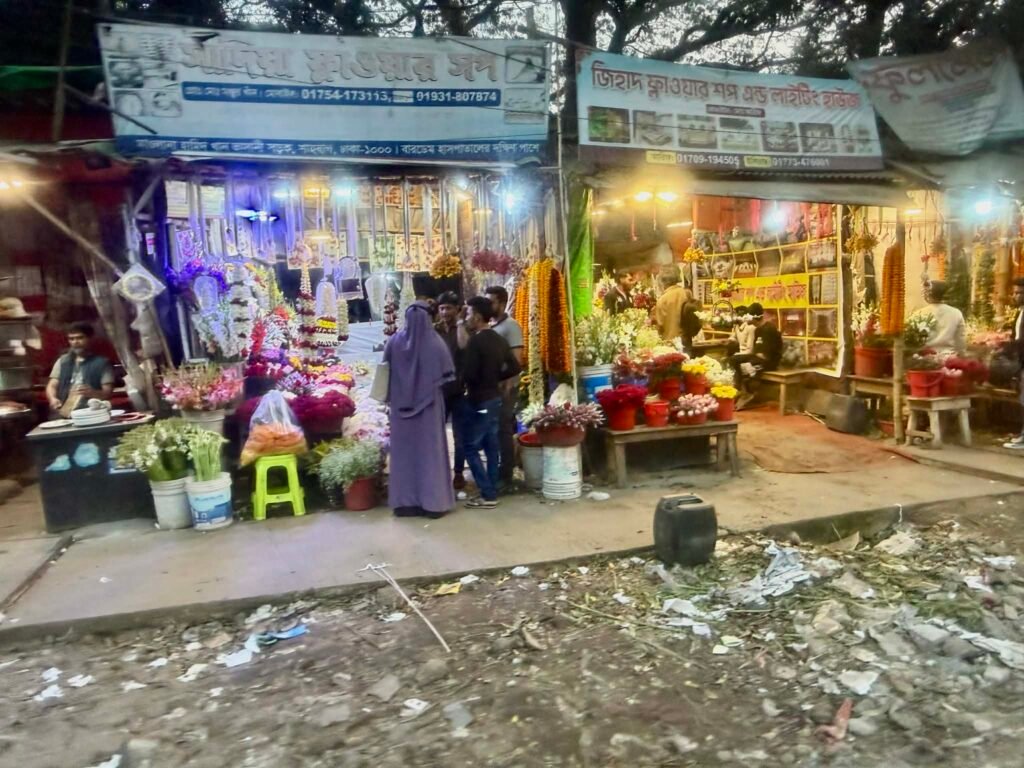
Unlike the large, commercialized markets of other capitals, Dhaka’s flower market is modest. There are no towering warehouses or dominant corporate traders. Instead, small vendors line the roadsides, relying on foot traffic, word of mouth, and the rhythm of daily demand. The air is thick with the scent of fresh blooms—locals say the fragrance is “perfume-quality”—a reminder of the country’s vast but often underutilized agricultural potential.

While men largely dominate sales and negotiations, women play an equally essential role. They prepare, sort, and wrap the flowers with precision and care. The division of labor may appear traditional, but it reflects economic pragmatism rather than exclusion.
“In Muslim families, women are traditionally homemakers. Many stay at home to care for children,” shared Surity Malitha, a Bengali woman who joined the tour. “But that is slowly changing. My mother is a writer and a filmmaker.”

Her words reflect a broader cultural shift underway in Bangladesh. While tradition remains deeply rooted, more women are stepping beyond domestic spaces—into creative industries, education, entrepreneurship, and public discourse. Change is gradual, uneven, but unmistakable.

Dhaka, however, is not Bangladesh in its entirety. It is only one segment of a country navigating profound challenges. The nation is approaching a critical election period in February, following the dramatic ouster of a 15-year ruler through people power in November. Political uncertainty continues to shape daily life, livelihoods, and market confidence.

Yet, in the presence of vibrant flowers sold at prices terribly low by global standards, one almost forgets the weight of national uncertainty. Beauty, after all, has a way of momentarily softening reality.

Local observers like Kamal Hossain express cautious optimism.

“What we hope for is equality and inclusive development,” he said, looking ahead to the elections.

For now, flower vendors survive on thin margins. But many believe that when the economy stabilizes, floriculture could emerge as a viable export industry—an untapped resource nurtured by fertile land, skilled hands, and generations of farming knowledge.

What stands out most in Dhaka is not merely its resources, but its people. Warm, reflective, resilient—Bengalis carry forward their daily routines with quiet strength. Men and women alike find ways to contribute, negotiate tradition, and adapt to change, even when the future remains uncertain.

One day, Dhaka may thrive as a fully inclusive city—where development reaches beyond elites, where gender roles expand rather than restrict, and where every journey toward a better life is given space to grow.

For now, the flowers bloom along the roadside—fragile, fragrant, and hopeful—much like the nation itself.-Editha Z Caduaya

Editha Z. Caduaya
Editha Z. Caduayahttps://newsline.ph
Edith Z Caduaya studied Bachelor of Science in Development Communication at the University of Southern Mindanao. The chairperson of Mindanao Independent Press Council (MIPC) Inc.
spot_img

Related articles

CCC cites youth as key partners in climate resilience in SOCCSKSARGEN

Photo courtesy: Climate Change Commission PH ISULAN, Sultan Kudarat (January 25) — The Climate Change Commission (CCC) highlighted the...

Shariff Aguak Mayor escapes death in ambush

SHARIFF AGUAK, Maguindanao del Sur — Shariff Aguak Mayor Datu Akmad B. Ampatuan Sr., al-Hadj narrowly escaped death...

4 bodies found in search for sunken Davao vessel

DAVAO CITY (January 24) — Four bodies believed to be from the sunken recreational vessel MBCA Amejara...

Ambassador Nina Cainglet Hails “Beneath the Badge” Award as a Triumph of Filipino Storytelling

DHAKA, Bangladesh (January 24) — The Philippine documentary Beneath the Badge (Sa Likod ng Tsapa), directed and produced...