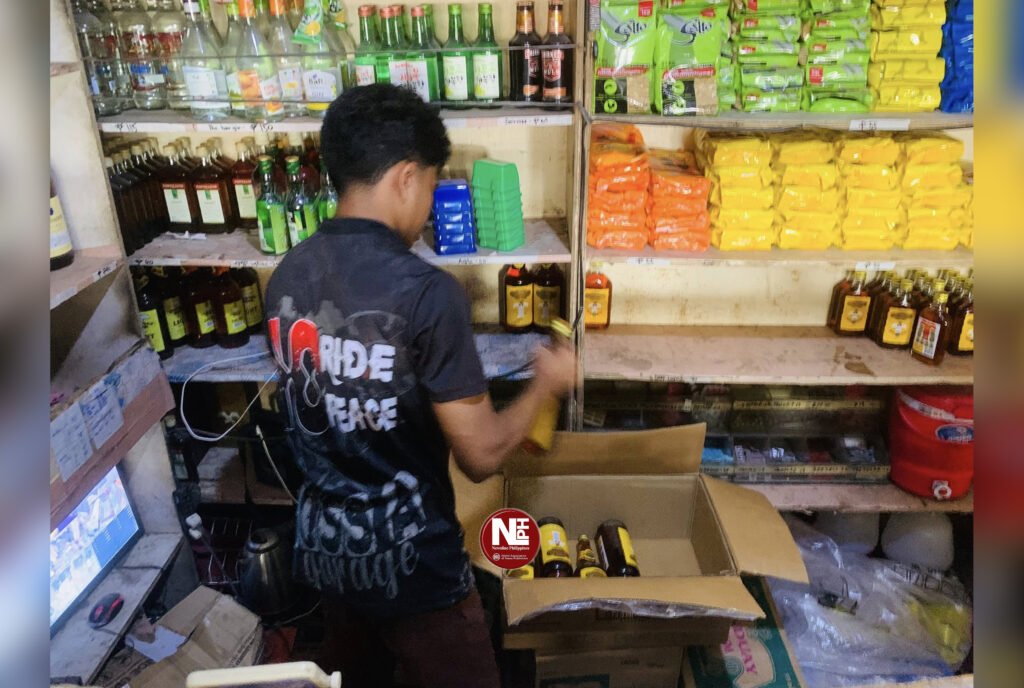
COTABATO CITY(January 21) — Two towns in Maguindanao have moved to ban the sale of liquor and public drinking, a decision local officials say is aimed at reducing crime, keeping order, and responding to long-standing community concerns.
The municipalities of Buluan and Datu Odin Sinsuat approved separate ordinances this month prohibiting the sale and consumption of alcoholic and intoxicating beverages in public places.
Local leaders say the measures are not meant to punish residents, but to address what they describe as a clear link between alcohol and disturbances in their communities.
Buluan: responding to residents’ complaints
Buluan, the provincial seat of Maguindanao del Sur, was the first to implement the ban after residents raised concerns about crimes allegedly committed by intoxicated individuals.
Vice Mayor Jazzer King Mangudadatu announced the policy in an online video shortly after the Sangguniang Bayan approved the ordinance in a session he presided over.
“Effective this month, selling and drinking of all forms of intoxicants in public are prohibited in Buluan,” he said.
He explained that the move followed repeated complaints received by Mayor Ibrahim Mangudadatu and the municipal council, with residents pointing to alcohol as a common factor in local crime incidents.
Because Buluan hosts the provincial capitol complex, the ordinance allows limited exemptions. Households entertaining official or prominent visitors may serve wine, but consumption must be strictly limited to closed-door venues and not in public spaces.
Datu Odin Sinsuat: campaign promise fulfilled
In Datu Odin Sinsuat, the official seat of Maguindanao del Norte, Mayor Abdumain Abas ordered a similar ban after the municipal council passed an enabling ordinance last week.
Even before the measure took effect, Abas went live on social media to warn store owners to begin clearing out their stocks of alcohol.
“Alcohol and intoxicating drinks are banned in Datu Odin Sinsuat. This is one of my campaign pledges,” Abas told vendors in Filipino during a visit to the town public market.
The mayor said the policy is consistent with Islamic teachings and reflects the values of the community. Abas is allied with the Moro Islamic Liberation Front (MILF), which supported his 2025 mayoral bid through its political arm, the United Bangsamoro Justice Party (UBJP).
Clear exemptions for non-Muslim areas
Vice Mayor Bobsteel Sinsuat later clarified in a radio interview that the ordinance includes exemptions for Barangay Awang and Barangay Tamontaka, two predominantly non-Muslim communities within the town.
Barangay Awang, in particular, is home to active and retired soldiers of the 6th Infantry Division and hosts the Cotabato airport, making it a distinct area with different social dynamics.
The exemptions, officials said, are meant to balance religious and cultural considerations with the realities of a diverse population.
Balancing order, culture, and community life
While enforcement details are still being finalized, local officials stressed that the ordinances are preventive in nature—aimed at minimizing public disturbances, improving safety, and promoting discipline rather than policing private behavior.
For many residents, the bans reflect a broader effort by local governments to assert order at the community level, especially in areas where alcohol-related incidents have long been a concern.
As both towns begin enforcement, residents and business owners alike will be watching closely to see whether the measures lead to quieter streets—and fewer police blotters—in the months ahead.