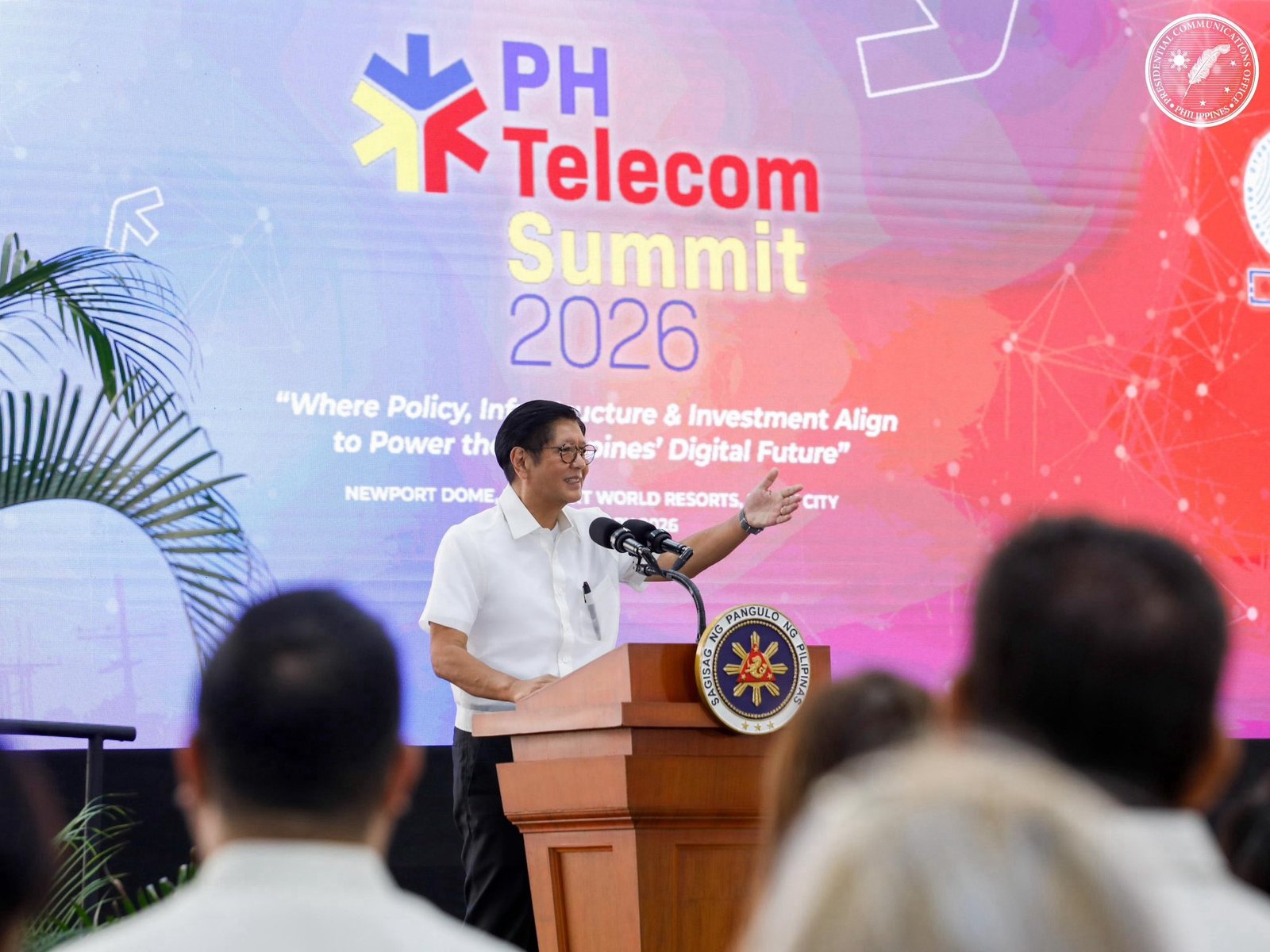
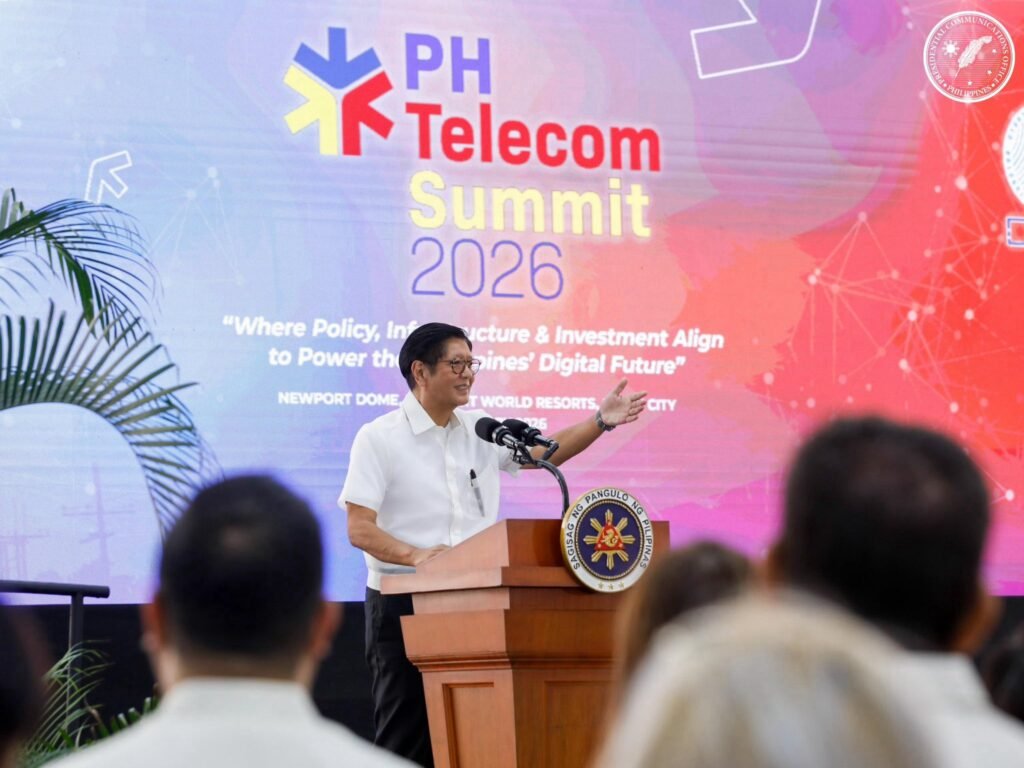
MANILA (February 6) — President Ferdinand R. Marcos Jr.’s call for unified action to expand internet access to geographically isolated and disadvantaged areas (GIDA) highlights a long-standing reality in Mindanao: while policies are in place, millions remain digitally disconnected—and the cost is felt daily in classrooms, farms, clinics, and barangay halls.
Speaking at the Philippine Telecommunications Summit 2026, Marcos framed connectivity as a gateway to opportunity, urging government, telecom companies, and local governments to act in unison.
Yet in provinces such as Maguindanao del Sur, Lanao del Sur, Surigao del Sur, Bukidnon, and Davao Oriental, internet access remains unreliable or absent—underscoring the gap between national commitments and local experience.
Education, Livelihood, and Safety at Stake
In upland barangays of Bukidnon, many public school students still depend on printed modules or travel to town centers to access a signal, limiting their ability to keep pace with digital learning. In coastal communities of Surigao del Sur and Davao Oriental, fisherfolk lack access to real-time weather alerts and market prices, increasing both economic risk and vulnerability to disasters.
In parts of BARMM, weak connectivity also affects governance itself—delaying digital civil registration, health referrals, and emergency coordination in conflict-affected and geographically isolated communities.
President Marcos acknowledged that permit delays, right-of-way issues, fiber cuts, and unstable power supply continue to slow network rollout—problems that are magnified in provinces with difficult terrain and limited local resources.
“Walang iisang sektor ang kayang harapin ang mga hamong ito,” Marcos said, stressing the need for shared responsibility.
Reforms vs. Reality on the Ground
The administration has pointed to reforms led by the Department of Information and Communications Technology (DICT), particularly the Konektadong Pinoy Act, which removed regulatory barriers that previously discouraged telecom expansion.
However, analysts note that policy reform alone does not guarantee last-mile connectivity, especially in Mindanao provinces where:
- LGU capacity to process permits varies widely
- security concerns raise deployment costs
- power interruptions disrupt service reliability