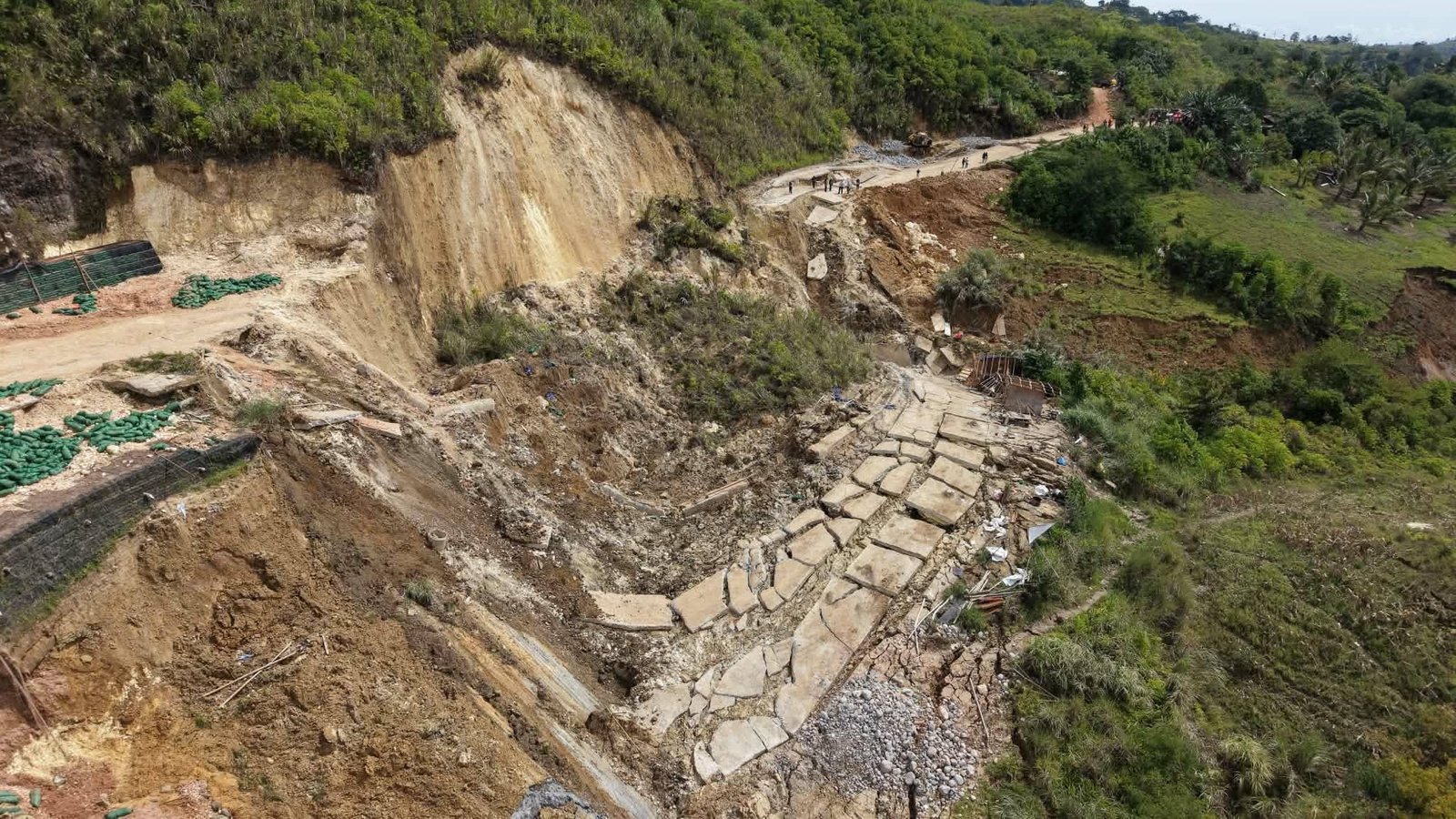
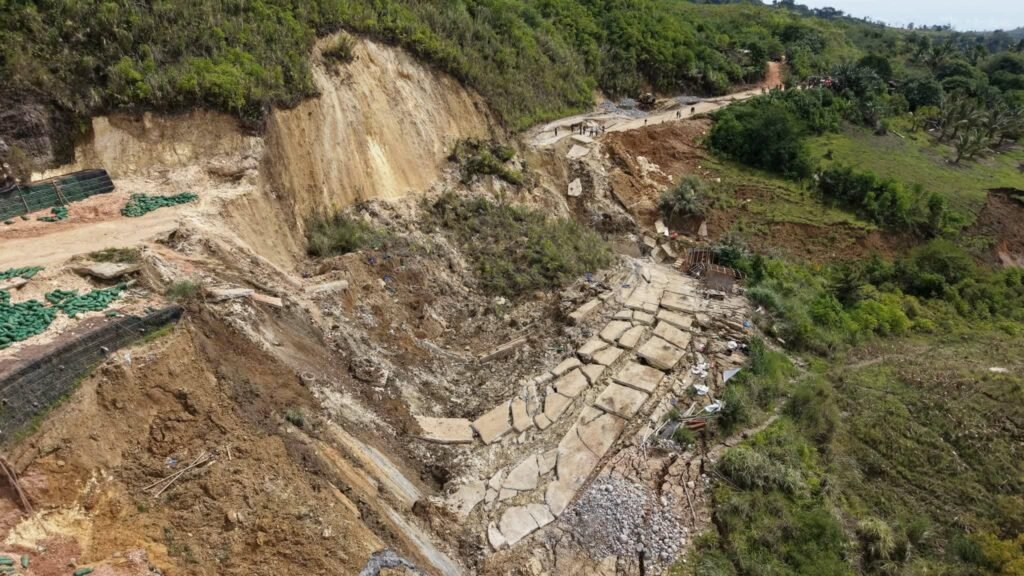
GENERAL SANTOS CITY(February 25) — What used to be a busy farm-to-market corridor in upland South Cotabato is now a broken strip of earth.
A 200-meter section of the Sto. Niño–Maitum Road in Lake Sebu collapsed on February 13 after weeks of heavy rain, cutting off a vital link between farming communities and coastal markets. The damaged highway remains closed as engineers from the Department of Public Works and Highways assess unstable slopes and widening ground cracks.
For residents, the impact is immediate — and personal.
“Fuel eats our profit”
Vegetable farmers now reroute through Sultan Kudarat, adding hours of travel and significantly higher fuel costs.
“We’re losing profit every trip,” said Ernesto Tio, a local farmer. “If market prices dip, we barely earn.”
Longer hauls mean greater risk of spoilage for perishable produce. Some growers accept lower farm-gate prices just to move goods quickly. Transporters say vehicle wear-and-tear and fuel expenses have nearly doubled, but passing on the cost to buyers isn’t easy.
Quiet roadside, shrinking income
Small roadside stores that once served truckers and commuters now sit idle. “The road used to bring customers,” said Marilyn Maure, a sari-sari store owner near the affected stretch. “Now it’s quiet.”
Market vendors supplying buyers in General Santos City report delayed deliveries and thinner supply. Residents in upland barangays limit trips to town to save money, affecting access to schools, clinics, and basic services.
More than a road
Local officials call the Sto. Niño–Maitum Road an economic lifeline for Lake Sebu’s agricultural communities. Until the ground stabilizes, full rehabilitation cannot begin — leaving families and traders in limbo.
For now, the detour is the only option.
“When the road collapses,” Ernesto said, “our livelihood collapses with it.”
As engineers study long-term fixes, communities are hoping for at least temporary access — because in upland South Cotabato, mobility means survival.