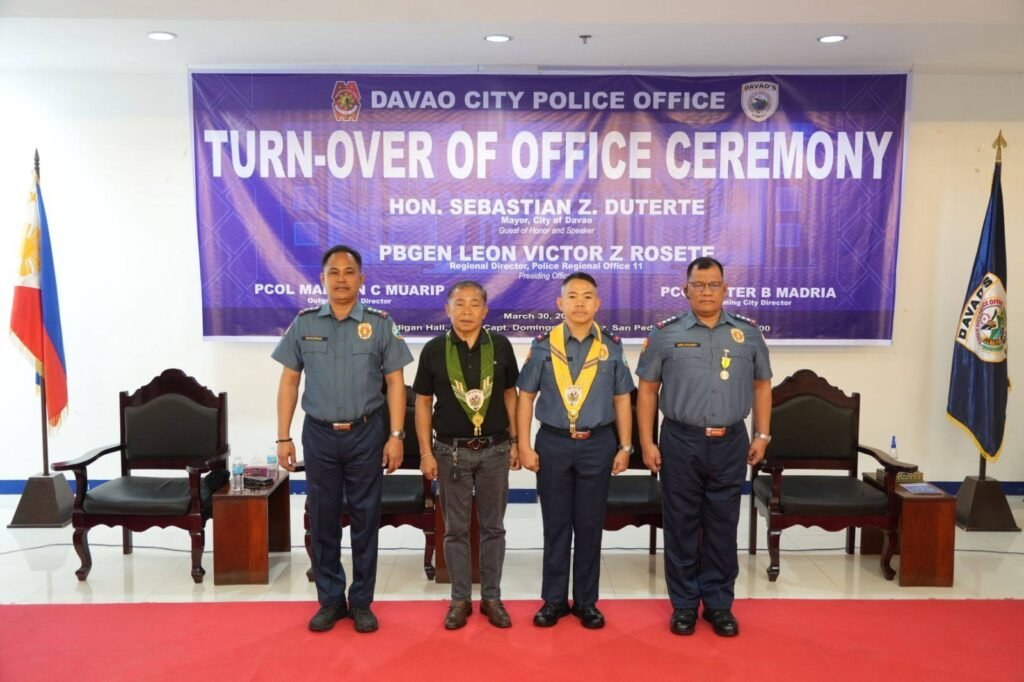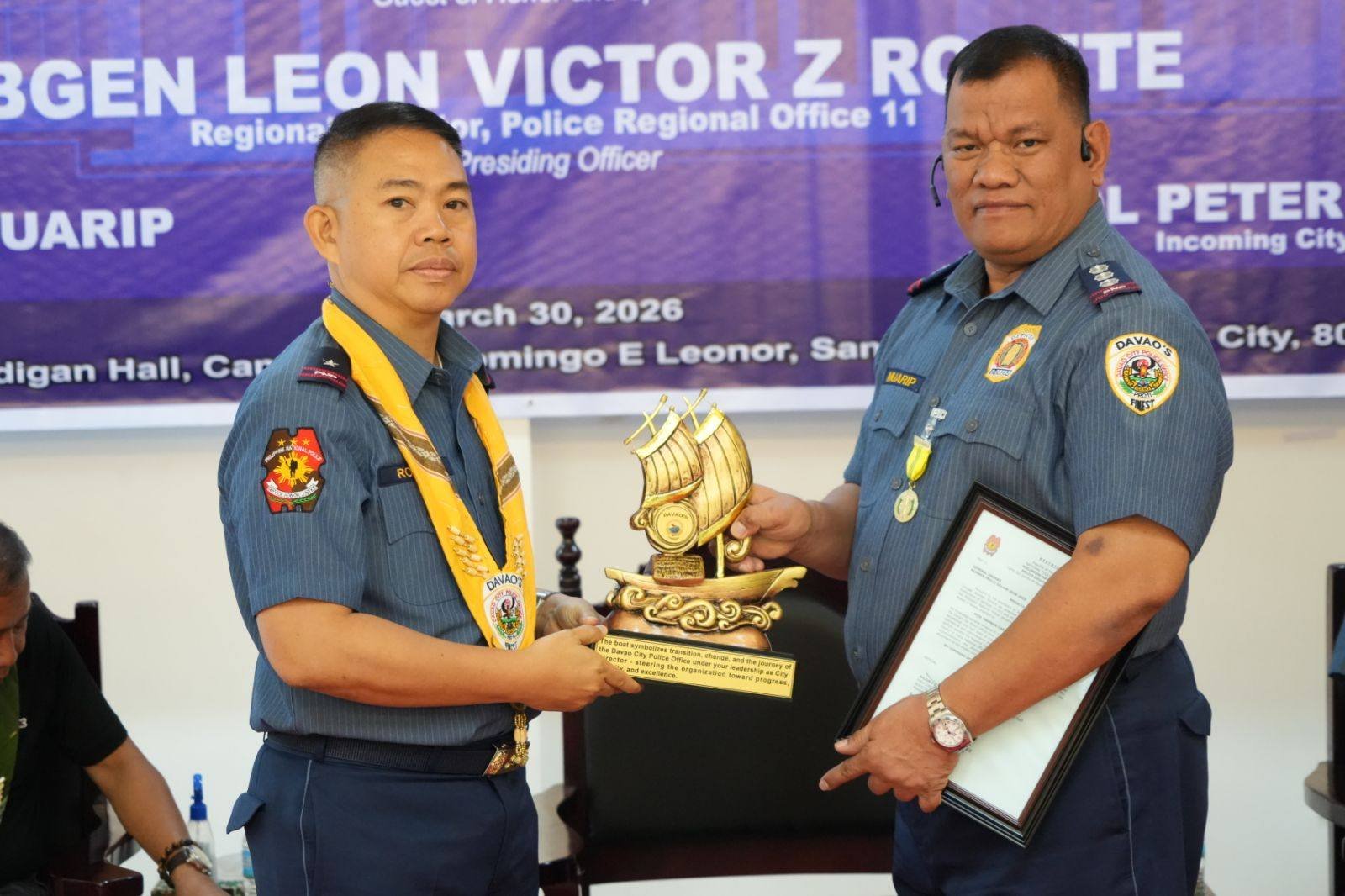
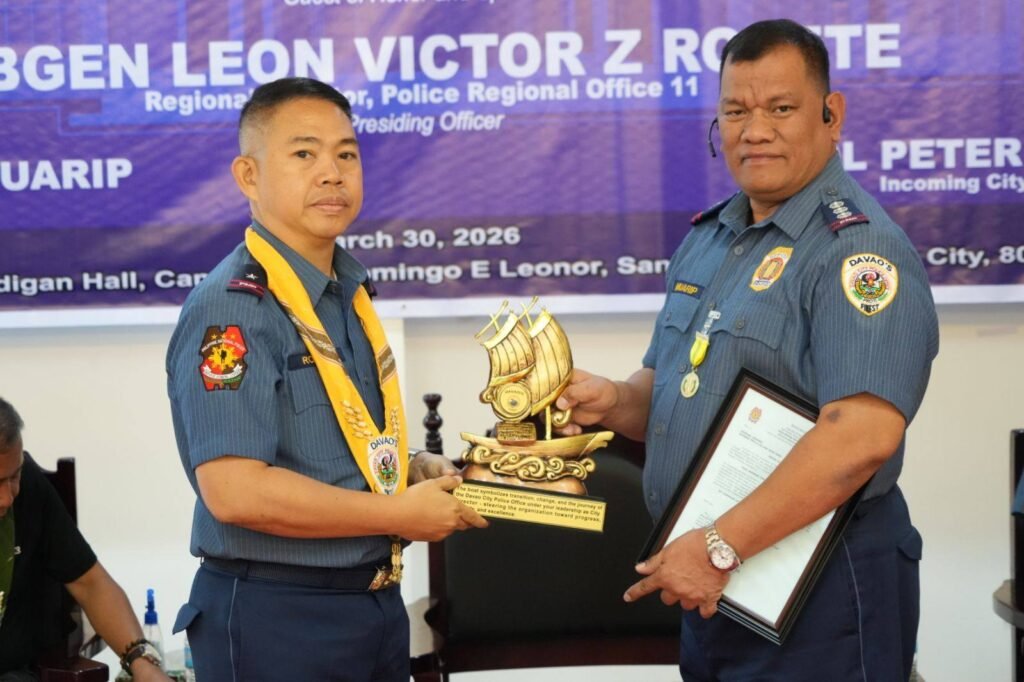
DAVAO CITY (March 30) — A long-delayed leadership transition at the Davao City Police Office (DCPO) was finally carried out on Monday (March 30), as Col. Mannan Muarip formally handed over command to Col. Peter Madria—months after the move was first scheduled but abruptly stalled under unclear circumstances.
Muarip, who served as acting DCPO director for eight months, stepped down in a ceremony that, while routine in form, comes with lingering questions over why the turnover had been deferred since January.
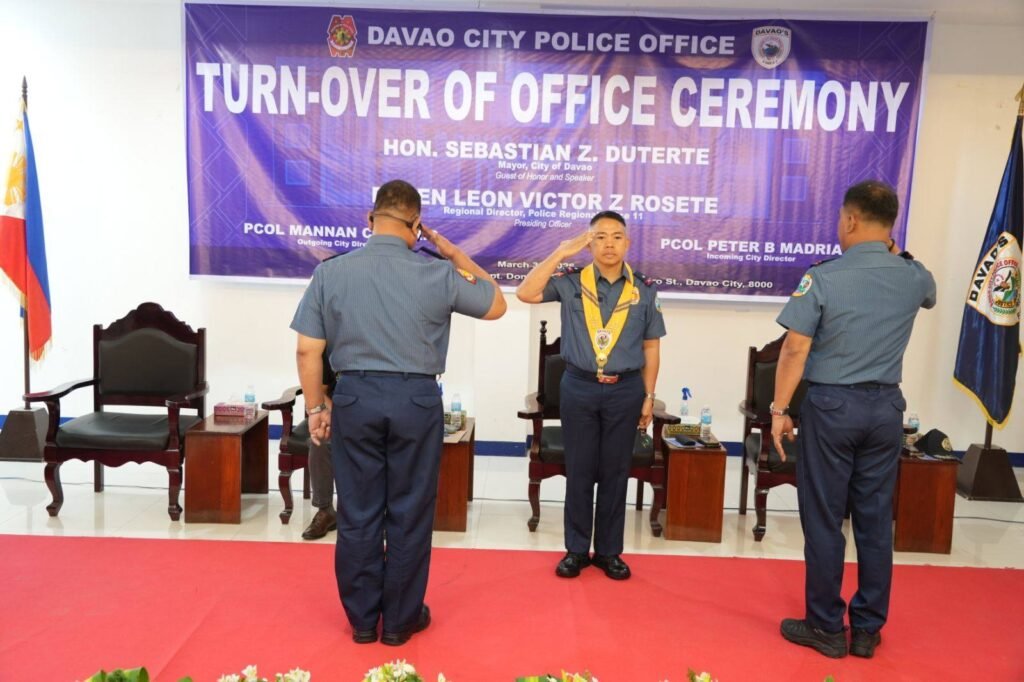
The earlier attempt to install Madria was halted after both officers reportedly received a call that led to the sudden postponement of the ceremony. To date, authorities have yet to publicly explain who made the call, what prompted it, or why a standard police leadership transition required last-minute intervention.
The silence has fueled speculation within law enforcement circles, raising concerns over possible external influence, internal power struggles, or last-minute recalibrations within the police hierarchy.
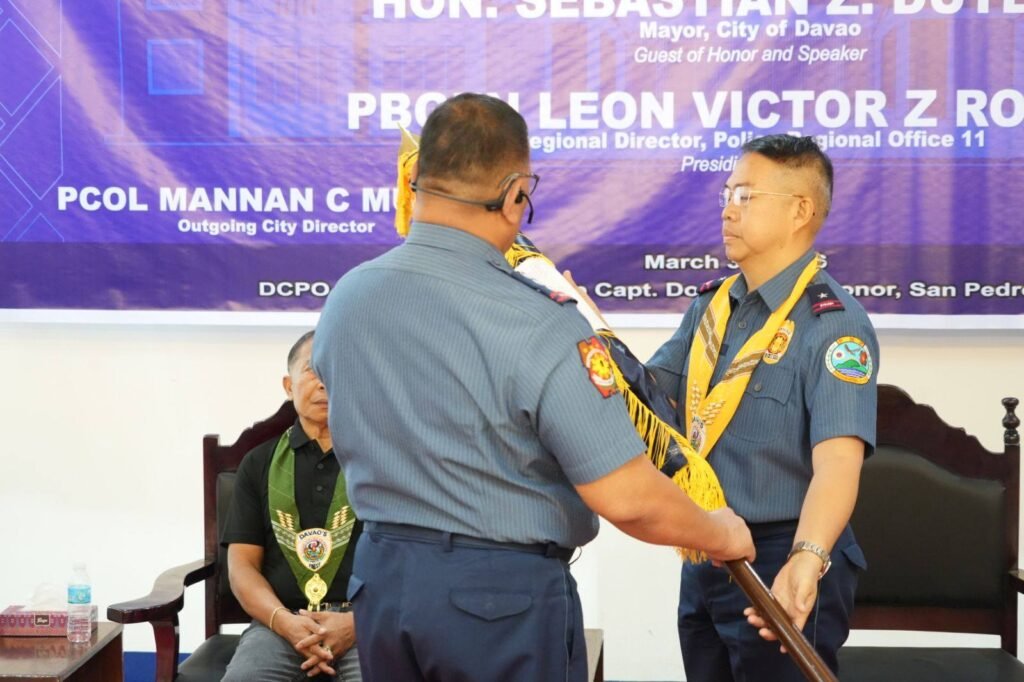
Leadership transitions within the Philippine National Police are typically procedural, guided by formal orders and institutional protocols. Delays—particularly those triggered by undisclosed instructions—are rare and often signal deeper issues beyond routine reshuffling.
The eventual installation of Madria now attempts to restore normalcy in the DCPO, a key urban police unit tasked with maintaining peace and order in Davao City, long touted as one of the safest cities in the country. But the episode has cast a spotlight on how decisions at the top are made—and who ultimately holds sway over them.
For eight months, Muarip led the DCPO in an acting capacity, navigating operational demands while the question of permanent leadership lingered. His extended tenure underscores the uncertainty that gripped the command during the stalled transition.