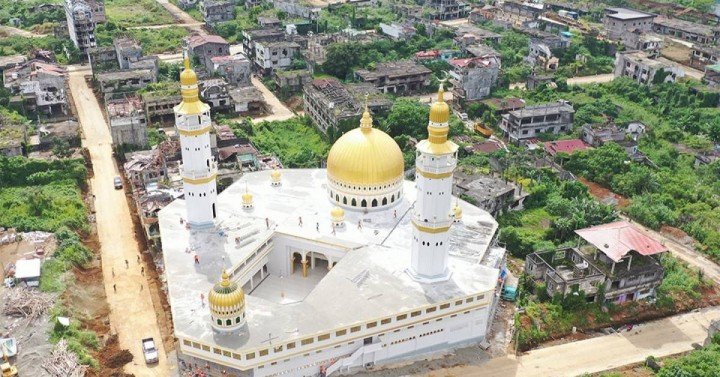
MARAWI CITY / MINDANAO(April 12) — Nearly nine years after the 2017 siege, Marawi’s slow recovery continues to unfold in fragments—homes rebuilt one family at a time, compensation released after years of waiting, and communities still navigating the long tail of displacement.
But even as survivors begin to close one chapter of conflict, a new layer of pressure is emerging: a broader socioeconomic strain across Mindanao marked by rising fuel costs, inflation, and tightening local government budgets.
The experience of survivors like Hayadullah Atar—who only recently received compensation under the Marawi Siege Victims Compensation Act—reflects how recovery in post-conflict settings is often shaped not only by peacebuilding timelines, but by the state of the economy itself.
While the Marawi Compensation Board continues to process claims for families whose homes were destroyed, the pace of rebuilding on the ground remains uneven. Many families have been forced to self-finance partial reconstruction while awaiting government payouts, stretching household resources thin over years.
That strain is now being compounded by wider economic pressures.
Across Mindanao, transport groups have scaled down operations due to fuel price volatility, local governments have adopted cost-cutting measures, and agencies are increasingly forced to adapt service delivery to rising operational expenses. In General Santos City, for example, police units have shifted to bicycle patrols as a fuel-saving measure—an illustration of how even basic public safety functions are adjusting to economic constraints.
At the same time, grassroots groups in Davao and other urban centers have staged protests demanding cash assistance, tax relief, and stronger government intervention to cushion inflation’s impact on workers, drivers, and low-income households.
These developments form the backdrop against which Marawi’s recovery is taking place.
For many displaced families, compensation payments—when they arrive—are not only used to rebuild homes, but also to offset rising construction costs driven by inflation in cement, steel, and transport logistics. What once might have been sufficient to fully rebuild a structure is now often absorbed by higher material and labor prices.
Local government units in the Bangsamoro region and neighboring provinces face similar constraints. With limited fiscal space, LGUs are balancing long-term recovery programs with immediate demands such as social services, disaster response, and energy-related cost increases.
The result is a layered challenge: post-conflict recovery is competing with ongoing economic stress.
Policy analysts note that this overlap creates a “dual pressure” environment—where communities recovering from conflict must simultaneously absorb national and global economic shocks. In such conditions, even well-designed compensation or housing programs risk being delayed, diluted, or partially offset by inflationary realities.
For survivors like Atar, the symbolism of receiving compensation remains powerful. It represents recognition of loss and a pathway to rebuilding. But in practical terms, recovery is no longer determined solely by whether aid is delivered—it is also shaped by how far that aid can stretch in a changing economic landscape.
This convergence of post-conflict recovery and socioeconomic strain underscores a broader reality in Mindanao today: rebuilding is no longer happening in a vacuum. It is unfolding in the middle of a cost-of-living crisis, where justice, infrastructure, and survival are all subject to the same rising pressures.