DAVAO CITY (June 19) — Children affected by illegal drugs are often viewed through the lens of crime and punishment. Yet child rights advocates and public health practitioners argue that such perspectives overlook a more difficult truth: many children caught in the cycle of illegal drugs are themselves victims of neglect, poverty, violence, family breakdown, and weak social protection systems.
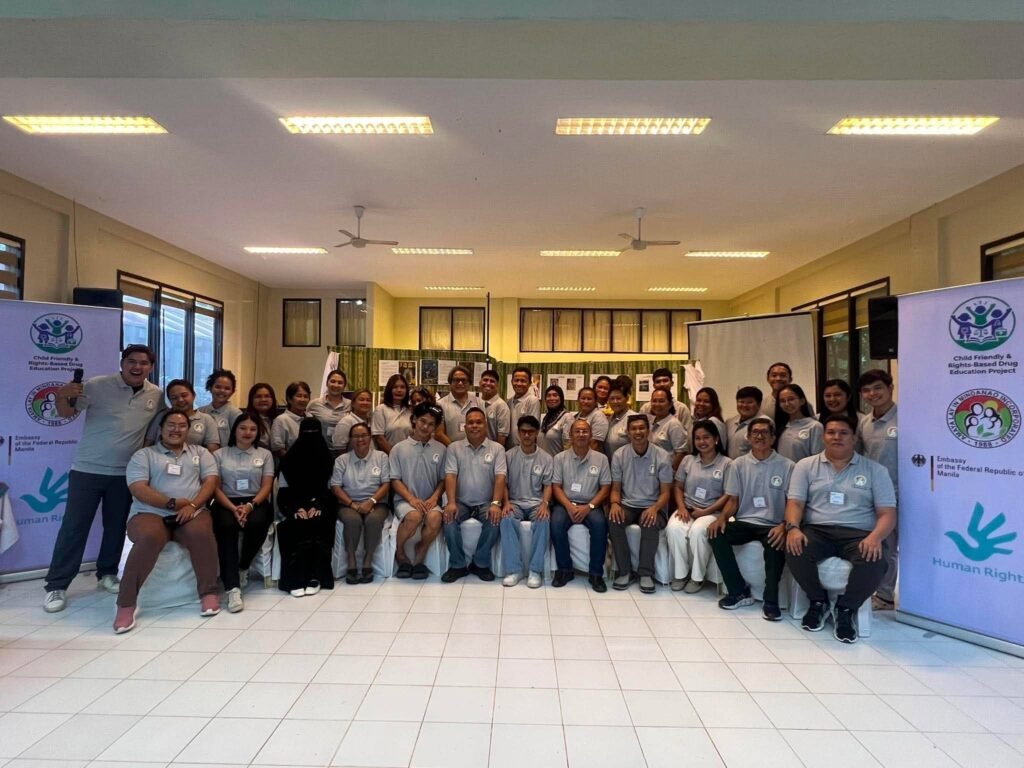
This reality is at the center of a new rights-based drug prevention initiative launched by ALAY Mindanao and its partner organizations, which seeks to reframe illegal drug use among children and adolescents as a child protection and public health concern rather than solely a law enforcement issue.
The initiative comes amid continuing concerns about children who remain vulnerable to drug-related harms despite existing laws, programs, and enforcement efforts.
The Children Behind the Statistics
Advocates point out that children do not become vulnerable to drugs in isolation.
Many grow up in communities where poverty limits opportunities, where schools struggle to retain learners, where mental health services are scarce, and where families are themselves affected by substance abuse, incarceration, migration, or violence.
In these circumstances, illegal drugs become not only a criminal justice issue but also a symptom of deeper social and economic inequalities.
Children exposed to the illegal drug trade often experience multiple and overlapping harms: disrupted education, family separation, exploitation, abuse, poor health outcomes, trauma, and social stigma. Some become Children at Risk (CAR), while others eventually enter the juvenile justice system as Children in Conflict with the Law (CICL).
The consequences are not borne by children alone. Communities experience increased insecurity, weakened social cohesion, and continuing cycles of poverty that can persist across generations.
The Gaps That Continue to Put Children at Risk
Despite growing recognition of children’s rights, significant gaps remain in prevention and intervention efforts.
Among these are:
- Limited access to child and adolescent mental health services;
- Inadequate community-based prevention programs;
- Insufficient support for families facing economic hardship;
- Lack of safe recreational and developmental opportunities for youth;
- Weak referral pathways between schools, health providers, social workers, and local governments;
- Persistent stigma against children associated with drug-related issues;
- Limited participation of children in designing programs that affect them.
Advocates argue that when these gaps remain unaddressed, communities are left responding to crises rather than preventing them.
“The question is not only why children become involved with drugs,” one participant reflected during the program launch. “The deeper question is why so many children continue to fall through the cracks.”
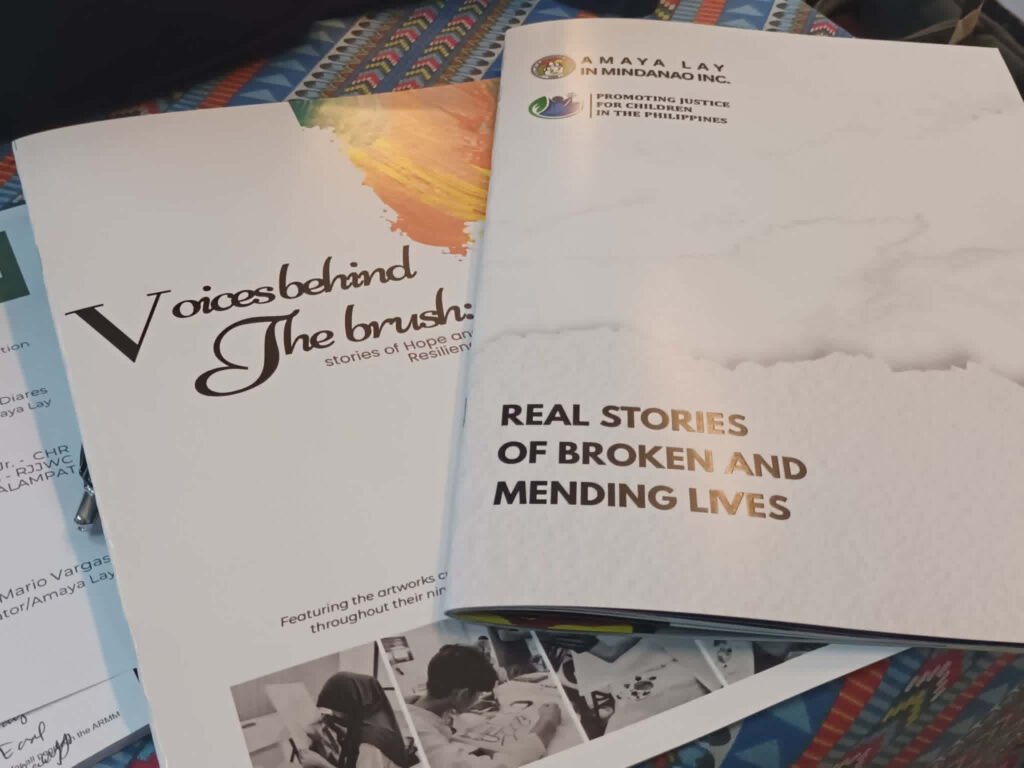
A Rights-Based Approach: Holding Duty-Bearers Accountable
A rights-based approach shifts the conversation from blaming children to examining the responsibilities of institutions that are obligated to protect them.
Children are rights-holders. Families, schools, churches, local governments, health agencies, law enforcement institutions, and civil society organizations are duty-bearers.
This means that addressing drug-related harms requires more than awareness campaigns. It requires coordinated action to ensure children’s rights to health, education, protection, participation, and development are fulfilled.
For families, this means creating safe and nurturing environments.
For schools, it means promoting inclusive education, counseling, and early intervention rather than exclusion and labeling.
For churches and faith-based organizations, it means accompanying vulnerable children and families with compassion, support, and community engagement.
For local governments and national agencies, it means investing in prevention, treatment, mental health services, child protection systems, and evidence-based community programs.
The measure of success, advocates say, should not simply be the number of arrests or enforcement operations conducted, but the number of children protected, supported, and given opportunities to thrive.
Art Reveals the Human Cost
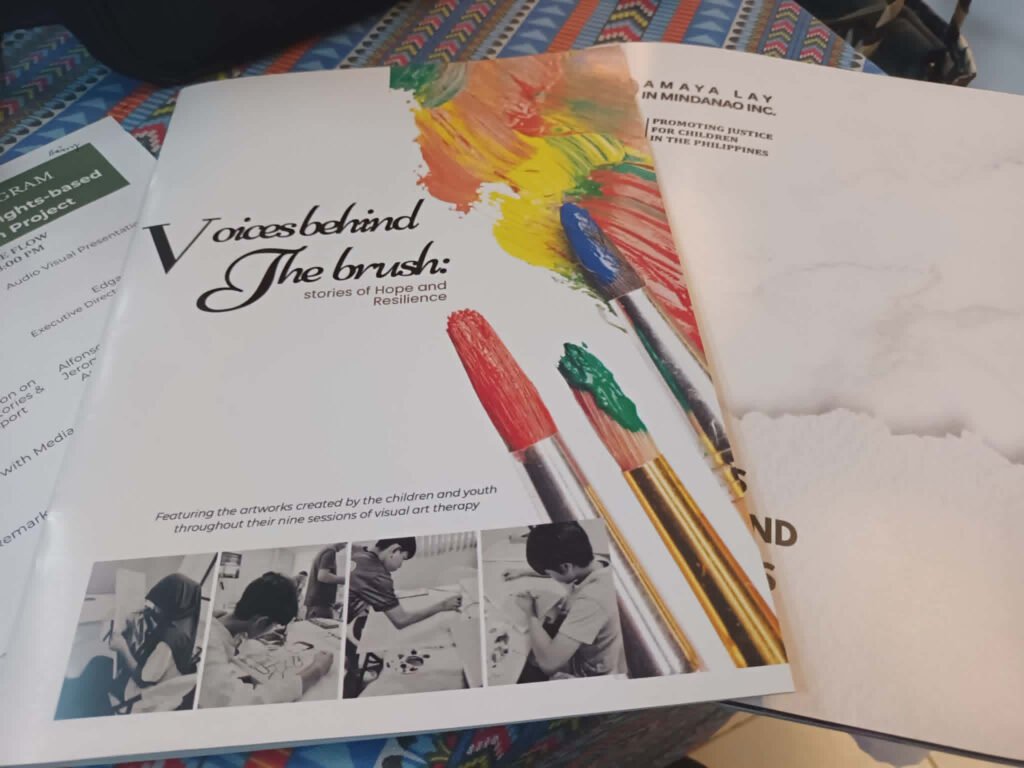
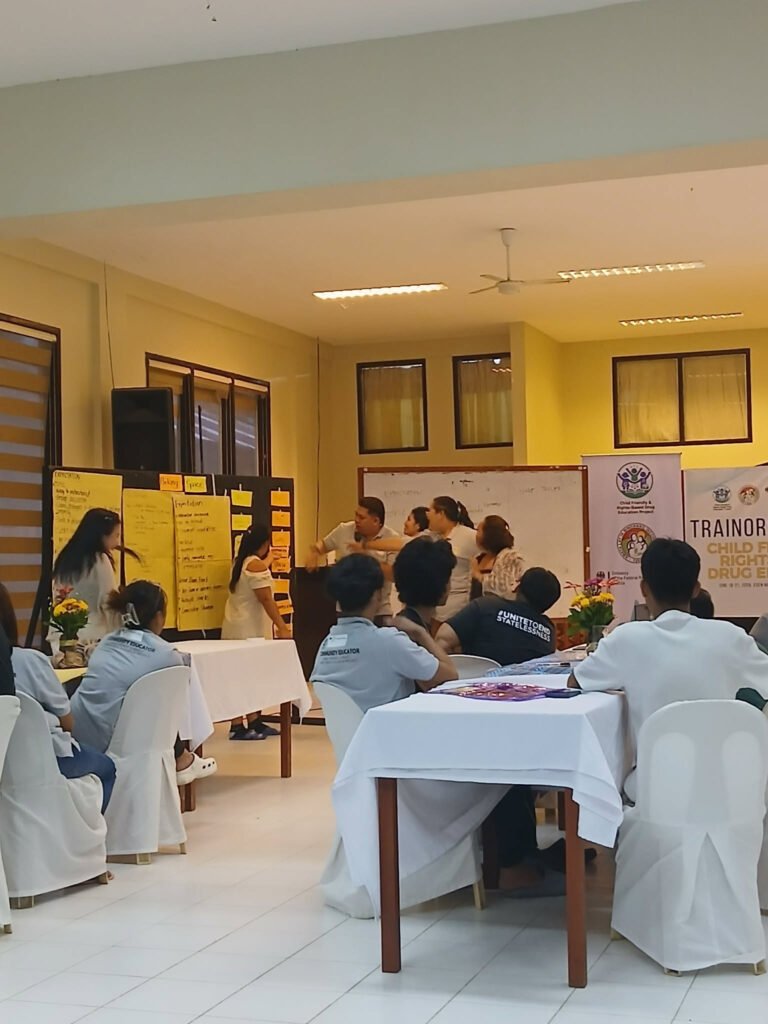
The urgency of this approach became visible during the program launch through an exhibit of artworks and case stories created by Children in Conflict with the Law and Children at Risk in Davao City.
Far from being simple artistic exercises, the works revealed stories of loss, trauma, resilience, and hope.
In a reflection on the exhibit, representatives from the Commission on Human Rights described the artworks as powerful testimonies of children’s lived realities.
“The artworks created by these children and youth are more than paintings—they are powerful expressions of courage, healing, and hope,” the Commission stated.
Through their art, children communicated experiences that statistics alone often fail to capture.
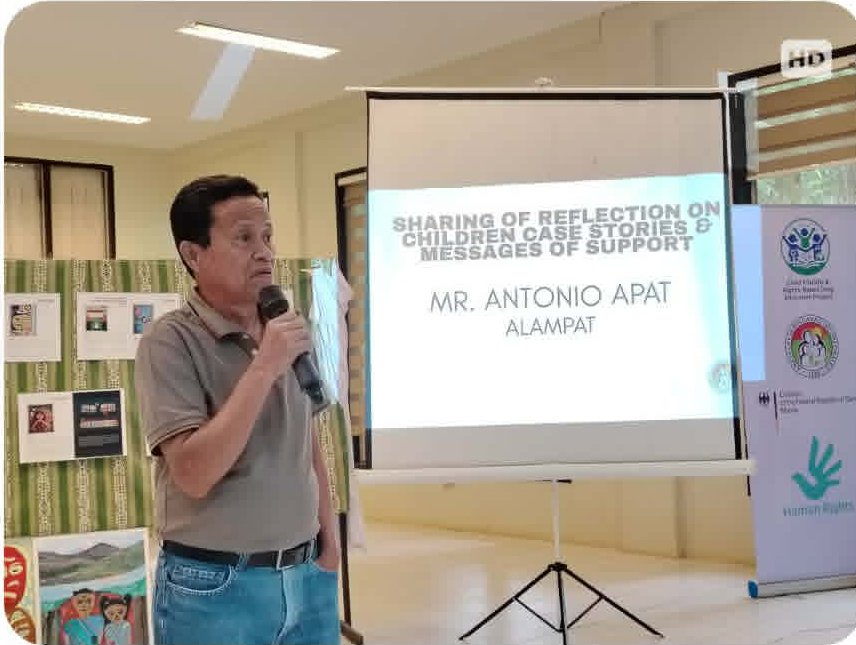
Artist-trainer Antonio Apat observed that art allows children to express truths that may be difficult to articulate through words.
Former health professional Ronald Rivera noted that the artworks expose the social determinants underlying children’s vulnerability.
“They show the adverse experiences children have lived through,” Rivera said. “Behind every number is a child, a family, and a story.”
For social workers and juvenile justice practitioners, these stories provide important insights for designing effective interventions and support systems.
From Control to Care
For organizers, the challenge facing communities is not simply how to stop illegal drug use but how to build environments where children are less vulnerable to it in the first place.
ALAY Mindanao, together with No Box Philippines, Kalitawhan Network, and ACCEPT Network, has developed child rights-based education modules that aim to strengthen prevention efforts through community education, training of trainers, and partnerships with government and non-government institutions.