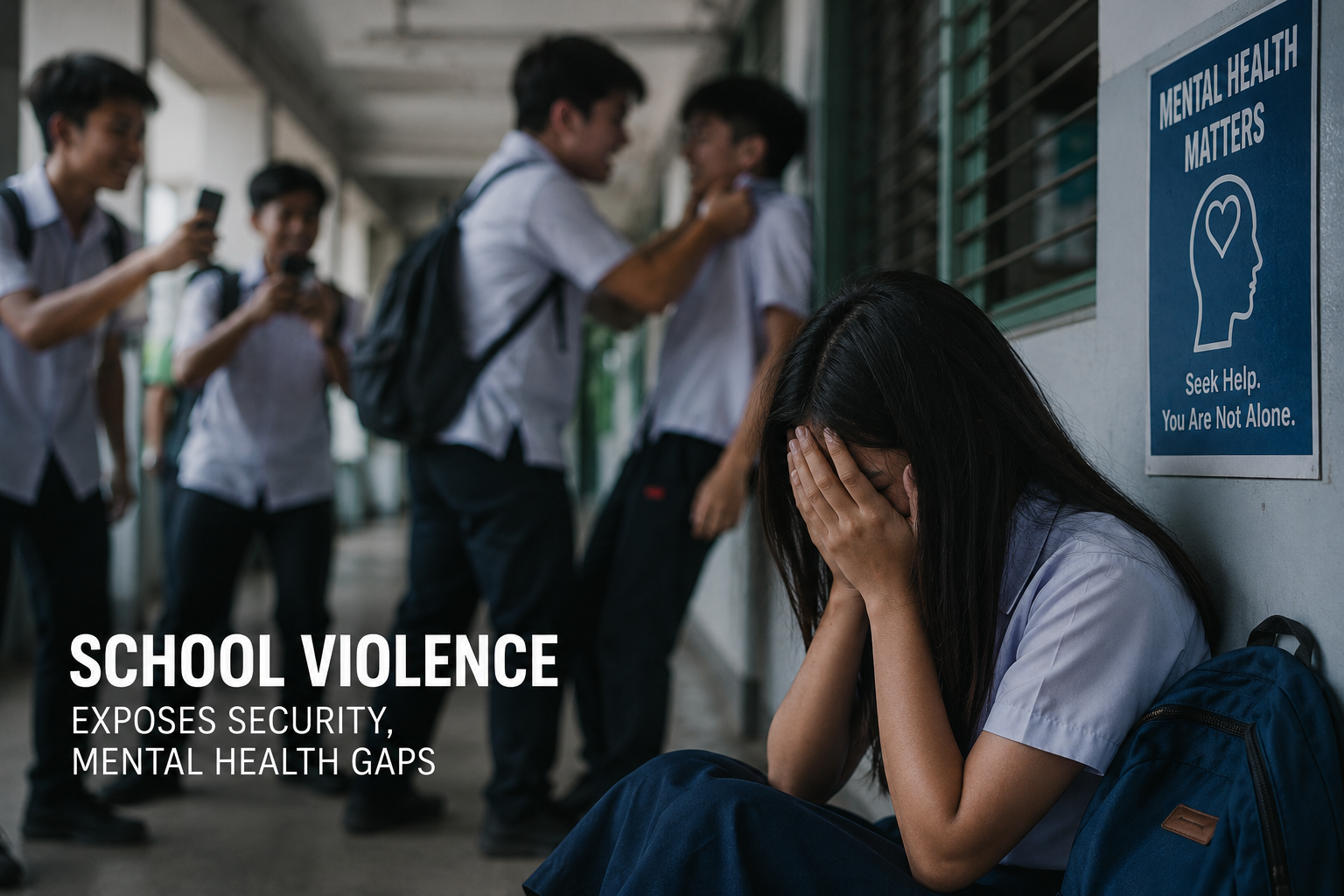
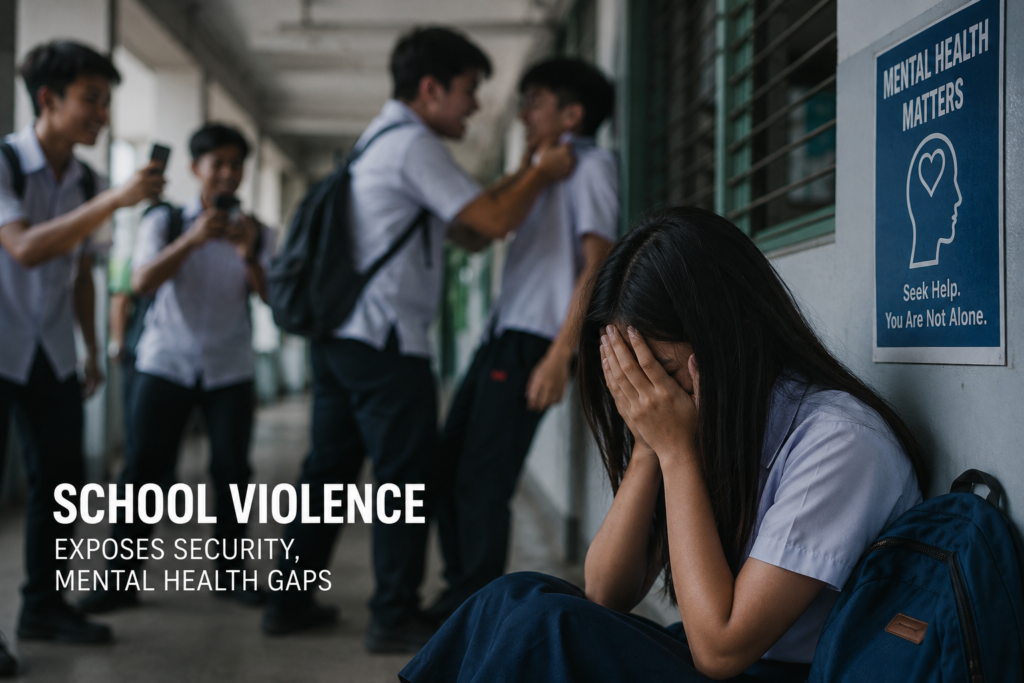
MANILA(August 3) — More guards, tighter gates and stricter school protocols may make campuses harder to breach. But teachers warn they will not solve a deeper problem: violence can come from within the school community itself.
The Teachers’ Dignity Coalition (TDC) is urging government to strengthen school security while expanding mental health services after a string of violent incidents involving learners and school personnel.
The warning has particular resonance in Mindanao.
In August 2025, a Grade 11 student at Balabagan Trade School in Lanao del Sur was accused of shooting and killing a teacher. Days later, a 9-year-old Grade 3 pupil at Maria Cristina Falls Elementary School in Iligan City was allegedly assaulted by five high school students and seriously injured.
The cases, along with other school-based violence nationwide, prompted President Ferdinand Marcos Jr. to order a government probe and a review of school safety measures.
But the incidents raise a bigger question: Can schools prevent violence if their response begins only after someone gets hurt?
The question gained urgency after a June 2026 shooting at a public high school in Tacloban City killed three students and wounded several others. More recently, a 13-year-old learner was fatally stabbed inside a school in Las Piñas City.
Face-to-face classes have resumed at San Jose National High School following a separate campus incident, while the Department of Education (DepEd) has tightened security, expanded psychosocial support and introduced flexible learning options for affected learners.
The TDC said DepEd already has child protection and school safety policies, but repeated incidents point to gaps in implementation, emergency preparedness and coordination with law enforcement.
“We mourn the tragic loss of lives and condemn all forms of violence inside and around schools,” the group said, citing bullying, stabbing attacks, shooting threats and bomb threats.
Security alone is not enough
For teachers, the answer cannot be simply more guards and stricter entry controls.
“Violence is often rooted in deeper social and mental health concerns that require early intervention and sustained support,” the TDC said.
That puts the spotlight on the country’s thin mental health support system in public schools.
President Marcos has announced plans to deploy 10,000 School Counselor Associates. But with more than 45,000 public schools, the proposed workforce would average only about one counselor associate for every 4.5 schools.
The TDC said the government must fully implement Republic Act No. 12080, or the Basic Education Mental Health and Well-Being Promotion Act, and expand the counselor program so every public school can access qualified guidance and mental health personnel.
The need goes beyond responding to trauma after an attack.
Counselors and other trained personnel can help identify learners at risk, address bullying and behavioral problems, intervene in conflicts and provide support before distress escalates into violence.
The TDC also cited the need for stronger child protection systems, credible reporting channels and better coordination among schools, parents, communities and law enforcement.
The prevention gap
The recent incidents expose a recurring weakness in the government’s approach to school safety: action often intensifies after tragedy, rather than before it.
Mindanao’s own cases show why prevention cannot depend solely on security at the school gate. A threat may come from someone already inside the campus, while the warning signs may involve bullying, conflict, behavioral problems or untreated emotional distress.
For communities, the issue is therefore not simply whether schools have guards or security protocols.
It is whether teachers have enough support, whether vulnerable learners can access help, whether threats are taken seriously and whether schools have the capacity to intervene before violence turns deadly.
Parents, communities, religious groups, media organizations and government agencies all have a role, the TDC said.
“Every learner deserves to study without fear, and every teacher deserves to work in a safe and secure environment.”
That should mean more than securing school gates.
It should mean building a school system capable of seeing danger early — and acting before the next tragedy.