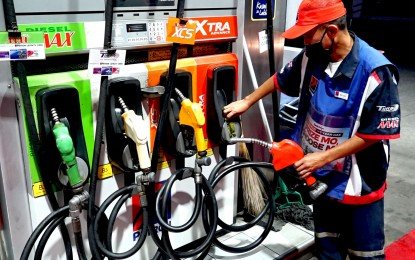
MANILA (August 3) — Motorists are getting a small break at the pumps this week—but the rollback is unlikely to erase the pain of weeks of sharp fuel price increases that have already pushed up transportation and delivery costs.
Energy Secretary Sharon S. Garin said Monday that oil companies are expected to cut pump prices by at least P0.73 per liter for gasoline, P0.60 for diesel and diesel plus, and P2.09 for kerosene.
The rollback follows last week’s much steeper increases, when gasoline prices jumped by P6.80 per liter, diesel by P7.32, and kerosene by P4.22 amid renewed geopolitical tensions in the Middle East that sent global oil prices higher.
In other words, motorists are getting some of the increase back—but only a fraction of it.
In Metro Manila, gasoline prices are expected to settle at around P68.97 to P99.17 per liter, depending on the grade. Diesel prices could range from P79.29 to P98.20 per liter, while Diesel Plus could sell for P90.70 to P103.90.
Kerosene, meanwhile, could remain particularly expensive at around P102.91 to P136.01 per liter.
A rollback that may not reach household budgets
For ordinary motorists, the difference may be noticeable only at the margin.
A P0.73-per-liter gasoline reduction means a driver filling a 40-liter tank would save about P29 compared with the previous price.
For diesel users, a P0.60 reduction would mean roughly P24 less for a 40-liter fill-up.
That is a modest reprieve after last week’s increase, which added around P272 to a 40-liter gasoline fill-up and about P293 to a 40-liter diesel fill-up.
The impact also goes beyond private vehicles.
Higher fuel prices raise operating costs for jeepneys, buses, trucks, delivery vehicles, fishing boats, agricultural machinery and other fuel-dependent businesses. Those costs can eventually work their way into fares and the prices of food and other basic goods.
So while motorists may welcome this week’s rollback, the broader pressure on household budgets remains.
Global shocks, local consequences
The latest price movements again demonstrate how quickly international events can reach Filipino consumers.
Renewed tensions in the Middle East have unsettled global oil markets, exposing the Philippines’ vulnerability as a major fuel importer.
For households already dealing with high transportation and food expenses, even temporary oil shocks can have a cascading effect.
The concern is particularly significant for communities outside major urban centers, where transportation costs can already be higher and where fuel is essential to moving farm products, fishing catch and other goods to markets.
The rollback therefore offers relief—but not necessarily recovery.
The bigger question for consumers is whether global oil prices will continue to stabilize or whether another geopolitical shock could quickly erase the savings.
For now, motorists get a few centavos of breathing room.
But after last week’s P6.80 gasoline and P7.32 diesel increases, this is hardly a return to cheap fuel. It is, at best, a small step back from a much bigger price shock.