CAGAYAN DE ORO CITY (August 11) — For fishing communities in Lanao del Sur, the promise of new equipment, training and aquaculture projects is more than a development story—it is a question of whether outside assistance can translate into stable income, food security and livelihoods that last.
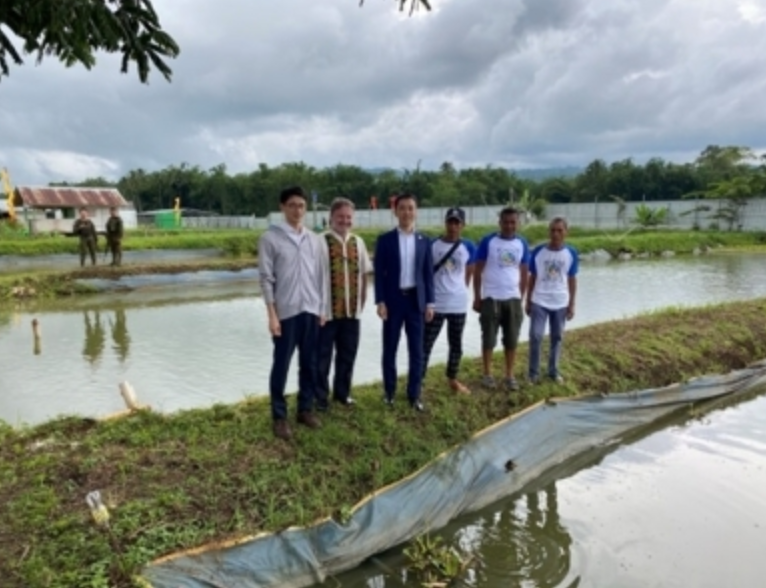
That question was at the center of Japanese Minister for Economic Affairs Naobumi Yokota’s visit to the province on July 7, where he inspected Japan-supported fisheries and livelihood initiatives targeting both fishing communities and persons deprived of liberty.
At the Marawi City Jail, Yokota joined the groundbreaking ceremony for an aquaculture pond that will train persons deprived of liberty in fish farming and provide them with skills they can use after their release.
The project carries a broader social promise: rehabilitation should not end at the jail gate. Without employable skills and livelihood opportunities, former persons deprived of liberty can face the same economic pressures that make reintegration difficult.
Yokota said development should be inclusive and benefit all sectors of society.
But for the project to make a real difference, training must lead to actual opportunities. Access to markets, capital, technical support and continued mentoring will be just as important as learning how to raise fish.
Fishing communities face bigger challenges
In Poona Bayabao, Yokota met with a local fishing association receiving assistance under a Japan-backed fisheries project.
The initiative provides training in feed mill operations, feed formulation and entrepreneurship while supporting the establishment of a pilot-scale Halal-certified aquaculture feed mill, complete with a building and equipment.
For small-scale fishers, such an intervention could help reduce dependence on expensive commercial inputs and create new income opportunities beyond simply catching fish.
But equipment alone does not guarantee a thriving enterprise.
The community will still have to contend with production costs, access to markets, technical maintenance, business management and the sustainability of fish stocks.
The success of the project, therefore, will ultimately be measured not by the number of machines delivered or trainings conducted, but by whether fishing families earn more and whether the local fisheries sector becomes more resilient.
From catch to value chain
Fisheries remain a major source of livelihood for thousands of small-scale fishers and coastal communities across the Bangsamoro Autonomous Region in Muslim Mindanao (BARMM).
Yet communities face persistent problems, including post-harvest losses, limited processing capacity and declining fish production.
These problems can erase much of a fisher’s earnings even after a successful catch.
Japan and the United Nations Food and Agriculture Organization (FAO) are addressing these concerns through the Project for the Development of Sustainable Fishery Value Chain in BARMM, which runs from 2025 to 2027.
The project covers Maguindanao del Norte, Maguindanao del Sur, Lanao del Sur, Basilan and Tawi-Tawi, with interventions focused on sustainable production, capacity building and livelihood support.
The emphasis on the entire value chain is significant.
Helping fishers produce more is only one part of the solution. Communities also need better ways to process, store, transport and sell their products so that more value stays with local producers.
The bigger test: sustainability
Yokota urged beneficiaries in Poona Bayabao to make effective and sustainable use of the assistance.
That sustainability will be the real test.
Development projects in vulnerable communities can provide a critical starting point, but their impact can fade if equipment breaks down, trained workers leave, markets fail to materialize or local organizations cannot maintain operations after external support ends.
The same applies to the aquaculture project at the Marawi City Jail. Skills training can help prepare persons deprived of liberty for life after incarceration, but meaningful reintegration also requires access to jobs, capital, markets and communities willing to give them a second chance.
Japan’s assistance gives Lanao del Sur communities tools and opportunities.
The harder task is ensuring those tools remain useful long after the foreign officials leave.
For fishing families, the measure of success is simple: more stable incomes, less wasted catch, stronger local enterprises and livelihoods that can survive without permanent dependence on aid.
That is where the promise of development will ultimately be tested—in the daily lives of the communities it is supposed to serve.