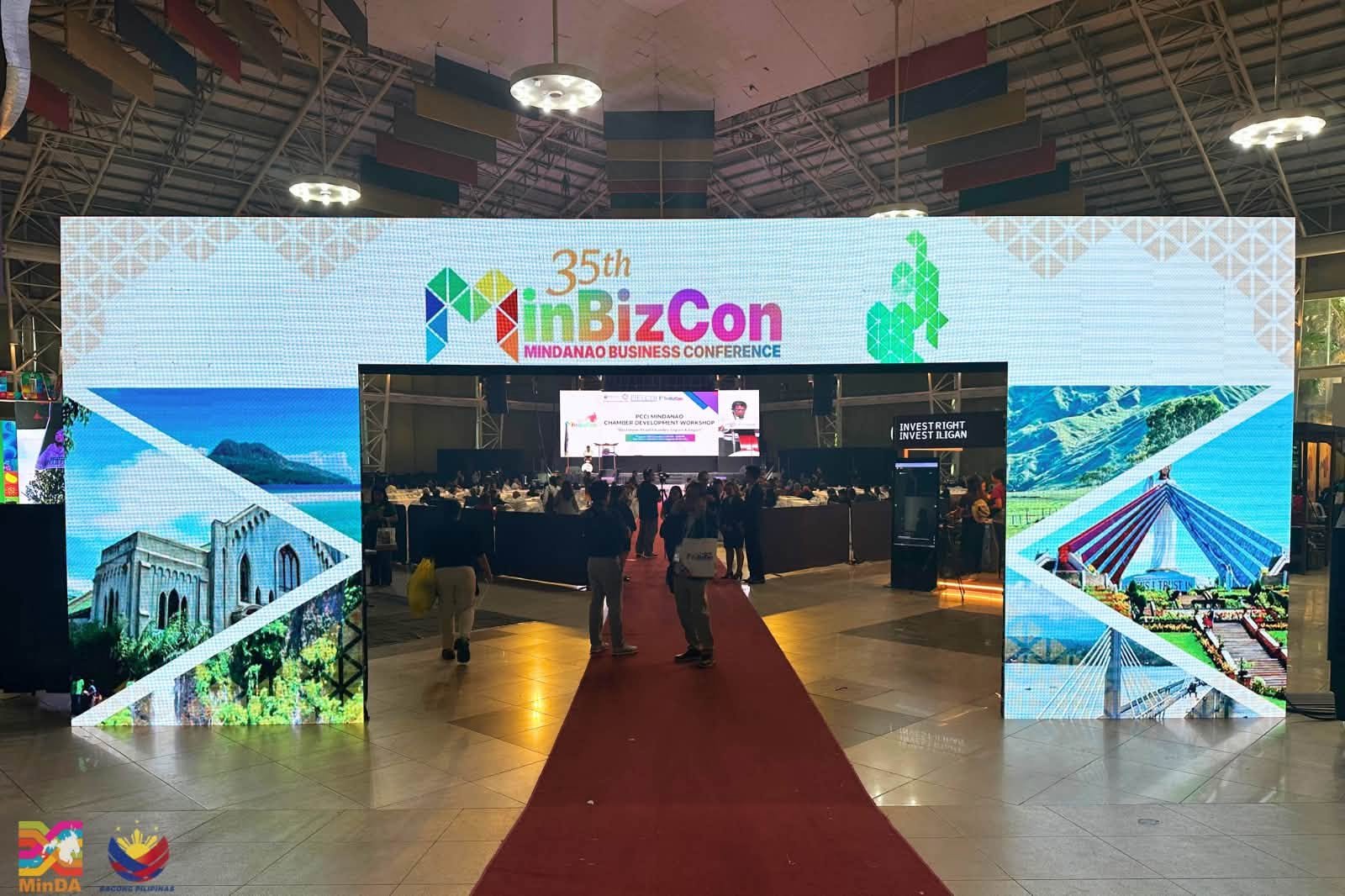
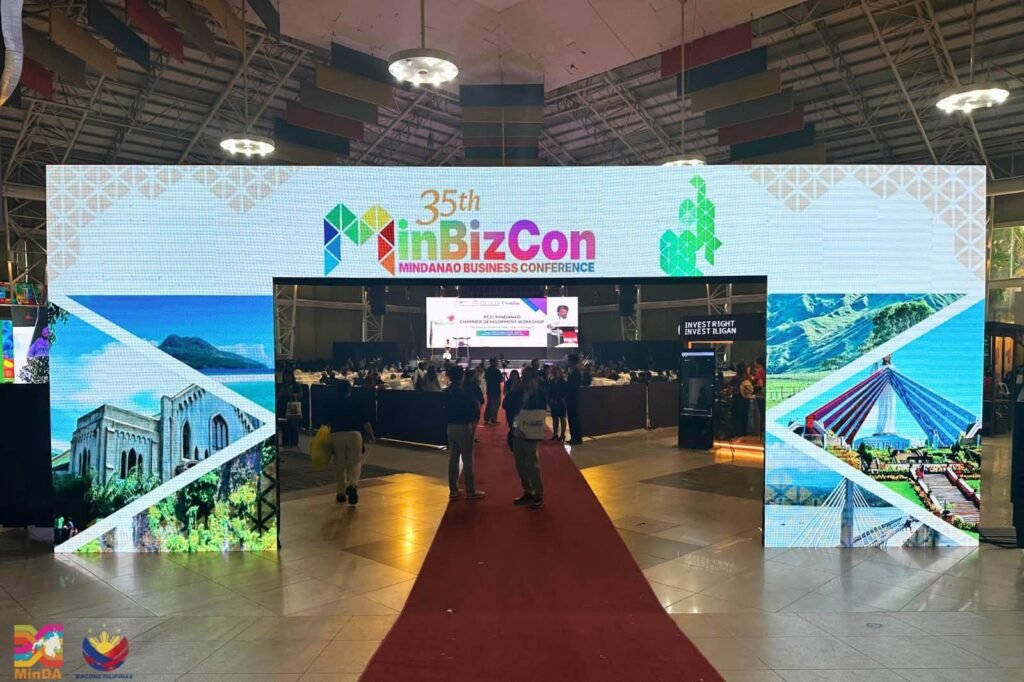
CAGAYAN DE ORO CITY (August 12) — Mindanao is rolling out the red carpet for investors, but business leaders are also confronting a harder question: Will the island become genuinely easier—and cheaper—to do business in?
The 35th Mindanao Business Conference opened in Cagayan de Oro on Tuesday with a familiar pitch. Cities and provinces showcased local products, investment opportunities and incentives, hoping to convince businesses from within and outside Mindanao to put their money on the island.
The three-day conference, hosted by the Cagayan de Oro Chamber of Commerce and Industry Foundation Inc. with the Philippine Chamber of Commerce and Industry and the city government, is expected to draw 800 to 1,200 delegates, including international business representatives.
But attracting investors is only the beginning.
A digital fix for an old problem
Cagayan de Oro is launching an Investment Action Center, a digital one-stop platform intended to streamline the processing of investment projects.
Developed with the Department of Trade and Industry 10, the system will give prospective investors access to official data for real-time assessment of investment opportunities.
The promise is familiar: faster transactions, less red tape and better information.
But technology alone cannot guarantee that investments will move faster.
For investors, the real test will be what happens after the dashboard is opened—whether permits are actually processed promptly, agencies coordinate efficiently and local governments can deliver the infrastructure and services businesses need.
Mindanao has more than an investment-pitch problem
The conference’s exhibits highlight the island’s entrepreneurial potential, particularly its micro, small and medium enterprises.
MSMEs account for 97 percent of businesses in the country, making them the backbone of local economies.
But small businesses cannot simply be told to innovate and scale if the basic cost of operating remains high.
Financing institutions at the conference are offering loans ranging from PHP300,000 to PHP3 million, giving qualified businesses another avenue for expansion.
Yet access to credit is only useful if businesses can generate enough income to repay it.
That is where one of Mindanao’s biggest competitiveness problems comes in: the cost of electricity.
Business leaders say electricity accounts for about 30 percent of manufacturing costs—a burden that can discourage new investments and squeeze existing enterprises.
Railway remains on the wish list
The business sector is also pushing once again for the Mindanao Railway System, placing it among the priorities in a unified policy agenda to be presented to President Ferdinand Marcos Jr. at the Philippine Business Conference in October.
The railway has long been promoted as a potential game-changer for moving people and goods across the island.
But its continued appearance on business wish lists also highlights the gap between Mindanao’s economic ambitions and the infrastructure needed to support them.
Investors do not operate on promises alone. They look at transportation costs, power reliability, market access, logistics, permits, financing and the predictability of government policies.
Beyond ribbon-cutting
Malaybalay City is among the local governments using the conference to showcase its tourism products and investment opportunities.
Tourism Office representative Jienjien Tanquion said the city is ready for major investors and can offer incentives.
That kind of local competition can be healthy.
But Mindanao’s challenge is bigger than convincing one company to choose one city over another.
The island needs investments that create decent jobs, strengthen local suppliers, expand markets for farmers and producers, and keep more economic value within communities.
Otherwise, investment figures may rise while many small businesses and workers remain on the margins.
The theme of this year’s conference speaks of inclusive growth, innovation and sustainability.
The harder task is turning those words into measurable results.
For Mindanao, the question is no longer simply “Are we open for business?”
It is whether the island can build an economy where businesses can afford to stay, workers can afford to live, small enterprises can afford to grow, and communities actually share in the gains.