MANILA (August 15) — The Philippine government is preparing to surrender Pastor Apollo Quiboloy to the United States if Washington’s extradition request survives judicial scrutiny—but it is also drawing a line around one fundamental issue: the accused must not face capital punishment if convicted.
The Department of Justice (DOJ) assurance comes as it reviews the extradition papers recently submitted by US authorities seeking the Kingdom of Jesus Christ (KOJC) founder over allegations of conspiracy to engage in sex trafficking, sex trafficking of children and bulk cash smuggling.
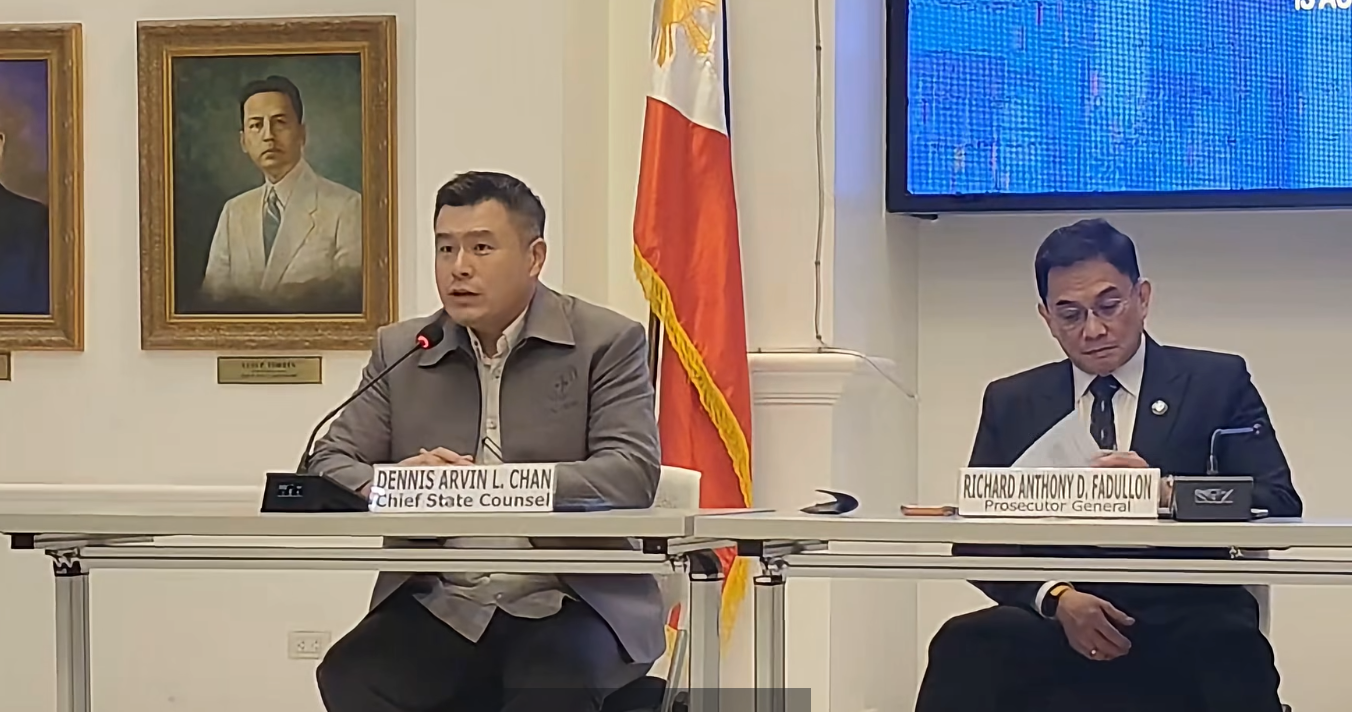
Chief State Counsel Dennis Arvin Chan said the DOJ would ensure that Quiboloy would not be subjected to capital punishment if convicted in the United States.
The assurance, however, does not mean Quiboloy will automatically be sent to the US.
It also does not settle the more complicated question confronting the Philippine government: how to honor an international treaty while ensuring that extradition remains a judicial process governed by law and due process.
A treaty obligation, not an automatic surrender
The DOJ has expressed confidence that it can obtain a favorable ruling on its extradition petition if the US request complies with the requirements of the Philippine-US Extradition Treaty.
But the department itself acknowledges that the treaty does not automatically require Quiboloy’s surrender.
Under Article 7, the requesting country must provide specific documents and information, including proof of the identity of the person sought, the facts and circumstances surrounding the alleged offenses, the relevant laws defining the offenses and their penalties, and information concerning prescription.
The DOJ is now reviewing those documents before filing its petition.
Chan said that if the treaty requirements and other legal elements are established, the department sees no reason why extradition should not be granted.
But that determination belongs ultimately to the courts.
“The court where the petition will be filed will have to determine whether the petition we submitted and the supporting documents are compliant with the extradition treaty,” Chan said.
That distinction is crucial.
The DOJ can advocate extradition. It cannot decide it.
The case is bigger than Quiboloy
The extradition proceedings are unfolding against a complicated domestic legal backdrop.
Quiboloy is also facing nonbailable qualified human trafficking charges before the Pasig City Regional Trial Court.
He faces separate child abuse and sexual abuse cases originally filed before the Davao City Regional Trial Court and now being heard by a court in Quezon City.
Quiboloy has consistently denied the allegations and has described the cases as politically and religiously motivated.
The parallel proceedings underscore why the extradition issue cannot simply be framed as a choice between protecting a high-profile religious leader and satisfying a foreign government.
There are competing legal processes already underway.
The Philippine government must deal with the United States as a treaty partner while allowing Philippine courts to independently determine the outcome of cases within their jurisdiction.
Why the death penalty assurance matters
The DOJ’s promise that Quiboloy will not face capital punishment is another important element of the extradition process.
The Philippines abolished the death penalty in 2006. The United States, meanwhile, retains capital punishment under federal law and in several states.
Although the US charges against Quiboloy do not automatically mean that he would receive a death sentence, the DOJ’s assurance is intended to remove that possibility as a consequence of extradition.
But the government’s commitment raises a practical legal question:
How will the Philippines ensure that its assurance is enforceable after Quiboloy is handed over to US authorities?
A statement from the DOJ is politically significant, but an extradition safeguard must ultimately have a firm legal basis.
That is particularly important because extradition places a person beyond the immediate jurisdiction of the country surrendering him.
The Philippine government therefore has an interest not only in determining whether the treaty requirements have been met, but also in ensuring that any conditions attached to the surrender are sufficiently clear and binding.
A credibility test for Manila
The DOJ sees the case as a test of the Philippines’ credibility as a treaty partner.
Chan warned that failure to comply with the Philippine-US Extradition Treaty could damage the country’s standing with Washington.
“The extradition treaty is a formal agreement between the Philippines and the United States,” Chan said.
“It will not look good on us if we do not follow the terms and provisions of the extradition treaty,” he added.
That argument, however, should not be interpreted as meaning that extradition is inevitable.
Treaties impose obligations, but they also establish procedures.
If the US request does not satisfy the treaty’s requirements, the Philippine courts have the authority to reject or require appropriate action on the request.
Conversely, if the requirements are met, the Philippines would face a serious credibility problem if it attempted to disregard its treaty commitments without a valid legal basis.
The real test, therefore, is whether Manila can do both: honor its international commitments and respect the independence of its courts.
Extradition could take time
Even a favorable trial court ruling would not necessarily end the matter.
Chan disputed the notion that a trial court decision would immediately become final and executory.
“Hindi siya final. It can still be appealed,” he said, stressing that an extradition ruling may go through the regular appeal process.
This could prolong the proceedings and delay any eventual transfer to US custody.
It also means that the DOJ’s confidence in securing extradition should not be mistaken for an actual court order.
At this stage, Quiboloy remains entitled to challenge the extradition request through the remedies available under Philippine law.
The broader accountability question
The case also carries implications beyond the legal mechanics of extradition.
Quiboloy is a powerful religious figure who has built a large following and significant institutional influence. The allegations against him, which he denies, are serious and involve alleged exploitation and abuse.
The Philippine government’s handling of his extradition will therefore be closely watched not only by Washington but also by victims and complainants, supporters of Quiboloy, human-rights advocates and the wider public.
For those who accuse him of wrongdoing, extradition could be viewed as a path toward accountability in a US court.
For his supporters, the proceedings will be another test of allegations they say are politically motivated.
The proper answer to both positions is the same:
Let the evidence be tested in court.
Extradition is not a declaration of guilt, just as resisting extradition is not proof of innocence.
The real test is the rule of law
The Philippine government now faces a narrow path.
It must demonstrate that it is serious about honoring the Philippine-US Extradition Treaty without reducing the treaty to an automatic surrender mechanism.
It must ensure that Quiboloy’s rights are protected without allowing those rights to become a shield against legitimate prosecution.
And if extradition is eventually granted, it must make good on its assurance that capital punishment will not be imposed.
The DOJ may prepare the petition and argue the government’s case.
But ultimately, the treaty does not decide Quiboloy’s fate—the courts do.
That may be the most important test of all: whether the Philippines can demonstrate that even in a politically charged and highly publicized case, international obligations, individual rights and accountability can coexist under the rule of law.