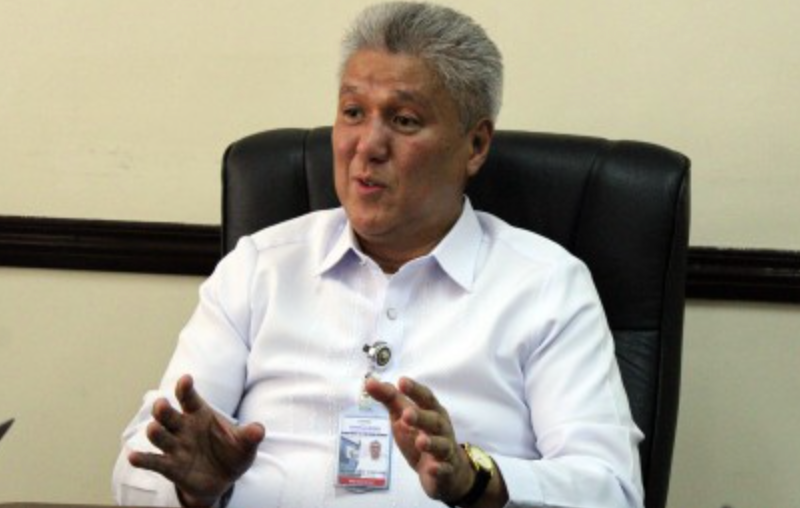
MANILA (August 17) — A dispute over the arrest of 69 Chinese nationals at a steel plant in Misamis Oriental has escalated into a sharper diplomatic confrontation, with the Department of National Defense (DND) accusing the Chinese Embassy in Manila of evading questions about its alleged intervention in a Philippine law enforcement operation.
The DND’s response came after the Chinese Embassy accused Defense Secretary Gilberto Teodoro Jr. of deliberately staging “anti-China activities” and attempting to damage relations between Manila and Beijing.
DND spokesperson Arsenio Andolong dismissed the embassy’s statement as evasive and deceptive, saying it failed to directly answer Teodoro’s allegation that Chinese diplomatic officials had attempted to cover up the activities of Chinese nationals arrested during the May raid on the Sanjia Steel Plant.
Instead, Andolong said, the embassy relied on questions and rhetoric—what he described as an “implied admission of culpability.”
The exchange underscores how a domestic law enforcement case has become entangled with the increasingly contentious relationship between the Philippines and China.
Raid raises serious questions
The 69 Chinese nationals were arrested during a joint operation involving the Armed Forces of the Philippines, the Presidential Anti-Organized Crime Commission and the National Bureau of Investigation.
Teodoro has alleged that the Chinese-run facility was involved in serious violations, including the production of substandard and allegedly radioactively contaminated steel, improper wastewater disposal and the release of toxic fumes.
Authorities reportedly discovered uranium and thorium in imported scrap materials, alongside alleged immigration, labor and environmental violations.
The government subsequently shut down the facility.
These allegations, if established through investigation and due process, go beyond an ordinary immigration or labor violation. They raise questions about environmental safety, public health, industrial regulation and the enforcement of Philippine law against foreign-operated businesses.
But the Chinese Embassy has challenged the government’s account.
Embassy spokesperson Ji Lingpeng accused Philippine authorities of discriminating against Chinese workers and deliberately portraying them as criminals. The embassy also questioned why Teodoro personally participated in the joint operation.
Ji alleged that three Chinese workers were made to wear protective equipment and pose for photographs, which he described as an attempt to create damaging publicity.
The embassy maintained that its intervention was part of its responsibility to protect the rights and interests of Chinese nationals.
From steel plant to diplomatic pressure
The dispute became more serious when Teodoro accused Beijing of retaliatory pressure following the arrest of the Chinese nationals.
He cited the arrest of more than 100 alleged undocumented Filipinos in China this month, describing the development as resembling “extortion and blackmail.”
Beijing rejected the characterization and said its embassy was simply carrying out its duty to protect Chinese citizens.
The conflicting claims have yet to establish whether the incidents are directly connected.
That distinction matters.
The Philippine government has an obligation to enforce its laws regardless of the nationality of those involved. At the same time, allegations involving foreign nationals, diplomatic intervention and possible retaliation require evidence and transparent investigation rather than assumptions.
A wider China-Philippines fault line
The confrontation is also unfolding against the backdrop of the much broader strategic dispute between Manila and Beijing.
Teodoro has been one of the administration’s most outspoken critics of Chinese activities in the West Philippine Sea. China has, in turn, sanctioned him and barred him and his family from entering mainland China, Hong Kong and Macao.
Beijing continues to reject the 2016 arbitral ruling that invalidated the legal basis of China’s sweeping claims in the South China Sea, calling the decision illegitimate and non-binding.
Against that backdrop, even a law enforcement operation involving Chinese nationals can quickly acquire diplomatic significance.
But the Misamis Oriental case should not be allowed to disappear beneath the larger geopolitical argument.
At its core are questions that affect ordinary Filipinos: Were Philippine environmental and labor laws violated? Was radioactive material actually present? Were workers and communities exposed to dangerous substances? Did any foreign official improperly interfere with Philippine law enforcement? And were the rights of all those arrested respected?
Those questions require evidence—not diplomatic rhetoric.
The government must establish its allegations through transparent investigation and due process. The Chinese Embassy, meanwhile, can defend its nationals without turning legitimate law enforcement questions into a contest of political accusations.
For communities near industrial facilities, the most important issue is not which government wins the diplomatic argument.
It is whether Philippine laws are being enforced, whether workers are protected, and whether the public can trust that potentially dangerous industrial activities will not be shielded by political or diplomatic influence.