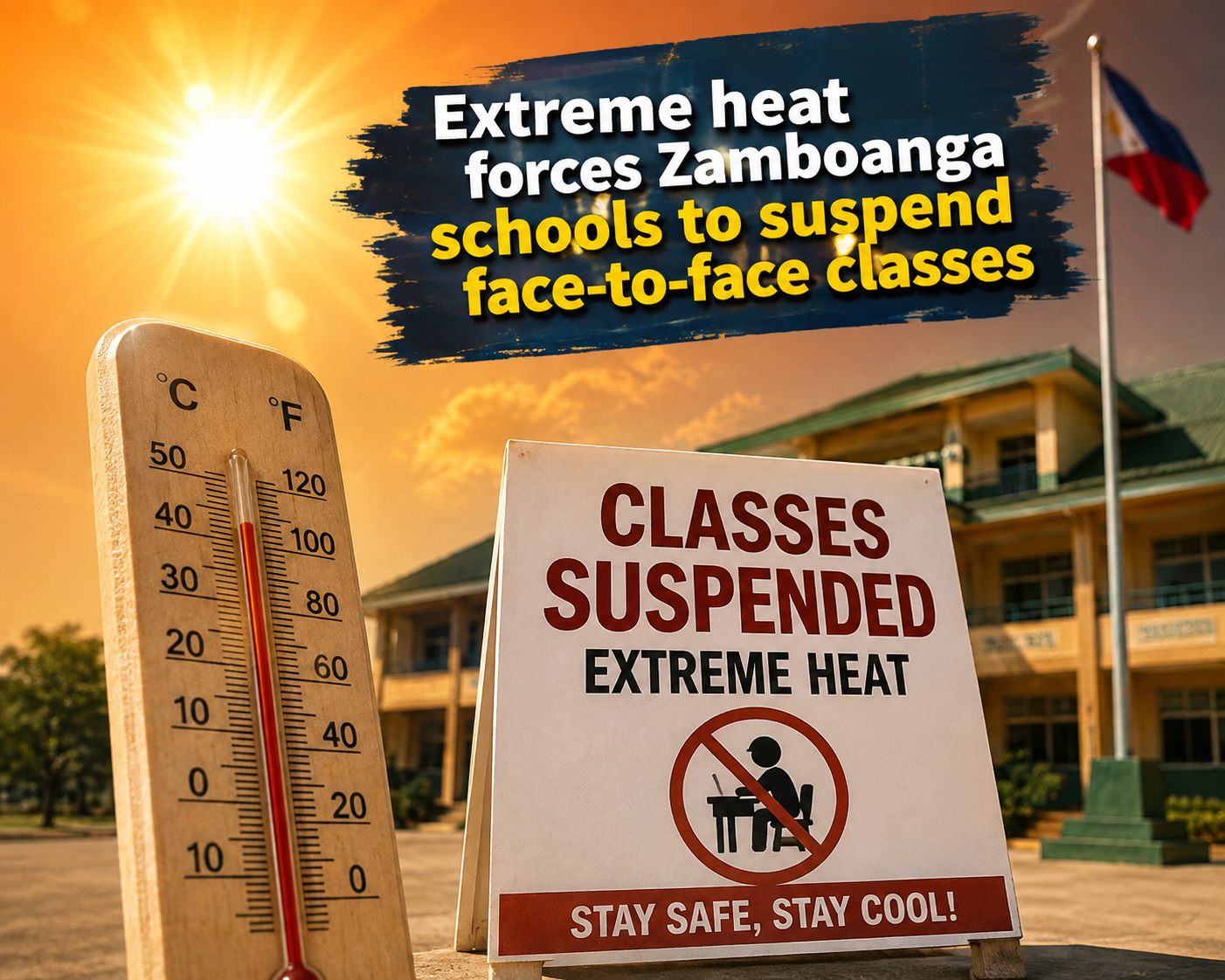
ZAMBOANGA CITY(August 17) — While heavy rains and storms are forcing schools in parts of Luzon to suspend classes, extreme heat is keeping students in Zamboanga City out of classrooms.
The city government has suspended face-to-face (F2F) classes at all levels in both public and private schools on Monday after the Philippine Atmospheric, Geophysical and Astronomical Services Administration (PAGASA) forecast a 41-degree Celsius heat index in the city.
Mayor Khymer Olaso ordered the suspension as a precaution against heat-related illnesses, including heat cramps, heat exhaustion and potentially life-threatening heat stroke.
The suspension underscores a growing challenge for schools and communities: dangerous weather is no longer limited to typhoons, flooding and heavy rainfall. Extreme heat itself can disrupt education and put children at risk.
Olaso said government and private offices, as well as business establishments, would continue operating despite the suspension of F2F classes.
For families, however, the suspension does not necessarily mean children are protected from the heat. Many learners still live in homes with limited ventilation or no cooling equipment, while others may need to travel or stay outdoors for errands and other activities.
PAGASA and local authorities have advised residents to drink plenty of water, reduce outdoor exposure particularly from 10 a.m. to 4 p.m., wear light-colored clothing and use appropriate sun protection.
These precautions become especially important for children, who may not immediately recognize or communicate symptoms of heat stress.
The 41°C heat index is also a reminder that temperature readings alone do not tell the whole story. The heat index reflects how hot conditions may feel to the human body when temperature and humidity are considered, making prolonged exposure particularly risky.
For schools, this raises a broader question: Are classrooms and school facilities adequately prepared for increasingly hot conditions?
Suspending F2F classes may provide immediate protection, but it is only a short-term response. Schools and local governments also need to consider longer-term measures such as improved classroom ventilation, access to drinking water, shaded areas, heat monitoring and clear protocols for protecting learners during extreme heat.
The situation in Zamboanga also highlights the uneven ways weather disruptions affect communities. In one part of the country, classes may stop because of torrential rains; in another, they may stop because the heat itself has become unsafe.
For parents and learners, the issue is more than whether classes are suspended for a day. It is whether communities are prepared for a climate in which extreme weather increasingly determines when children can safely go to school.