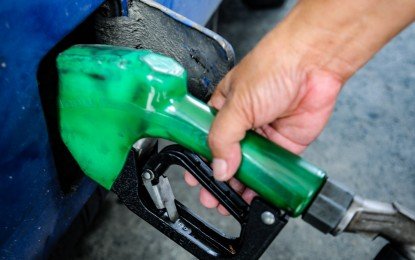
Diesel may drop by as much as P4 per liter, but motorists remain exposed to volatile global oil market
MANILA(August 29) — Motorists may get some relief at the pump next week, with diesel prices expected to fall by as much as P4 per liter and gasoline by up to P0.75 per liter, following a reversal in global oil market prices amid developments in the Middle East.
Local oil industry sources on Friday estimated a P3.50 to P4.00 per liter rollback for diesel and P0.25 to P0.75 per liter for gasoline.
The estimates are based on four days of trading of the Mean of Platts Singapore (MOPS), the benchmark used by oil companies in pricing refined petroleum products in the Philippines and other Southeast Asian markets.
The projected rollback, however, comes after a significant increase this week.
Data from the Department of Energy (DOE) showed that pump prices rose by P2.31 per liter for diesel and P1.08 per liter for gasoline this week.
If the projected rollback materializes, diesel prices would give back much of this week’s increase, while gasoline prices would see only a partial reversal.
For consumers, the swings underscore how quickly developments in the international oil market can translate into changes in household and transport expenses.
Diesel prices are particularly significant for public utility and commercial transport, delivery services, agriculture and other businesses that rely heavily on diesel-powered vehicles and equipment. Higher fuel costs can eventually feed into transport fares and the prices of basic goods.
The projected decline is linked to recent movements in the global oil market following developments in the Middle East, although the final adjustment will depend on the remaining MOPS trading days and other pricing factors considered by oil companies.
Oil companies typically announce their weekly price adjustments on Monday, with the changes taking effect the following day.
For motorists already hit by this week’s increases, the expected rollback offers some relief—but only if the international market continues to move in the same direction.
The volatility also highlights the continuing vulnerability of Filipino consumers to oil-price movements beyond their control, with every sharp increase quickly felt in transportation, food and other household expenses.