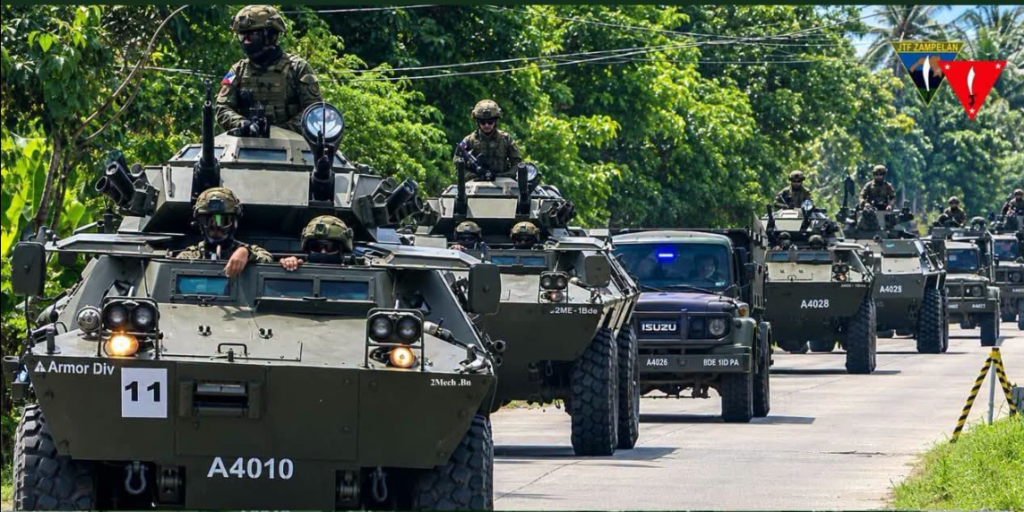
DAVAO CITY (September 10) — Thousands of soldiers and police have been deployed across the Bangsamoro to secure the region’s first parliamentary elections. For the government, it is a shield against violence. For some voters, the overwhelming presence of armed forces reminds them how fragile peace remains.
The Bangsamoro is preparing for a historic vote, but it is doing so under the watch of thousands of armed government forces.
For a region emerging from decades of armed conflict, the first parliamentary elections are supposed to symbolize a new chapter: politics replacing guns, ballots replacing bullets, and democratic institutions taking root where violence once dominated.
Yet as Sept. 14 approaches, the landscape tells a more complicated story.
The Philippine National Police and the Armed Forces of the Philippines are sending thousands of personnel, backed by military vehicles, armored assets, artillery systems, and helicopters, to secure the elections.
Government officials describe the buildup as preventive and protective, a necessary shield to keep armed groups from disrupting the vote and to ensure that people can cast their ballots without fear or intimidation.
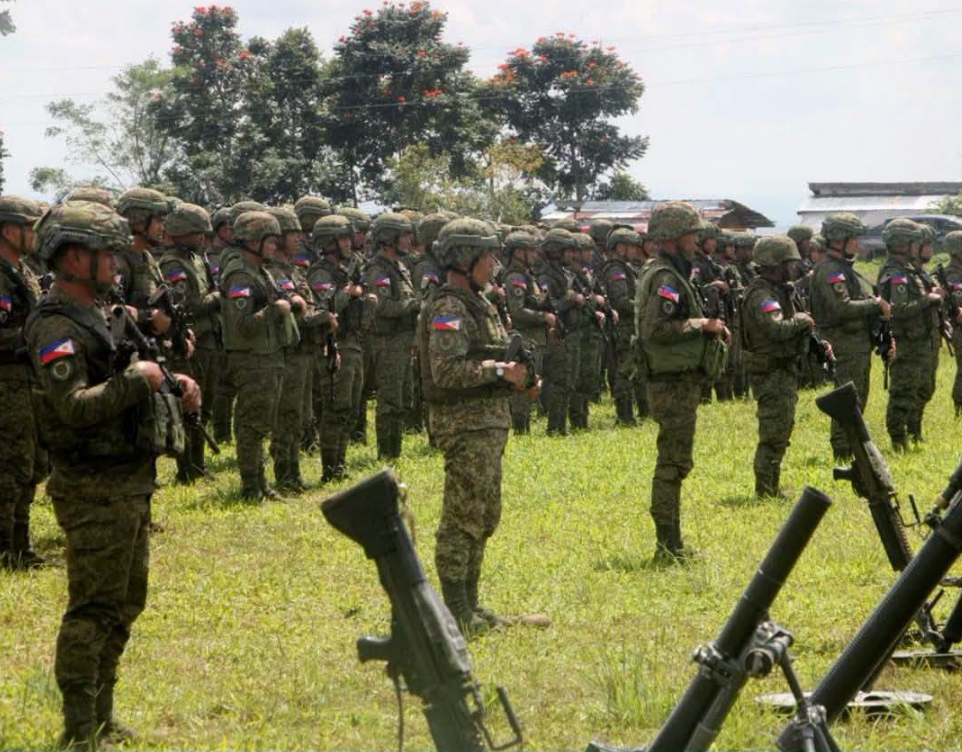
But on the ground, the sight of heavily armed soldiers and police can evoke a different emotion.
For ordinary voters, particularly communities that have lived through years of conflict, the question is not simply whether the government can secure an election.
Why does a historic vote for peace require such a massive security operation?
And how much does it cost the government—and ultimately the Filipino taxpayer—to secure a single day of voting?
Deploying thousands of personnel, along with their transportation, food, accommodations, communications, vehicles, weapons systems, and air assets, represents a substantial mobilization of state resources.
But the deeper cost may be harder to measure.
The first parliamentary elections are being held to demonstrate that the Bangsamoro can govern itself through democratic institutions. Yet the extraordinary security presence surrounding the polls also exposes the difficult reality of the transition: peace may have been negotiated, but it has not yet become completely ordinary.
The election, therefore, is more than a contest for parliamentary seats.
It tests whether the Bangsamoro can move from a culture of armed security to a culture of political security—where voters no longer need to see a heavily armed state before they feel safe enough to exercise their most basic democratic right.-Editha Z Caduaya