
Lorenzo Magno Wants Davao Students to Have Quality Education—Without the Price Tag

The young Lorenzo Rafael Magno once played for Davao Region in the Davao Regional Athletic Association.-Facebook photo
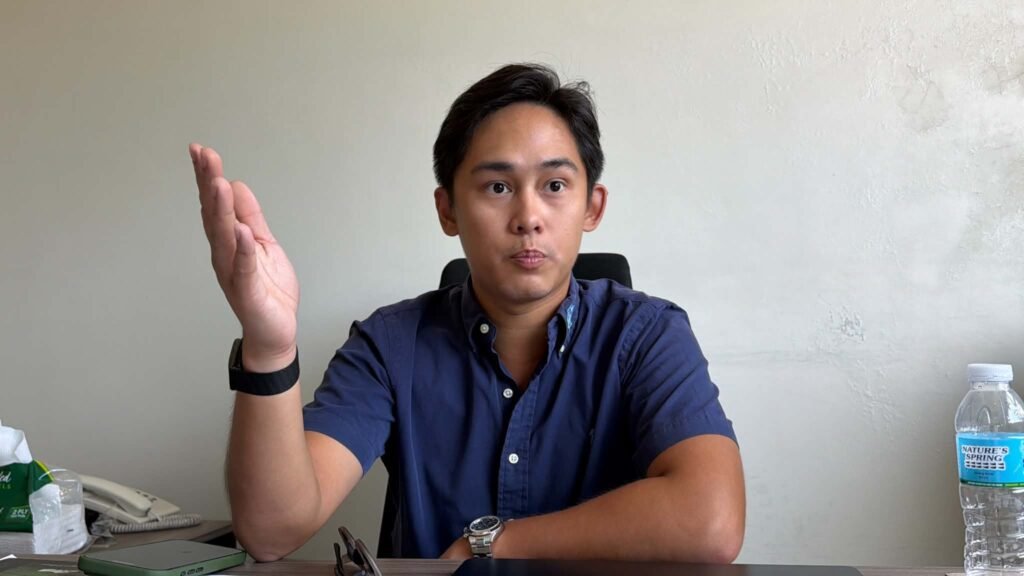
Lorenzo Rafael L. Magno speaks of his vision for RMC.-Newsline Photo

DAVAO CITY (September 21) —At 28, Lorenzo Raphael L. Magno is already carrying a responsibility that comes with both a family name and a family institution. But when he talks about the future of Rizal Memorial Colleges, he does not begin with prestige or the size of the campus. He talks about students, opportunity, and the kind of education that can change the direction of a young person’s life.

For Magno, the challenge is not simply to make Rizal Memorial Colleges bigger. It is to make it better while ensuring that quality education remains within the reach of ordinary families. At the heart of his vision is a belief that education should be measured not by how expensive it is, but by the quality of learning, the opportunities it creates, and the lives it helps transform.

His own entry into the institution came at an unusual time. Magno had just graduated from Ateneo de Manila University when the COVID-19 pandemic disrupted schools and communities everywhere. Fresh from college and preparing for his first job, his grandmother, RMC Board Chairperson Evelyn Magno, asked him to help the family-run institution navigate the sudden changes brought by the pandemic. He initially hesitated, but the school’s needs grew more urgent as curricula shifted and institutions were forced to adapt to a new environment.

“I just graduated from Ateneo de Manila, and then the pandemic hit. Everyone was locked down, and schools needed to adjust. That was the time my grandmother asked me to pitch in. At first I was hesitant because it would be my first job. But I needed to come in because school curricula had changed,” Magno recalled.

What began as an unexpected entry into the family institution would eventually become a career and a larger personal mission. Today, Magno serves as Vice President for Administration and Finance of Rizal Memorial Colleges, Inc. and is a member of the school’s Board of Directors. His responsibilities now extend beyond finance to administration, institutional development, accreditation, partnerships, and the college’s long-term direction.

For Magno, those responsibilities ultimately come down to one thing: giving students better opportunities. “I want to provide better opportunities for the people of Davao, sa totoo lang—the students,” he said.

He says one of the most fulfilling parts of his work is seeing students graduate every year and knowing that the institution has played a part in shaping their future. “It is a very fulfilling job na nakikita mo every year meron kang graduates, masaya, and you give impact to their lives,” he said. He wants the education they receive to go beyond classroom instruction and examinations. He wants RMC to equip them with the knowledge and skills they can carry into the wider world. “Sana malayo ang maabot ng ating mga estudyante,” he added.

That philosophy is important in a city where families make difficult choices to keep their children in school. For Magno, quality education should not become inaccessible simply because a family cannot afford the highest tuition fees. The value of a school, in his view, should ultimately be seen in what its students learn, what they become and the opportunities that open for them after graduation.

His vision for RMC is therefore both ambitious and deeply student-centered. Asked where he sees the institution a decade from now, Magno did not hesitate. He hopes RMC will attain university status, a goal he says the institution is already pursuing in phases.

He also recognizes that becoming a university is not simply a name change. It requires higher standards, stronger systems, improved facilities and continued professional development. Magno said he is himself considering pursuing another degree because he wants to strengthen his qualifications as the institution moves toward that goal.

For him, RMC’s transformation is not limited to academic programs. It also includes the physical and social environment in which students learn. Having experienced university life at Ateneo de Manila, he knows the difference between simply attending classes and feeling like you belong to a larger academic community. He wants students at RMC to experience that same sense of community on campus.

“Iba yung feeling ng university, not just school. After classes you stay there, tambay and you make friends,” he recalled. That memory has become part of his vision for RMC. He wants to create what he describes as an “ecosystem within the ecosystem” of the college, including dormitories and spaces where students can learn, interact, and build relationships beyond the classroom.

The young Lorenzo Rafael Magno once played for Davao Region in the Davao Regional Athletic Association.-Facebook photo

One of the most visible expressions of that ambition is the new College of Law building. What was once only a blueprint is now becoming a reality, Magno said. The project carries particular significance for him because the building is named after his great-grandfather, Justice Leopoldo M. Abellera, linking his family’s history to the future of an institution that continues to evolve.

But while infrastructure may symbolize growth, Magno appears to measure success by what those investments mean for students. A new building is valuable because it creates more room for learning. A stronger academic program matters because it prepares students for employment. International exposure matters because it broadens their understanding of the world. And quality assurance matters because students deserve an education that meets recognized standards.

His work at RMC increasingly reflects that broader approach. Earlier in his career at the institution, Magno was identified as Vice President for Finance. Over time, his responsibilities expanded, and by 2025 and 2026 he was serving as Vice President for Administration and Finance. His current portfolio includes initiatives connected to graduate employability, accreditation, infrastructure, and internationalization.

In February 2026, RMC entered into a partnership intended to strengthen graduate employability and alumni tracer studies, allowing the institution to better understand what happens to students after they leave the campus. The effort reflects a more practical measure of educational success: not simply how many students graduate, but whether those graduates find opportunities to use what they learned.

RMC has likewise continued its accreditation preparations, with Magno taking part in institutional activities designed to strengthen quality assurance, accountability, and academic standards. In this setting, the pursuit of quality is not separate from affordability. Rather, it is part of Magno’s larger challenge: to strengthen the institution without making access to education more difficult for families.

That challenge is not easy. RMC serves nearly 10,000 students from elementary through postgraduate education, and Magno openly acknowledges the pressure that comes with helping manage an institution of that scale. Yet he says he has the support of an active board and the guidance of his grandmother and his father, Secretary Leo Tereso Magno of the Mindanao Development Authority. Even so, he wants to develop his own leadership style and make decisions based on his own judgment.

Perhaps the clearest window into the person behind the administrator is found in his life as a father. Magno says becoming a parent has given him a deeper appreciation of the sacrifices his own parents made for him. Among his friends, he said, he was the first to have a son, and fatherhood made him appreciate more profoundly what parents give to their children while helping shape the people they become.

That understanding seems to shape how he speaks about students. For him, they are not simply names on an enrollment list. They are sons and daughters whose families are investing hope, sacrifice, and resources in their education. Every graduation therefore represents more than an institutional milestone. It is also the fulfillment of a family’s dream.

And that is where Magno’s vision for RMC becomes most compelling. He does not talk about education as a luxury. He talks about it as an opportunity that should be within reach. He wants RMC to improve its facilities, pursue university status, strengthen its academic standards, and expose students to broader opportunities, but he also wants the institution to remain a place where ordinary families can see a future for their children.

For Magno, the question is not whether RMC can become more expensive. The question is whether it can become better without losing its accessibility.

Because quality education, in his vision, should not be reserved for those who can pay the most.

It should be available to the student whose parents work hard to keep a child in school. It should be available to the young person who enters the campus unsure of what the future holds. It should provide knowledge, skills and confidence that can carry that student beyond Davao and into whatever profession or calling awaits.

“That’s one of the things that I love most—the legacy for the young Mindanaoans and Davaoenos in particular,” Magno said.

For a young executive who entered the family institution almost by accident during a global crisis, that has become something larger than a job. “Working to provide them a better tomorrow is more than work for me,” he said.

The school was registered with the Securities and Exchange Commission on April 5, 1948, and since then it has become an institution for academic excellence and affordable education.

For the young Rizal Memorial Colleges executive, the goal is not simply to make the school bigger, but to make quality education accessible to more Davaoeños.

He is now trying to build a legacy not through an institution defined by how expensive it is, but by how many young people it can help move forward.

And perhaps that is the future Lorenzo Magno sees for Rizal Memorial Colleges: a stronger institution, a wider community, and a university that proves that quality and affordability do not have to be opposites.-Editha Z. Caduaya