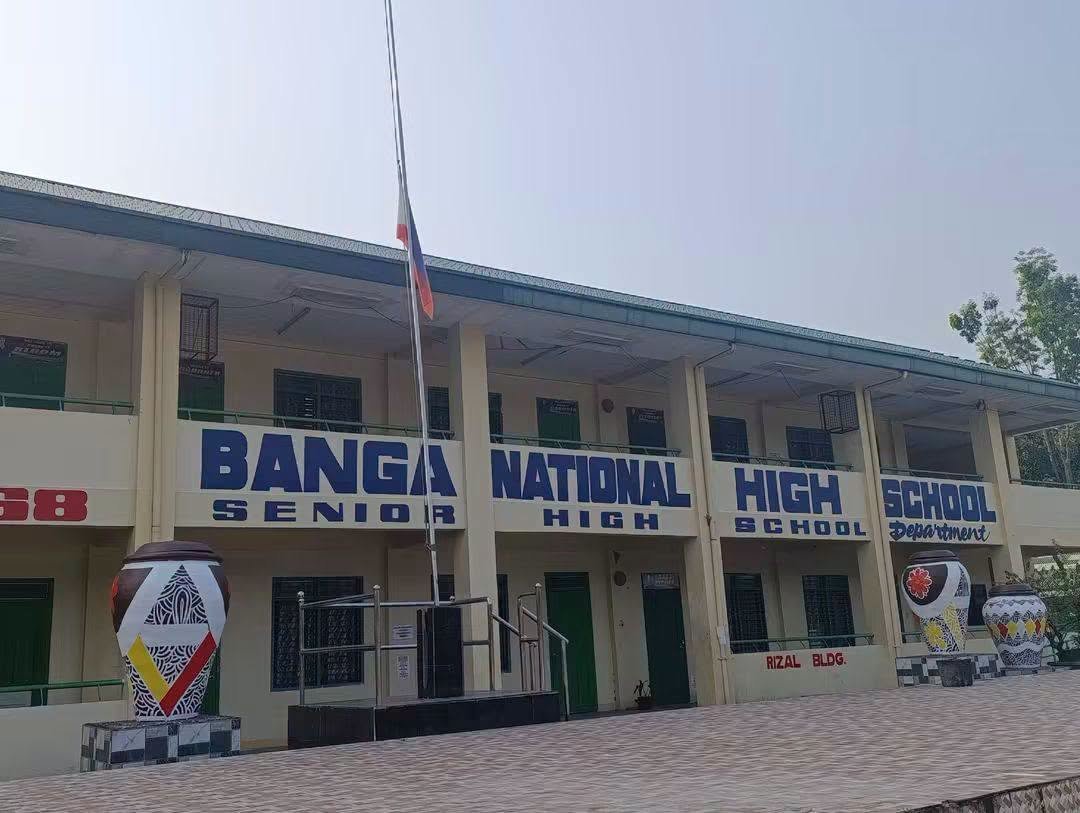
MANILA (September 24) — AUTHORITIES are pursuing a person suspected of influencing the minor involved in the deadly Banga National High School shooting, as investigators examine the possible role of online communities in the September 18 attack.
Department of the Interior and Local Government (DILG) Secretary Jonvic Remulla said Wednesday that the suspected recruiter is in the Philippines and that authorities have identified his location.
Remulla said the person allegedly preyed on the student’s insecurities and encouraged violence by making the minor believe that such an act would bring recognition.
“They prey upon their insecurities, telling them that they will be glorified if they do something like this,” Remulla said.
WHAT AUTHORITIES HAVE CONFIRMED
Remulla earlier said investigators had linked the junior high school student’s actions to exposure to the deep web, where, he said, violent acts were being glorified.
Authorities have also been examining an online community reportedly joined by the student. South Cotabato Gov. Reynaldo Tamayo Jr. had earlier asked the Department of Information and Communications Technology (DICT) and the Philippine National Police Anti-Cybercrime Group to investigate whether the online community had any connection to the shooting. At that stage, authorities said no such connection had yet been established.
Remulla said authorities are taking online threats involving school violence seriously following shooting incidents in Tacloban, Zamboanga and South Cotabato.
He also said four students had previously been apprehended over Facebook posts related to threats.
The government is considering broader measures to limit minors’ access to social media and websites, with Remulla citing Australia’s approach as a possible model.
WHAT STILL HAS TO BE ESTABLISHED
The investigation into the alleged online influence remains ongoing.
Authorities still have to establish the nature of the relationship between the suspected recruiter and the student, the extent of the alleged influence, and whether online activity directly contributed to the decision to carry out the shooting.
That distinction matters because an online association or exposure to violent material, by itself, does not establish that it caused the attack. South Cotabato officials have specifically urged the public not to draw conclusions until investigators establish the facts.
THE CHILD-PROTECTION QUESTION
Analysis: The investigation nevertheless raises a broader child-protection concern: whether existing systems can identify minors who are being drawn into online spaces that promote violence before threats become real-world harm.
That concern extends beyond monitoring what children post publicly. It involves the ability of parents, schools, law-enforcement agencies and digital platforms to recognize credible warning signs and respond without prematurely criminalizing children who may themselves be vulnerable to manipulation.
The government has already begun looking at both online and school-security measures. The Philippine National Police said this week that the National Telecommunications Commission had blocked two websites found to promote real-world violence and groom minors, while authorities continue identifying other potentially harmful sites.
For parents and schools, the Banga case therefore raises questions that the investigation must answer with evidence: Who was influencing the child? What warnings were visible beforehand? What interventions were available? And where did the protection system fail to detect the risk?
Those questions should remain separate from conclusions about the student’s motives or the alleged recruiter’s liability until investigators establish the facts.
Remulla, meanwhile, urged parents to monitor their children and watch for signs that they may be getting involved in online communities that promote violence.