MANILA (September 24) — THE first Bangsamoro parliamentary elections have delivered a new political mandate; now the Government of the Philippines, the Moro Islamic Liberation Front and the incoming Bangsamoro leadership face the harder test of honoring that mandate by completing the peace transition and delivering normalization in communities battered by decades of conflict.
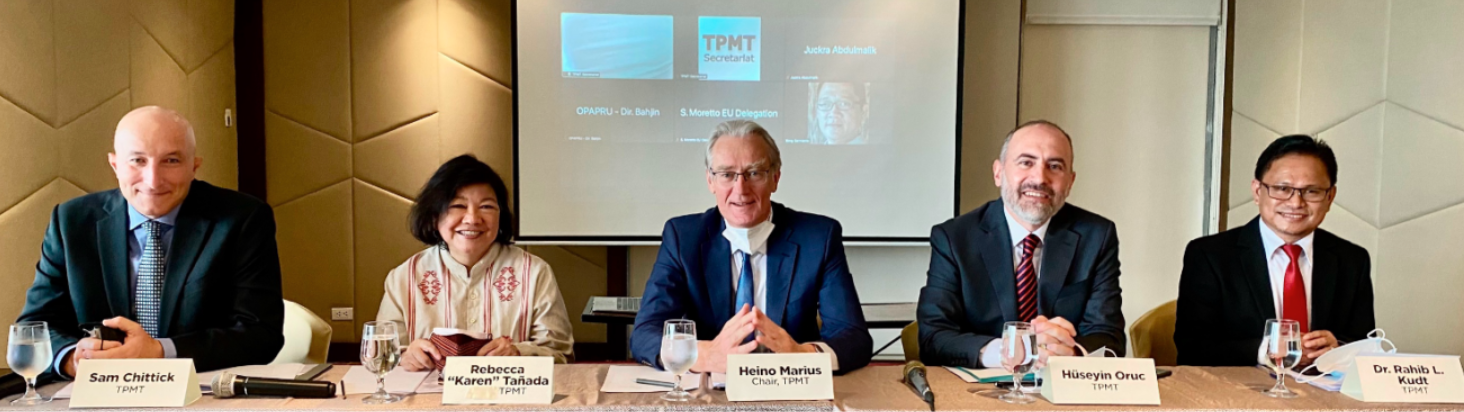
The Third Party Monitoring Team (TPMT) on Wednesday called on political stakeholders in the Bangsamoro Autonomous Region in Muslim Mindanao (BARMM) to respect the results of the September 14 elections and ensure a peaceful and inclusive political transition.
More than two million voters participated in the historic polls, electing the region’s first regular parliament after decades of armed conflict and 17 years of negotiations between the Government of the Philippines (GPH) and the Moro Islamic Liberation Front (MILF).
“The people’s votes counted,” the TPMT said, describing the high voter turnout as evidence of the importance Bangsamoro communities placed on the elections.
The monitoring body called the elections a “historic achievement” and a direct result of the Comprehensive Agreement on the Bangsamoro (CAB), which was negotiated by the GPH and MILF over 17 years.
But with the votes counted, the TPMT said attention must now shift to the formation of the new Bangsamoro government and the completion of the political transition.
It urged all political stakeholders to respect the election results and work toward a peaceful and inclusive transition.
THE WORK BEYOND THE BALLOT
The TPMT also raised concern over crimes committed and other reported incidents of violence leading up to and during election day.
For the monitoring team, the violence underscores that the peace process still has unfinished work even as the Bangsamoro moves toward regular democratic government.
“With the impending establishment of the regular Bangsamoro government, the political track of the CAB is about to reach its conclusion,” the TPMT said.
But it identified the gradual normalization of previously conflict-affected areas and their transformation into peaceful and progressive communities as the major remaining task.
The TPMT stressed that normalization is not an afterthought to the political settlement but an equally important part of the CAB.
This includes continuing the process of helping conflict-affected communities and former combatants move toward more stable civilian lives and communities after decades of armed conflict.
The monitoring team said the remaining obligations require sustained and effective cooperation between the MILF and the national government, regardless of the composition of the future Bangsamoro government.
The two parties remain primarily responsible for ensuring the effective implementation of the CAB, it said.
FROM POLITICAL SETTLEMENT TO COMMUNITY RECOVERY
The September 14 elections marked a major shift in the Bangsamoro peace process—from armed struggle and transitional governance toward an elected regional government.
But for communities that have borne the human and social costs of conflict, the significance of the election will ultimately be measured beyond the formation of a new parliament.
The remaining challenge is whether the political settlement can translate into sustained normalization, safer communities and meaningful recovery in areas that have endured decades of conflict.
The TPMT, established in 2013 to monitor implementation of the peace accords between the GPH and MILF, said the next phase will require both sides to continue delivering on their commitments under the CAB.