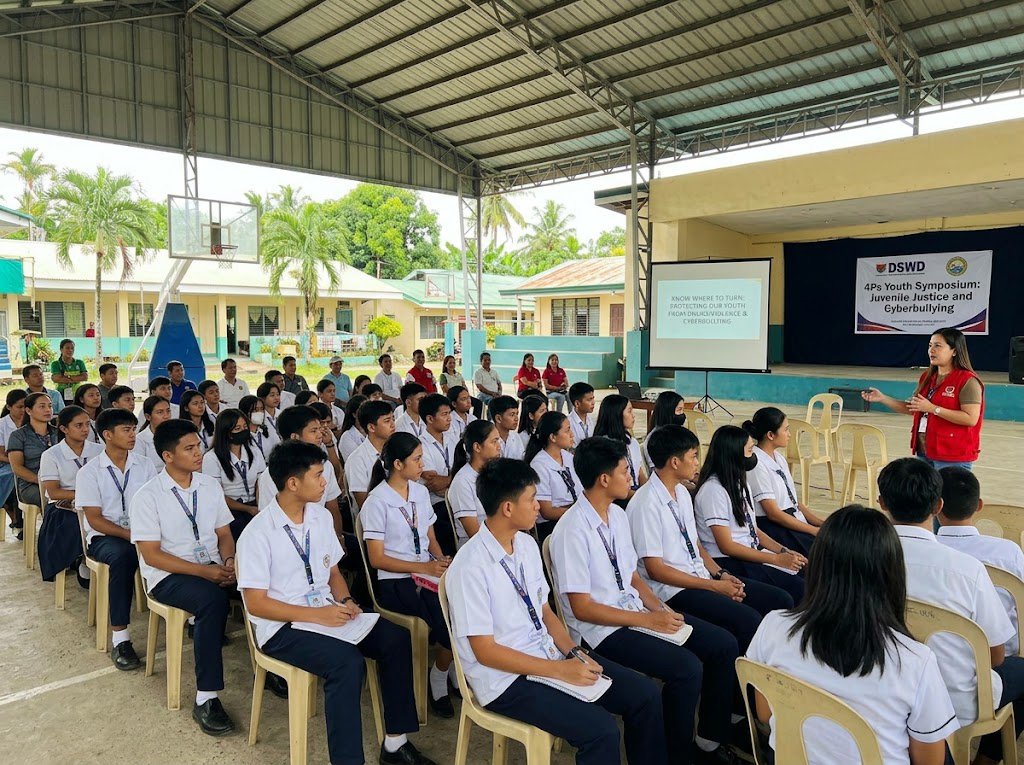
ZAMBOANGA CITY (September 27) — For 50 young people in Zamboanga City, a recent 4Ps youth session went beyond lessons on government programs and household support.
It put a harder question on the table: What should children do when violence, abuse or bullying reaches them—and where can they turn for help?
The young 4Ps beneficiaries joined a symposium on juvenile justice, cyberbullying and child protection on September 24 during a Youth Development Session for beneficiaries from Talon-Talon National High School and nearby communities.
The activity brought together police, social welfare workers, the school and the barangay to discuss risks facing children and the legal protections available to them.
Police Chief Master Sergeant Maricel Abduhalim of the Women and Children Protection Desk of Zamboanga City Police Station 12 served as resource speaker.
Using real-life scenarios, Abduhalim discussed laws protecting children and helped participants identify situations involving violence, abuse and online harassment.
The discussions also tackled a common misconception about children who get involved in offenses.
Abduhalim explained that children who commit serious offenses are still covered by applicable juvenile justice laws and may face legal consequences, depending on the offense and the circumstances surrounding it.
The message, however, was not simply about punishment.
For children facing abuse or harassment, knowing how to recognize danger, report it and access protection can be just as important.
When bullying follows children home
Cyberbullying presents a particular challenge because the harassment does not necessarily end when a child leaves school.
Messages, posts, images and online threats can follow young people into their homes and social circles, potentially exposing them to continuing intimidation or abuse.
That makes the availability of trusted adults and functioning child-protection mechanisms critical.
The 4Ps program coordinated with the City Social Welfare and Development Office (CSWDO) to discuss laws protecting women and children and the government mechanisms available to young people who need assistance.
For communities, those mechanisms matter only if children know where to report, whom to approach and what happens after a report is made.
Protection cannot stop at awareness
The symposium was supported by the Talon-Talon barangay council, headed by Village Chairperson Casmir Candido, and Talon-Talon National High School, led by Principal Garry Sta. Ana.
The DSWD-Zamboanga Peninsula described the discussions as timely amid concerns over violence and other risks affecting young people, including those arising online.
But awareness is only one layer of protection.
Children also need adults and institutions that can respond when they speak up—from schools and barangays to social workers, police and other child-protection agencies.
The 4Ps Regional Program Management Office said it will continue youth and family development interventions aimed at strengthening awareness, responsible behavior and community-based protection among beneficiaries.
The larger test for such programs is whether those lessons translate into action when a child actually faces abuse, threats or cyberbullying.
For young people, knowing the law is important. Knowing that someone will listen—and act—can be just as important.