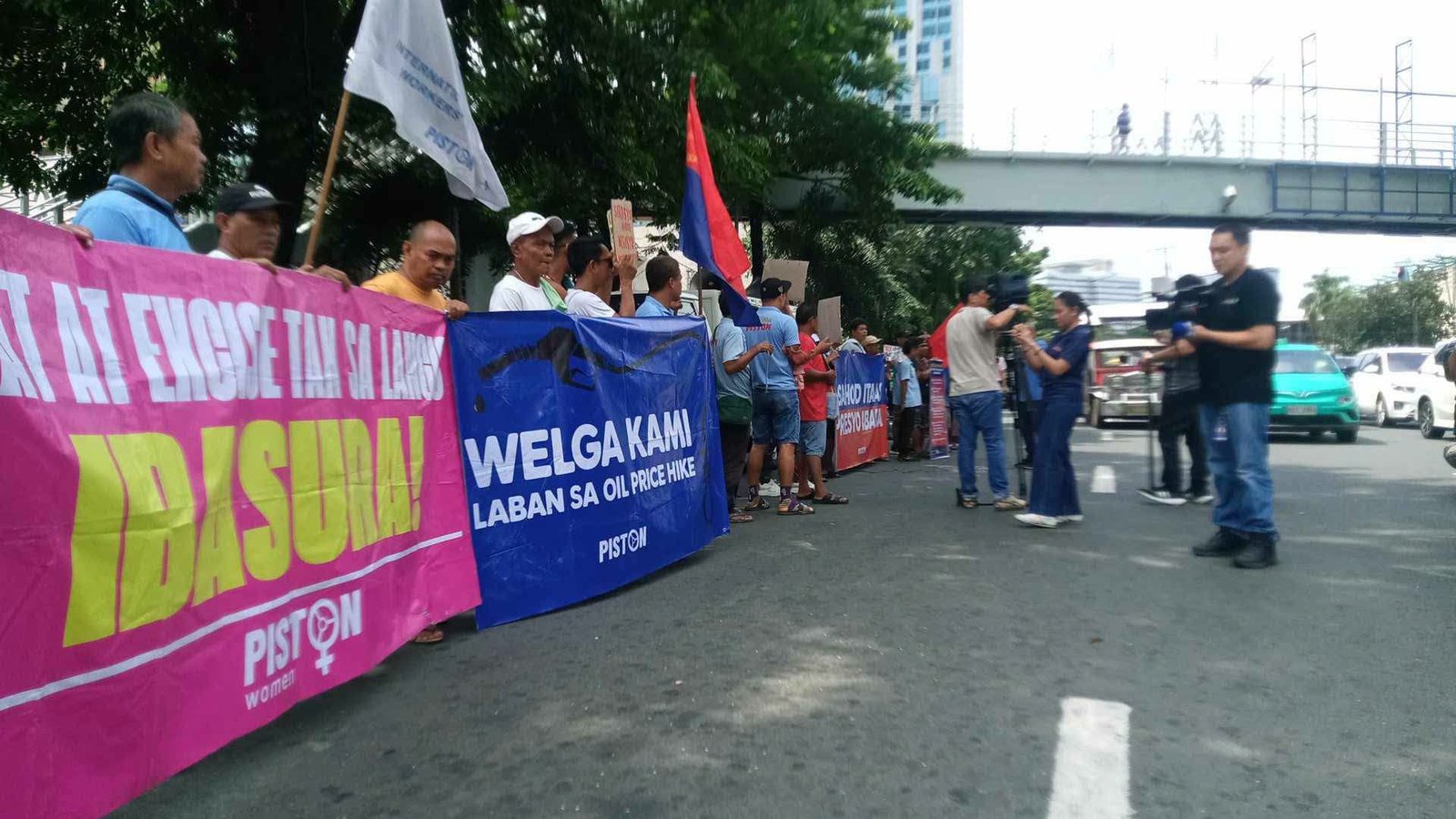
Photo: PISTON: Pagkakaisa ng mga Samahan ng Tsuper at Operator Nationwide
MANILA (September 29) — Commuters face a double squeeze this week as higher fares take effect Monday while transport strikes threaten to disrupt trips to work, school and markets, including in major cities in Mindanao.
The fare hike raises the minimum fare for traditional jeepneys from P13 to P14 and for modern jeepneys from P15 to P17. At the same time, Manibela began a three-day strike Monday, Sept. 28, while Piston’s strike is set for Sept. 29 and 30.
The disruption is already affecting communities beyond Metro Manila. In Bacolod City, schools announced suspension or shifts to online classes as transport groups prepared protests, while strike activities were also expected in Davao City and General Santos City.
For students and workers who depend on jeepneys and other public utility vehicles, the issue is no longer simply the cost of a higher fare. It is whether they can get to school, work or other essential destinations when fewer vehicles are operating.
Manibela president Mar Valbuena said more than 20,000 members in Metro Manila are expected to join the strike, including jeepney, UV Express, motorcycle taxi and transport network vehicle drivers.
The groups say the approved fare increases remain inadequate against soaring fuel and operating costs.
From fare hike to transport strike
The current dispute dates back to March, when the Land Transportation Franchising and Regulatory Board (LTFRB) approved fare increases for jeepneys, buses, airport taxis and transport network vehicle services.
March 18: President Ferdinand Marcos Jr. suspended the increases, which were scheduled to take effect the following day, citing the global crisis. The government instead promised free rides, transport discounts and increased cash and fuel subsidies.
April to July: Transport groups continued demanding larger fare adjustments as fuel costs remained high. Piston eventually sought a P10 increase in the jeepney minimum fare.
Sept. 22: Manibela renewed its demand for a higher fare. Transportation Secretary Giovanni Lopez said subsidies should be considered first and warned that higher fares could add to the cost of goods and services.
Sept. 25: The Department of Transportation approved the LTFRB recommendation to lift the suspension.
Sept. 28: The March-approved fare increases took effect as Manibela launched its three-day strike. Piston is set to follow on Sept. 29-30.
Fuel prices drive the protest
The transport groups say the P1 increase for traditional jeepneys is too small to offset the surge in fuel costs.
Diesel rose by P8.82 per liter to an average of P103, while gasoline increased by P4.88 to P98 and kerosene by P6.47 to P130.
Valbuena said a driver consuming about 30 liters of diesel daily could face around P1,500 in additional fuel expensebased on the increase.
“Our protest will still push through because our request is for a P2 fare increase,” he said.
Piston, meanwhile, is calling for the removal of value-added taxes on diesel and gasoline. The group expects 70,000 to 100,000 participants, including workers’ groups, urban poor organizations and commuters.
President Marcos has suspended the excise tax only on liquefied petroleum gas and kerosene under Executive Order No. 125. The government has also committed to targeted subsidies and financial assistance for affected transport workers.
Commuters caught in the middle
The LTFRB has allowed drivers to collect the new fares even without physical copies of the fare matrix, provided they follow the official fare guide.
LTFRB Chair Greg Pua Jr. warned drivers against overcharging and said the agency would deploy “mystery riders” to monitor compliance. The agency has also warned that operators who fail to provide public transportation during the strike could face sanctions, including a possible P5,000 fine for a first offense.
For commuters, the immediate impact is clear: higher fares when rides are available, and longer waits or alternative arrangements when they are not.
In Mindanao, where many workers and students rely on daily jeepney and bus trips, the disruption is also putting pressure on schools and local governments to provide alternative arrangements, including class shifts and free rides where necessary. Bacolod schools, for example, have already moved some classes online or suspended face-to-face sessions.
The fare dispute now goes beyond the question of whether commuters can absorb another peso or two.
It raises a more immediate public-service question: how can government keep fares affordable for passengers while ensuring that drivers can still afford to keep public transportation running?