Some transport operators warn they could pull up to half of their daily operating units if fuel costs keep rising
DAVAO CITY (September 30) — Rising diesel prices are putting pressure on public transport operators across the Davao Region, with some operators warning that they could pull up to half of their daily operating units if fuel costs continue to climb.
The warning came as the Land Transportation Franchising and Regulatory Board (LTFRB) implemented provisional fare increases Monday, September 28, for public utility jeepneys (PUJs), public utility buses (PUBs), taxis and transport network vehicle services (TNVS).
Tessa Piansay, LTFRB-Davao administrative officer V, said some operators and transport service entities had told the agency that as many as 50 percent of their daily operating units could be taken off the road because they could no longer absorb high fuel costs.
The figure refers to the potential reduction cited by some operators, not a forecast that half of all public transport vehicles in the Davao Region will be withdrawn.
“There are operators and transport service entities that have expressed that a number of their units may no longer run, as many as 50 percent of their daily operations, because they can no longer absorb the high cost of fuel,” Piansay said during the Kapehan sa Dabaw media forum at SM City Davao.
The warning comes as transport disruptions can have a direct effect on students and families, particularly when classes are suspended or schedules are adjusted because of extreme weather. Even when schools suspend classes, transport operators still face fuel and operating costs, while students and parents may continue to need public transport for other essential trips.
Piansay said transport groups began filing fare petitions in March, but recent fuel price increases prompted authorities to implement the adjustments to help sustain public transportation.
LTFRB-Davao also consulted regional transport leaders, including Southern Mindanao Bus Operators Association president Jerry Sy, who urged the government to speed up fuel subsidy assistance.
Piansay said the LTFRB’s role is to ensure that operators collect only authorized fares and comply with fare regulations.
New fares take effect
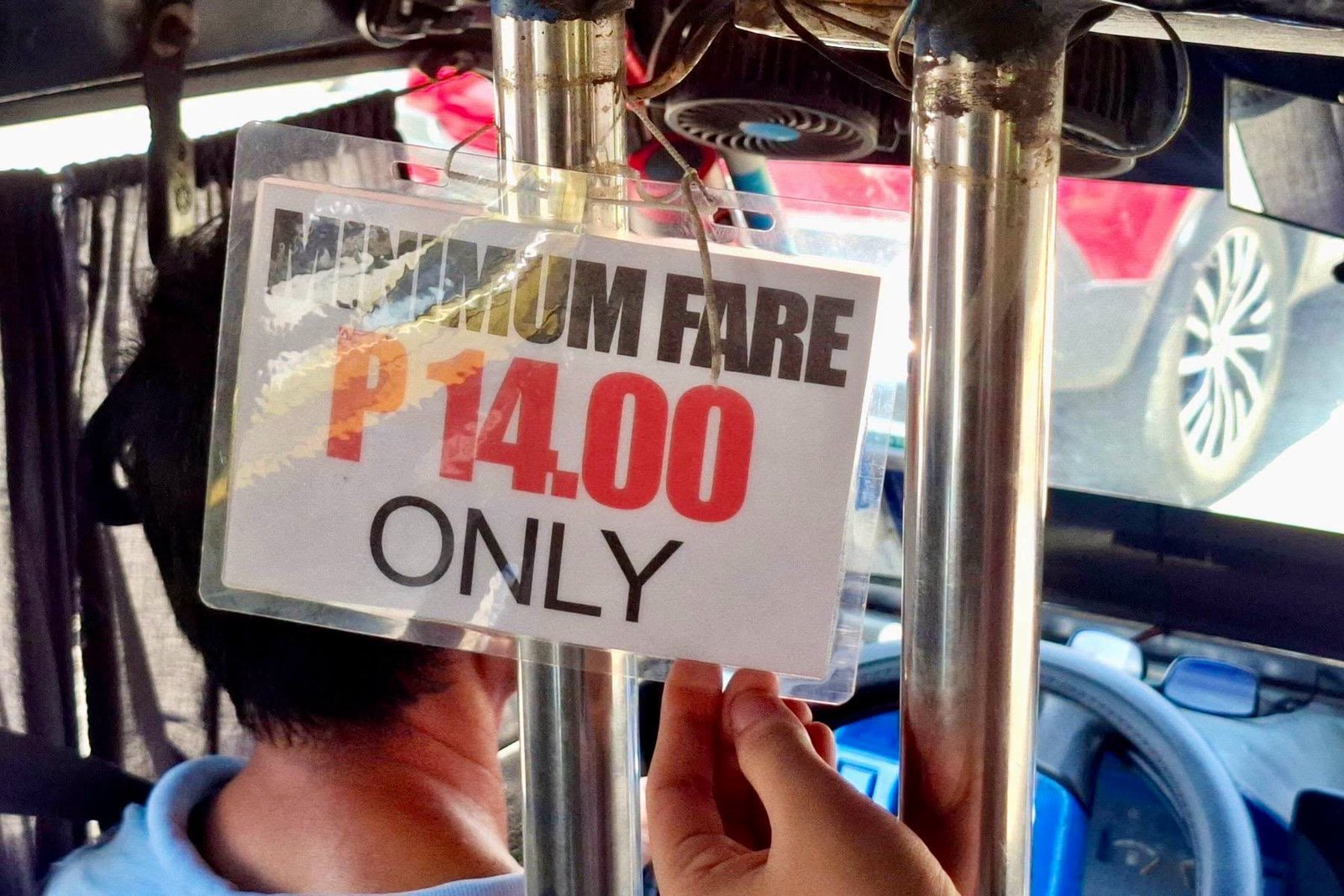
Under the new fare structure, the minimum fare for traditional PUJs increased from P13 to P14 for the first four kilometers.
For air-conditioned modern PUJs, the minimum fare rose from P15 to P17 for the first four kilometers.
Taxi flag-down rates increased from P50 to P65 across the region, including electric vehicle taxis.
For provincial buses, the minimum fare for the first five kilometers increased from P11 to P12, with additional charges ranging from P0.15 to P0.45 per kilometer, depending on the bus classification.
The taxi and TNVS increases are provisional and may be modified or withdrawn if fuel prices fall or market conditions stabilize.
Fare guides required
The new rates took effect Monday. Operators must display updated fare guides inside their vehicles before collecting the higher fares.
About 6,000 traditional PUJs and more than 90 modernized units are temporarily allowed to download and print the fare matrix from the LTFRB-Davao’s official Facebook page or website while signed copies are being distributed.
Official tariff sheets will be available at the LTFRB-Davao regional office in Bago Gallera, Davao City.
The LTFRB-Davao also reminded operators that the mandatory 20 percent fare discount for qualified passengers, including students, senior citizens, persons with disabilities and pregnant women, remains in effect.
Under the new rates, the discounted minimum fare for traditional PUJs is P11.25, while the discounted minimum fare for modern PUJs is P13.50.
Enforcement
Drivers who overcharge passengers or collect the new fares without displaying the required fare guide face administrative penalties.
A first offense carries a P5,000 fine, while a second offense carries P10,000. Repeated violations may lead to vehicle impounding and franchise sanctions.
Commuters may report overcharging and other fare-related concerns through the LTFRB 24/7 hotline or regional office.
For now, the 50-percent figure remains a warning from some operators about their potential daily operations—not a confirmed reduction in the region’s public transport fleet.
For students and families, meanwhile, the issue goes beyond the price of a single ride: fewer operating vehicles could mean longer waits and harder commutes when classes resume after weather-related suspensions or schedule disruptions.