ZAMBOANGA CITY (October 5) — RESEARCH can do more than fill academic journals. When scientific findings reach the people facing floods, plastic pollution, environmental degradation and climate risks, they can become tools for protecting livelihoods and making communities more resilient.
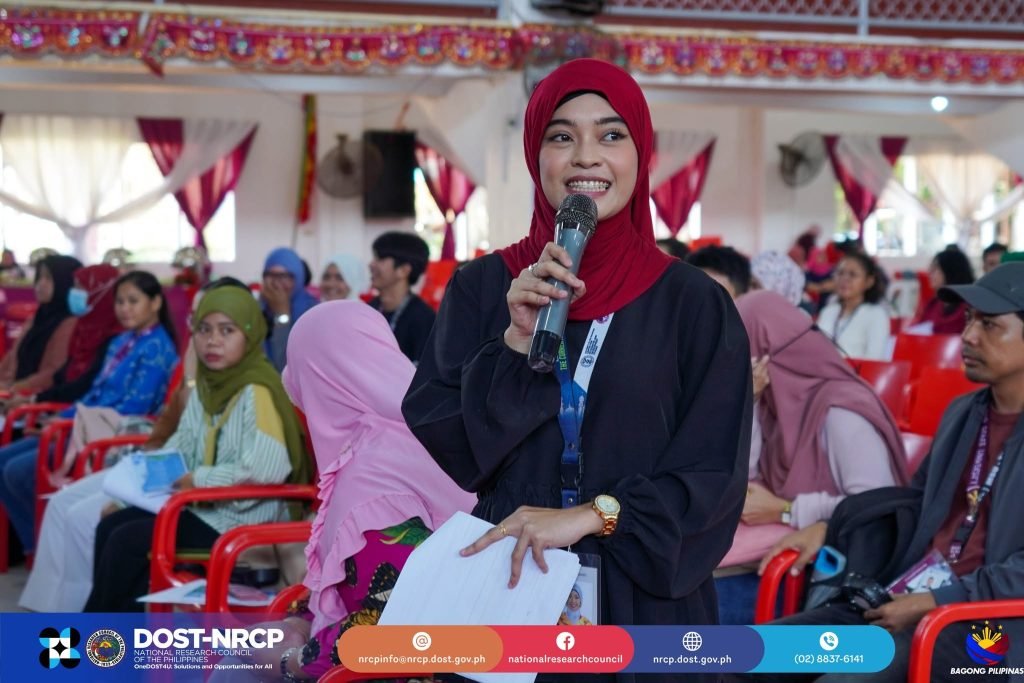
That was the message behind the May Magandang Bukas Mula sa Pagtuklas (MMBMP) Season 5, Episode 2, held September 24 at the Henry V. Kong Gymnasium of Mindanao State University-Tawi-Tawi College of Technology and Oceanography (MSU-TCTO).
The program of the Department of Science and Technology–National Research Council of the Philippines (DOST-NRCP), in partnership with MSU-TCTO, brought three DOST-NRCP-funded studies from Mindanao directly to students, government representatives, researchers and other stakeholders.
The studies dealt with problems that are not confined to laboratories: flooding, plastic pollution, environmental degradation and climate change.
Their potential value lies in turning research findings into information that communities can use to protect natural resources, reduce risks and strengthen local livelihoods.
From data to decisions
Dr. Ruth U. Gamboa presented research on the ethno-ecological characteristics of the Ligawasan Marsh and its links to surrounding communities.
She explained that the accumulation of sediment and silt can make portions of the wetland shallower, potentially contributing to flooding in nearby communities during heavy rainfall.
Understanding these changes can help communities and local authorities improve environmental monitoring and make better-informed decisions on wetland protection and disaster risk reduction.
For Gamboa, protecting the marsh is also a responsibility to safeguard resources entrusted to communities.
“While there is still time, let us work harder to protect our amanah,” she said, urging continued monitoring, documentation, technical training and community participation.
The message is particularly important for communities whose homes, farms, fisheries and other sources of income are vulnerable to environmental changes.
Another study, presented by Dr. Rey Y. Capangpangan, examined plastic debris and microplastics found in fish, sediments, water and other aquatic organisms in Mindanao.
The research also looked at stress markers associated with the presence of these materials, providing scientific evidence that can help communities better understand the consequences of plastic pollution on aquatic ecosystems.
For communities dependent on rivers, coastal waters and fisheries, such evidence can support stronger environmental practices and more informed decisions about waste management and resource protection.
Local knowledge as a climate tool
In Tawi-Tawi, Dr. Richard N. Muallil presented research on Islamic and Indigenous knowledge and practices that can support environmental conservation and climate change adaptation.
The study highlighted how community knowledge and established cultural practices can complement scientific approaches to environmental protection.
This can be particularly valuable in areas where communities have accumulated generations of knowledge about their ecosystems, weather patterns and natural resources.
Bringing that knowledge into research and policy discussions can help produce environmental solutions that are not only scientifically sound but also more relevant and acceptable to the communities expected to implement them.
Giving young people a role
The forum also positioned students not simply as audiences for scientific research but as potential contributors to solving local problems.
Students were encouraged to explore research opportunities, including hands-on activities and thesis projects. MSU-TCTO officials said those interested in research and extension programs may coordinate with the university’s research offices.
MSU-TCTO Chancellor Prof. Mary Joyce Z. Guinto-Sali, PhD, stressed that universities have a responsibility to ensure that research produces benefits beyond the campus.
“Research and extension are partners. We cannot have research without community service,” she said.
That connection can be crucial for communities facing environmental threats that require more than short-term responses.
Scientific studies can identify risks. Local knowledge can explain how those risks are experienced on the ground. Students and researchers can help generate evidence. Government and communities can then use that evidence to shape policies and actions.
The bigger challenge, however, is making sure research does not stop at a presentation.
For Tawi-Tawi and other Mindanao communities confronting climate and environmental pressures, the real measure of research is whether its findings reach the people who need them—and whether those findings lead to safer communities, healthier ecosystems and more secure livelihoods.