Davao genome study tracks HIV transmission in two sites as researchers call for deeper investigation into youth behavior and prevention gaps
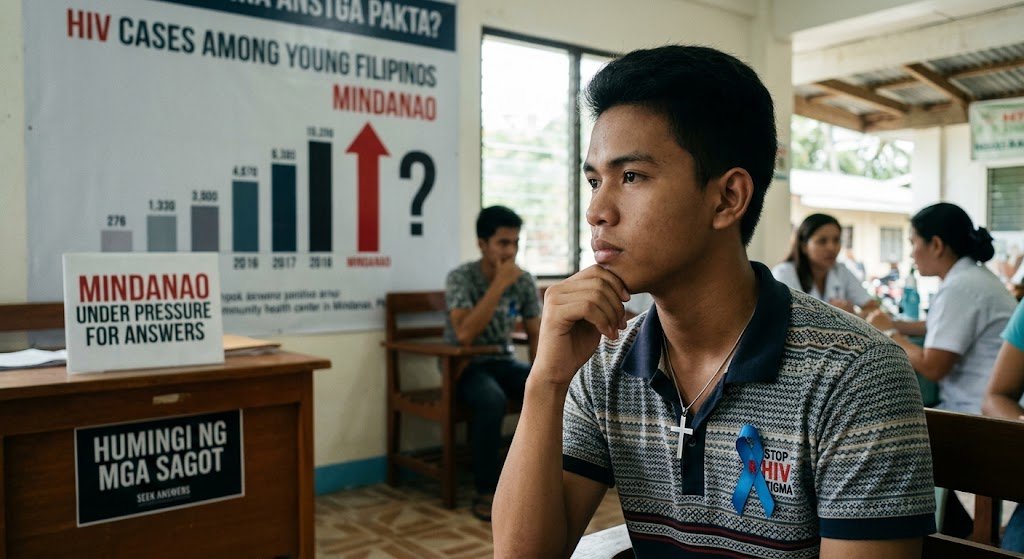
DAVAO CITY (October 14) — Nearly one in three newly reported HIV cases in the Philippines from April to June 2026 involved young people aged 15 to 24, underscoring the urgency of stronger prevention, early testing and treatment as researchers investigate transmission patterns in Mindanao.
The Philippine Genome Center (PGC) Mindanao is conducting a two-year HIV genomic surveillance study covering Davao City and Tawi-Tawi from 2025 to 2026. However, researchers expect to finalize the results in 2027 because of delays in optimizing laboratory protocols.
Dr. Aleyla De Cadiz, PGC Mindanao chair, said during Monday’s press conference for the 16th Health Research and Development Expo that the study aims to characterize local HIV strains and examine their geographic transmission patterns.
“We want to know where our HIV cases here really originated,” Cadiz said, explaining that genomic analysis could help researchers examine whether local HIV strains are related to transmission within Mindanao or to connections with other countries.
The project was initiated following a request from Tawi-Tawi, where authorities sought genomic research in response to the province’s HIV burden. Samples are primarily obtained from newly diagnosed patients who have not yet received HIV treatment, recruited through health facilities such as the Southern Philippines Medical Center.
As of the October 2026 briefing, sequencing and genetic analysis were still underway, and no results had been released.
Cadiz said the findings could help the Department of Health (DOH) improve epidemiological surveillance, patient monitoring and prevention policies. However, the two study sites do not represent every HIV case in Mindanao, and genomic analysis alone cannot explain the behavioral and social factors behind transmission.
Dr. Jasmin Pasia, chair of the research utilization committee of the Regional Health Research and Development Consortium XI, called for more studies into youth behavior as regional health data point to infections among increasingly younger populations.
Pasia said the Philippine Statistics Authority had requested the Department of Science and Technology to explicitly identify HIV as a regional research priority. She also cited concerns about Davao City’s HIV burden among younger age groups.
Beyond behavioral patterns, researchers need to examine whether young people can access confidential testing, accurate sexual health information, condoms and other prevention services without fear of discrimination. Such studies could help health authorities identify gaps in education and healthcare rather than placing the burden solely on individual behavior.
The national surveillance figures reinforce the urgency.
The Philippine HIV and AIDS Surveillance report for April to June 2026 recorded 2,994 confirmed HIV-positive individuals reported to the One HIV/AIDS and STI Information System.
Of these, 918, or 31%, were aged 15 to 24, while 1,294, or 43%, were aged 25 to 34. Another 509, or 17%, were aged 35 to 49. Ten cases involved children younger than 15, while 81 were among people aged 50 and older.
The report also recorded 828 cases, or 28%, involving people with advanced HIV disease at diagnosis, highlighting the need for earlier testing and timely access to care.
Males accounted for 2,865, or 96%, of the newly reported cases, while females accounted for 129, or 4%.
More than half of the cases were concentrated in five regions: the National Capital Region, with 567; CALABARZON, 338; Central Luzon, 280; SOCCSKSARGEN, 235; and Western Visayas, 189.
These national figures do not establish the number of infections in Davao City or Tawi-Tawi. Localized data are needed to determine Mindanao’s epidemic patterns and identify populations facing the greatest barriers to prevention and treatment.
Treatment must accompany surveillance
PGC Mindanao is also interested in the changing age profile of people living with HIV, including those who have reached senior citizenship while receiving treatment.
Cadiz said some people fear that an HIV diagnosis means the end of their lives. With appropriate medical care and sustained antiretroviral therapy, however, people living with HIV can live long, healthy lives. Those who achieve and maintain an undetectable viral load do not transmit HIV through sex, a principle known as Undetectable = Untransmittable (U=U).
For health authorities, the challenge is to make testing, treatment and continuing care accessible before patients develop advanced disease.
The genomic study could clarify relationships among HIV strains and help researchers understand transmission patterns. It cannot independently establish the circumstances of individual infections or explain the social and behavioral factors driving them. Complementary epidemiological and behavioral research, conducted with strong privacy safeguards, remains essential.
Mindanao must turn research into public health action
For Davao City and Tawi-Tawi, the test of this research is whether it leads to fewer infections, earlier diagnoses and better access to treatment—not simply whether researchers can map HIV strains.
The DOH, local government units and regional research institutions must ensure that the expected 2027 findings translate into concrete interventions. These include more accessible and confidential HIV testing, age-appropriate sexual health education, stronger prevention services, uninterrupted treatment and targeted outreach to communities underserved by existing programs.
The DOH and local health authorities must also make reliable, disaggregated data on HIV cases in Mindanao available while protecting patients’ identities. Such data would allow communities to identify gaps in services and assess whether public spending is producing results. Researchers, meanwhile, must clearly explain what genomic surveillance can establish and what requires separate behavioral and epidemiological studies, preventing preliminary findings from fueling stigma or unsupported conclusions about transmission.
The accountability question is whether health authorities will act on the evidence, fund the interventions and publicly measure their results. Young people should not have to wait for a genomic study to be completed before they can obtain accurate information, confidential testing and effective prevention and treatment.
For Mindanao, research will matter only when it strengthens services that prevent infections today and ensures that an HIV diagnosis does not become a sentence to discrimination or inadequate care.