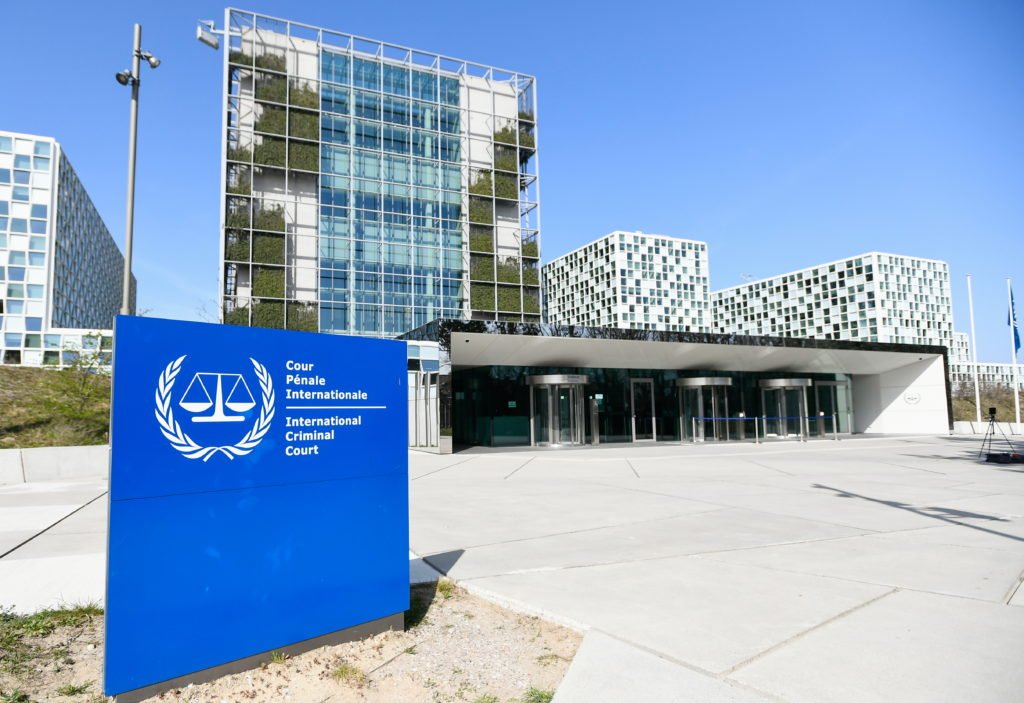
An exterior view of the International Criminal Court in the Hague, Netherlands.
DAVAO CITY (February 26) — Nearly four years after the end of his presidency, the anti-drug campaign of former president Rodrigo Duterte is now being dissected in a courtroom thousands of miles away — at the International Criminal Court (ICC) in The Hague.
On Tuesday, ICC prosecutors laid out what they described as a “widespread and systematic” attack against civilians, arguing that killings carried out during Duterte’s time as Davao City mayor and later as president formed part of a state-backed campaign that may amount to crimes against humanity.
For families in Davao and across the country who lost loved ones in anti-drug operations, the proceedings mark a significant moment: the first time an international tribunal has formally examined the scope and structure of the drug war.
A ‘common plan,’ prosecutors say
During the confirmation of charges hearing, prosecution trial lawyer Robynne Croft told Pre-Trial Chamber I that the killings were not isolated incidents but part of what she called a “common plan” to neutralize individuals suspected of involvement in illegal drugs.
The prosecution presented maps showing locations of killings covered under three counts of crimes against humanity, including 76 murders forming part of the case record. Croft argued that these incidents demonstrate both scale and pattern — key elements in establishing crimes against humanity under international law.
From 2012 to 2015, when Duterte was mayor of Davao City, prosecutors cited at least 274 alleged extrajudicial killings based on publicly available reports. They also referenced testimony from an alleged insider who claimed that far more victims were buried in sites such as Laud Quarry.
When Duterte assumed the presidency in 2016, prosecutors said the campaign expanded nationwide. Citing independent monitoring data, they said at least 5,823 anti-drug killings were recorded during his six-year term.
“The data show that the attack during the presidential period was widespread. It occurred across the country. It occurred over multiple years, and thousands of civilians were killed,” Croft told the chamber.
How targets were identified
Central to the prosecution’s argument is the claim that victims were pre-identified through drug watch lists — including so-called high-value target lists and local police inventories.
Operations, Croft said, were frequently justified using the “nanlaban” narrative — asserting that suspects fought back — to frame killings as self-defense.
“Targets were pre-identified, listed and then subject to operations based on that list. This clearly demonstrates the systematicity of the attack,” she said.
Among the high-profile deaths cited were Albuera Mayor Rolando Espinosa Sr., Ozamiz Mayor Reynaldo Parojinog, and 17-year-old Kian Delos Santos — cases that drew national attention at the height of the drug war.
Alleged roles of key officials
The prosecution named several former officials in its presentation, including former Philippine National Police chief and now Senator Ronald Dela Rosa, and former Justice secretary Vitaliano Aguirre II, describing them as alleged co-perpetrators in the broader framework of the campaign.
Video clips of past speeches were played in court, with prosecutors arguing these statements reflected encouragement or authorization of violent methods against suspected drug offenders.
Duterte has repeatedly defended his drug war as a necessary crackdown on crime and has denied wrongdoing.
What happens next?
The ongoing hearing is not yet a trial. The ICC judges must first determine whether there is sufficient evidence to confirm the charges and move the case forward.
For many communities in Mindanao — particularly in Davao City, where Duterte built his political base — the proceedings reopen difficult conversations about law enforcement, accountability, and the cost of the anti-drug campaign.
Victims’ counsel Gilbert Andres described the hearings as a “first step towards the truth and towards justice” for affected families, urging the chamber to confirm the charges for crimes against humanity.
The confirmation hearing resumes on Feb. 26, as the world court weighs whether the case will proceed to full trial — a decision that could shape how history judges one of the most controversial chapters in recent Philippine governance.