COTABATO CITY (August 17) — The ambush of Bangsamoro Interim Chief Minister Abdulraof Macacua has not been enough to derail the Sept. 14 Bangsamoro parliamentary elections, but the attack has raised a more serious question for the region: Can the first parliamentary polls be held safely in a political environment where armed violence remains a threat?
The Commission on Elections (Comelec) said Sunday that the Aug. 15 attack in Barangay Dulangan, Datu Odin Sinsuat, Maguindanao del Norte, was not sufficient legal or factual basis to postpone the elections.
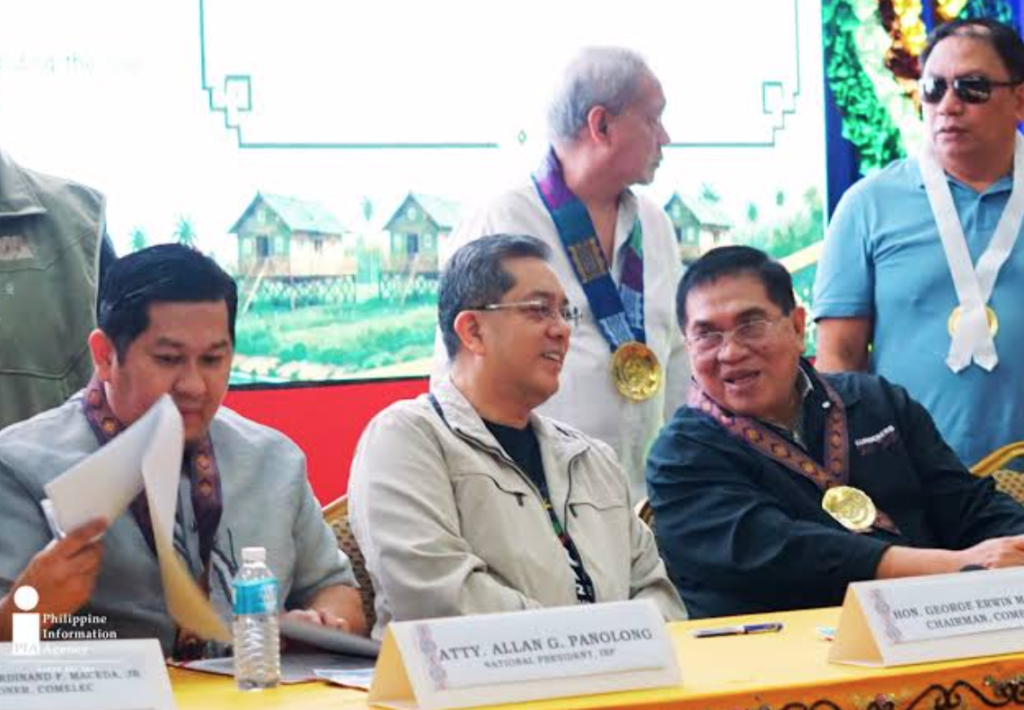
Comelec Chairman George Erwin Garcia described the incident as apparently isolated and said there was no immediate reason to place the municipality under Comelec control.
Still, the attack cannot be dismissed simply as another isolated act of violence, particularly because it involved the region’s interim chief minister and occurred as the Bangsamoro prepares for its first parliamentary elections.
Macacua and his companions escaped unharmed after armed men strafed their convoy at about 4 p.m. Saturday while they were traveling from his hometown in Barangay Gambar, Mother Kabuntalan.
The attack happened shortly after Macacua attended the proclamation rally of the Bangsamoro Federalist Party, which he recently joined and which subsequently named him its chairman.
Garcia said Comelec personnel had spoken with Macacua and were determining whether the attack was connected to his recent political activities.
Investigators, he said, already have leads on the suspects and arrests could follow in the coming days.
A test for the peace process
Macacua said the attack would not weaken his commitment to the parliamentary elections.
“The voice of the people, rather than the force of arms,” should dictate the future of the region, he said.
That message carries particular weight in the Bangsamoro, where the transition from armed conflict to democratic governance has been one of the central objectives of the peace process.
The attack therefore raises concerns beyond the personal safety of the chief minister.
Lanao del Sur 1st District Rep. Zia Alonto Adiong said the incident threatens gains achieved through the Bangsamoro peace process, arguing that an attack on the chief minister also strikes at the foundation of the region’s transition.
The Philippine Army, meanwhile, reaffirmed its commitment to helping ensure peaceful and credible elections. Armed Forces Chief of Staff Gen. Antonio Nafarrete said the military would coordinate with the Philippine National Police, Comelec and other agencies to identify and pursue those responsible.
The Palace also condemned the attack and ordered a thorough investigation.
Security cannot be an afterthought
Authorities have so far resisted linking the ambush to the elections without evidence.
PNP chief Gen. Jose Melencio Nartatez said investigators would not speculate on the motive until the circumstances of the attack are established.
That caution is appropriate. But the absence of a confirmed election motive should not diminish the security concern.
The parliamentary elections are intended to mark a historic step in the Bangsamoro’s transition toward representative governance. Voters must be able to campaign, travel, assemble and cast their ballots without fear of intimidation or violence.
For the Comelec, keeping the Sept. 14 election schedule is only the first decision. The more difficult task is ensuring that the conditions surrounding the vote are safe enough for people to participate freely.
The Office of the Presidential Adviser on Peace, Reconciliation and Unity has urged restraint, warning political actors against allowing differences and unverified information to trigger further violence.
That warning is especially important as the campaign intensifies.
The Bangsamoro’s first parliamentary election is being presented as a shift from the politics of conflict toward the politics of representation. But the ambush of Macacua is a stark reminder that the region’s democratic transition remains vulnerable to the very forces the peace process seeks to overcome.
Keeping the election on schedule may demonstrate institutional resolve.
Ensuring that voters are not forced to choose between exercising their democratic rights and staying safe will be the real measure of whether the transition is working.