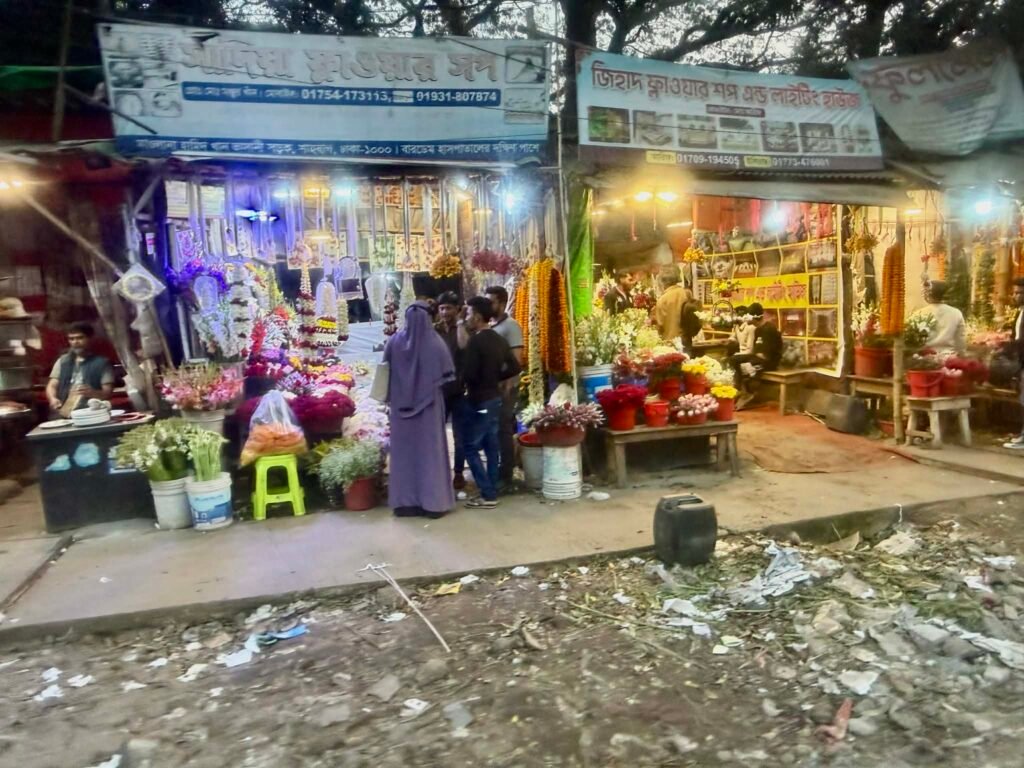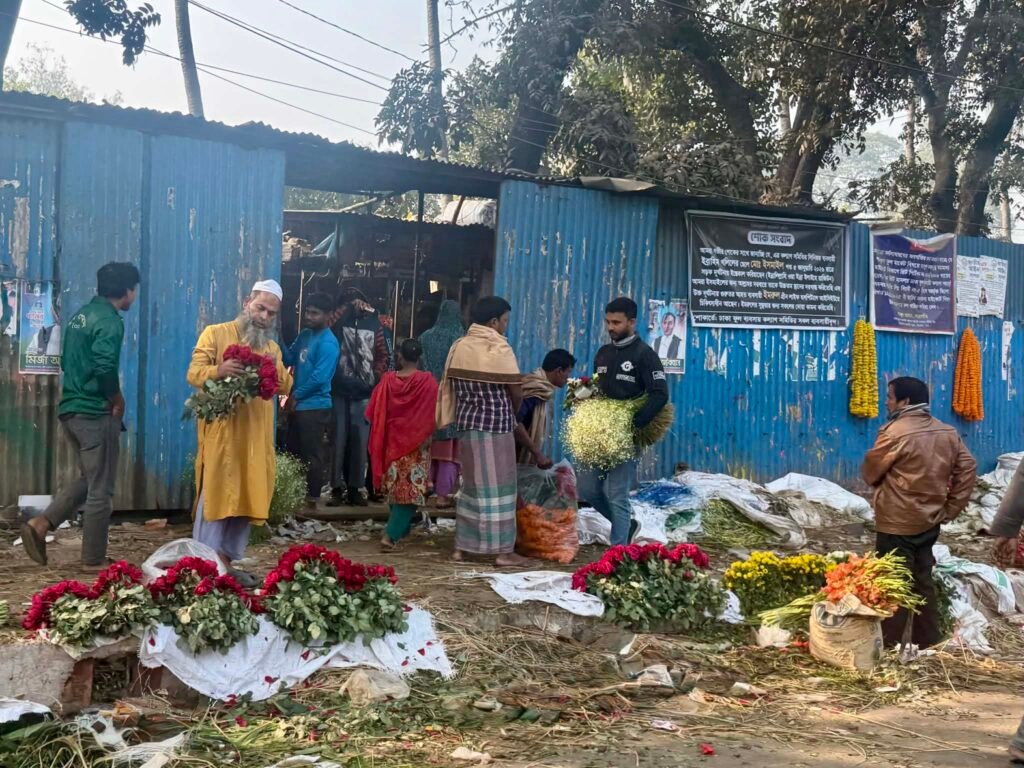
DHAKA, Bangladesh (January 17) — On a cold Friday morning in Dhaka, amid political uncertainty and economic fragility, life unfolds quietly along the flower-lined streets of the capital. Men stand behind makeshift stalls, negotiating prices and handing out bouquets, while women sit nearby, carefully wrapping each stem sold. It is an everyday scene, unassuming, practical, and deeply telling of a society in transition.
The visit to the flower market was part of a city tour organized by the Bangladesh Tourism Council, in coordination with the Dhaka International Film Festival, welcoming foreign guests and delegates from across the world. For many of us, the flower market became more than a tourist stop, it was a window into the resilience, labor dynamics, and quiet dignity of the Bengali people.
Unlike the large, commercialized markets of other capitals, Dhaka’s flower market is modest. There are no towering warehouses or dominant corporate traders. Instead, small vendors line the roadsides, relying on foot traffic, word of mouth, and the rhythm of daily demand. The air is thick with the scent of fresh blooms—locals say the fragrance is “perfume-quality”—a reminder of the country’s vast but often underutilized agricultural potential.
While men largely dominate sales and negotiations, women play an equally essential role. They prepare, sort, and wrap the flowers with precision and care. The division of labor may appear traditional, but it reflects economic pragmatism rather than exclusion.