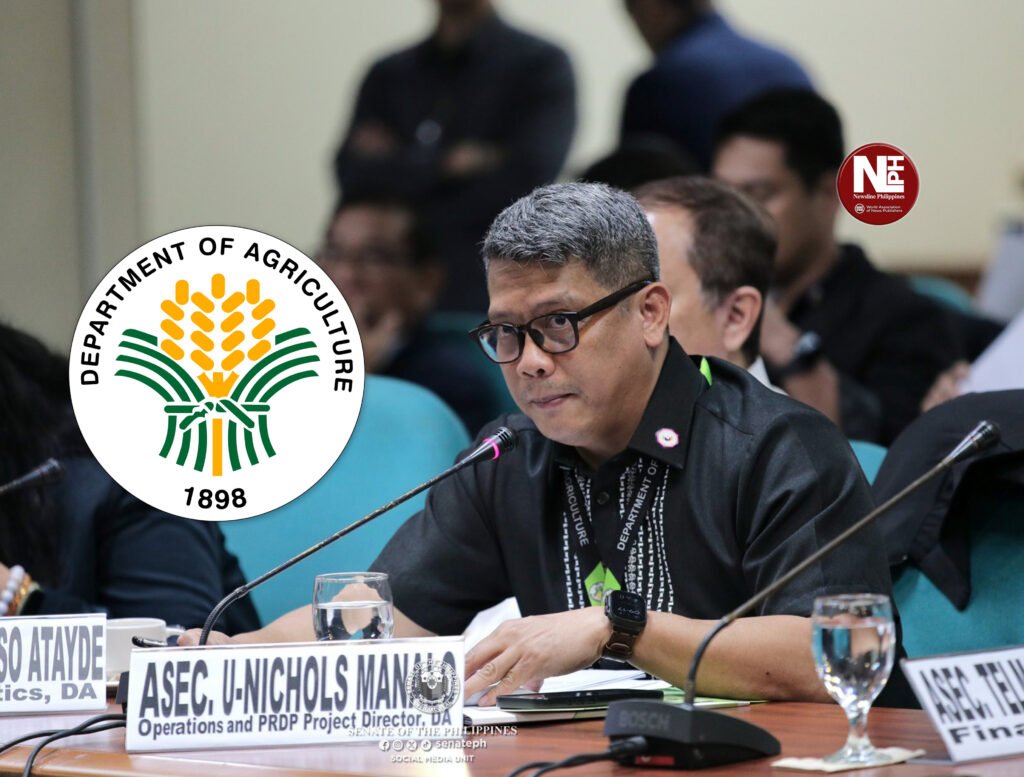
MANILA (October 13) — The Philippines aims to produce enough rice to meet 84 percent of its domestic demand by the end of 2026, according to the Department of Agriculture (DA), as the government pushes to reduce dependence on food imports and strengthen local production.
Agriculture Assistant Secretary U-Nichols Manalo told lawmakers during the agency’s 2026 budget deliberations that the country’s rice self-sufficiency level currently stands at around 77 percent.
“If the budget will be given to us, it will be around 84 percent level of sufficiency at the end of 2026,” Manalo said. He added that the government’s long-term goal is to hit 90 percent rice self-sufficiency by 2028, coinciding with the end of the current administration’s term.
Bigger agri budget to boost production
To achieve this, the DA is seeking a ₱216.1-billion budget for 2026 to fund programs that include increased rice production support, farm mechanization, fertilizer and seed assistance, irrigation, and improved farm-to-market logistics.
Agriculture Secretary Francisco Tiu Laurel Jr. has repeatedly stressed the need to reverse years of underinvestment in the sector. Although agriculture employs one in every five Filipinos, its contribution to gross domestic product has shrunk to around 10 percent.
“Years of limited funding have weakened agriculture’s role in the broader economy,” Tiu Laurel said, warning that the agricultural trade deficit continues to widen as food imports grow to feed the country’s fast-rising population — the second largest in Southeast Asia.
Rice output shows modest gains
Data from the Philippine Statistics Authority (PSA) showed that rice output in the first half of 2025 reached 9.08 million metric tons, up 6.4 percent from the same period last year. This puts the government on track toward its annual target of 20.46 million metric tons, later adjusted slightly to 20.35 million MT due to the lingering effects of La Niña.
Tiu Laurel said sustaining this momentum will depend on consistent investment in farmers, infrastructure, and technology. “Rice sufficiency is not just about yields — it’s about building a more resilient agriculture sector,” he noted.
Less import dependence
The Philippines has long relied on imported rice to plug production shortfalls, making it vulnerable to price spikes in the global market. Increasing domestic output is expected to help stabilize supply and reduce the impact of external shocks.
For many farming communities, reaching 84 percent rice self-sufficiency could also mean better income opportunities and more secure livelihoods.
“Food security starts with local production,” Manalo emphasized. “If we invest now, the gains will be felt for years to come.”