City generates up to 800 tons of waste daily as new landfill and proposed P7-billion facility move forward
DAVAO CITY (October 8) — DAVAO City residents will face stricter enforcement of household waste segregation as the city prepares for a new landfill and a proposed P7-billion Waste-to-Energy (WTE) facility, a city councilor said.
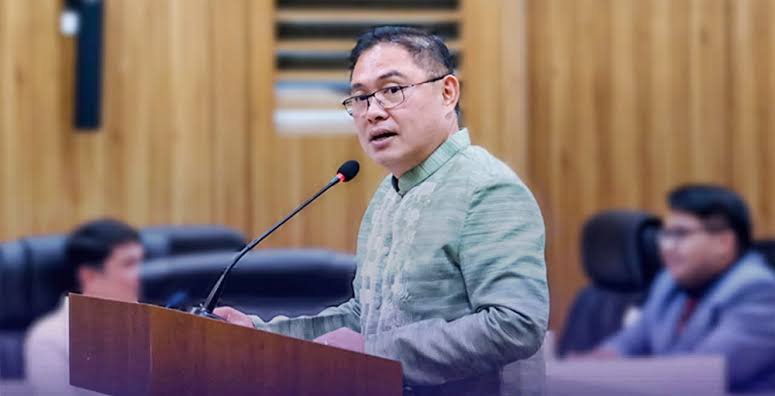
Davao City Councilor Temujin “Tek” Ocampo, chairperson of the Committee on Environment and Natural Resources, said source-level segregation is critical to reducing the volume of waste sent to landfills and ensuring that materials suitable for recycling, composting or energy recovery are properly handled.
Speaking at the Isyu Karon media forum on Oct. 2, Ocampo said the city generates about 700 to 800 tons of waste daily, making household segregation increasingly important as disposal capacity comes under pressure.
The shift to a new landfill followed directives from the Department of Environment and Natural Resources-Environmental Management Bureau (DENR-EMB) to close the city’s old dumpsite. Garbage collection has since moved to the Carmen landfill, located beside the former disposal site.
Ocampo said the City Environment and Natural Resources Office (CENRO) continues to cover the city’s garbage collection routes, although localized delays may occur.
“The CENRO is trying its best to really cater to all the needs of garbage collection in the City of Davao,” he said.
WTE needs properly sorted waste
Ocampo said the city will strictly enforce its 2010 Solid Waste Management Ordinance, particularly as preparations for the WTE facility progress.
The proposed facility is designed to use dry, highly combustible materials such as paper, cardboard and clean hard plastics as feedstock.
Wet and organic waste, including food leftovers, as well as residual materials such as disposable diapers, cannot be fed into the WTE incinerators and must be handled through other disposal or processing systems.
Organic waste will instead be directed to municipal composting areas or accredited private processors.
Hazardous medical and hospital waste will also remain excluded from both public landfills and the WTE facility. These wastes require separate treatment through hospital-based systems or certified medical-waste handlers.
Ocampo urged households to separate recyclable paper, metals and plastics before collection. He said recovering these materials can also provide additional income for waste workers who collect and sell recyclables.
“So dapat ang mapunta sa landfill ‘yung talagang hindi na natin magagamit at ‘yung mga ma-recycle natin, pagkakitaan natin,” Ocampo said.
WTE project targets 2028-2029
The planned nine-hectare WTE facility is being pursued under an existing agreement with the Japanese government, which is expected to oversee the international bidding process for contractors.
The facility is designed to generate 13 megawatts of electricity—2 MW for its own operations and 11 MW for the local power grid.
The city recently approved an ₱11-million bid bond for its participation in the national Green Energy Auction Program, a requirement tied to the planned grid integration of the project.
The bond is refundable if the city’s bid does not advance but would serve as a performance guarantee if the project wins the auction. Power generation is targeted for 2028 to 2029.
Ocampo also said environmental safeguards will be monitored by DENR-EMB, including continuous monitoring of stack emissions and automated warning systems.
But even with the planned facility, he stressed that technology alone will not solve the city’s waste problem.
For Davao households, he said, the first step remains simple: segregate waste at source and send only non-recyclable, non-compostable waste to final disposal.