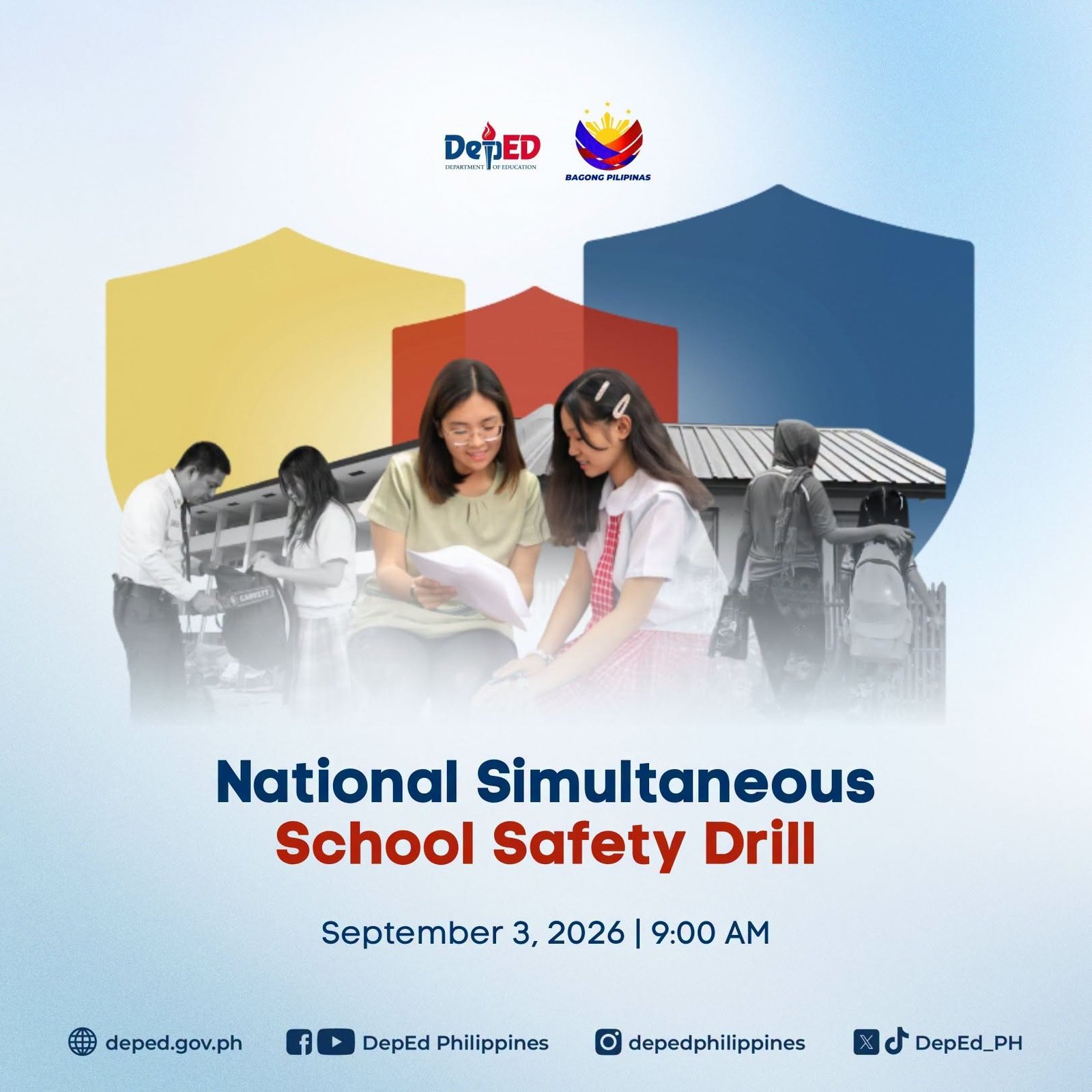
CAGAYAN DE ORO CITY (September 2) — Schools across the country will hold a nationwide safety drill on Sept. 3, but students will not be exposed to simulated gunfire, weapons or staged attacks as the Department of Education (DepEd) seeks to teach preparedness without causing unnecessary fear or trauma.
The drill, which was earlier postponed because of bad weather, will prepare schools for possible active-threat situations through simple, step-by-step safety procedures.
DepEd said schools must first assess their readiness, train teachers and explain the exercise to learners in ways appropriate to their age.
Parents and learners must also be informed ahead of time. Schools are required to obtain written consent from parents and assent from learners before they participate.
For families, this means children should know what the drill is about before it happens—not be suddenly confronted with a frightening or confusing scenario.
No fake attacks, no weapons
DepEd said the exercise will not use aggressors pretending to attack students, weapons, simulated gunfire, fireworks or other pyrotechnics.
There will also be no graphic images or staged casualties.
Instead, students will practice basic actions that could help keep them safe during a real emergency.
These include securing school entrances, staying quietly in protected areas away from windows and following evacuation procedures when necessary.
A signal different from the alarms used for earthquakes and fires will be used to begin the drill.
Children with special needs need protection, too
DepEd said schools must make adjustments for learners with disabilities, special needs and sensory sensitivities.
Children who need additional safeguards—including those whose parents request special arrangements—may take part in alternative activities.
They should not be punished, embarrassed or treated differently because they cannot safely participate in the standard drill.
This is particularly important for children who may become distressed by loud noises, sudden movements or emergency-style activities.
The department said participation in an alternative activity should not result in any penalty or stigma.
Support after the drill
The safety exercise will not end when the drill is over.
Guidance personnel and school health officers are expected to provide Psychological First Aid and conduct discussions with learners afterward.
Children who become frightened, distressed or emotionally affected by the exercise should be given an opportunity to talk about what they experienced.
Schools may also coordinate with their Schools Division Offices, local governments and health facilities when children or personnel need specialized mental health support.
This post-drill support is important because preparedness should not come at the expense of children’s emotional well-being.
What happens when police arrive?
The Philippine National Police may participate, but its role will be limited.
Police personnel will focus on external perimeter security, emergency communications, dispatch response testing and tracking what happens after an incident.
Students will also practice keeping their hands raised, empty and visible when encountering first responders during an evacuation.
DepEd said police will not conduct tactical disarming exercises or expose learners to aggressive displays during the drill.
The approach is intended to help children understand what to do during an emergency without making them feel that they are actually under attack.
Preparedness without trauma
Education Secretary Sonny Angara said the objective is to help schools respond calmly and effectively during a real threat.
“Our goal for September 3 is to build calm operational confidence and muscle memory through proper orientation, not fear,” Angara said.
“Preparedness saves lives, and trauma-informed execution protects our learners.”
For parents, the message is straightforward: the drill is meant to teach children how to stay safe—not frighten them into compliance.
Schools are therefore expected to prepare not only their emergency procedures but also the people who will carry them out.
A successful safety drill should leave children knowing what to do, where to go and whom to follow in an emergency—without leaving them feeling as if they have just survived one.