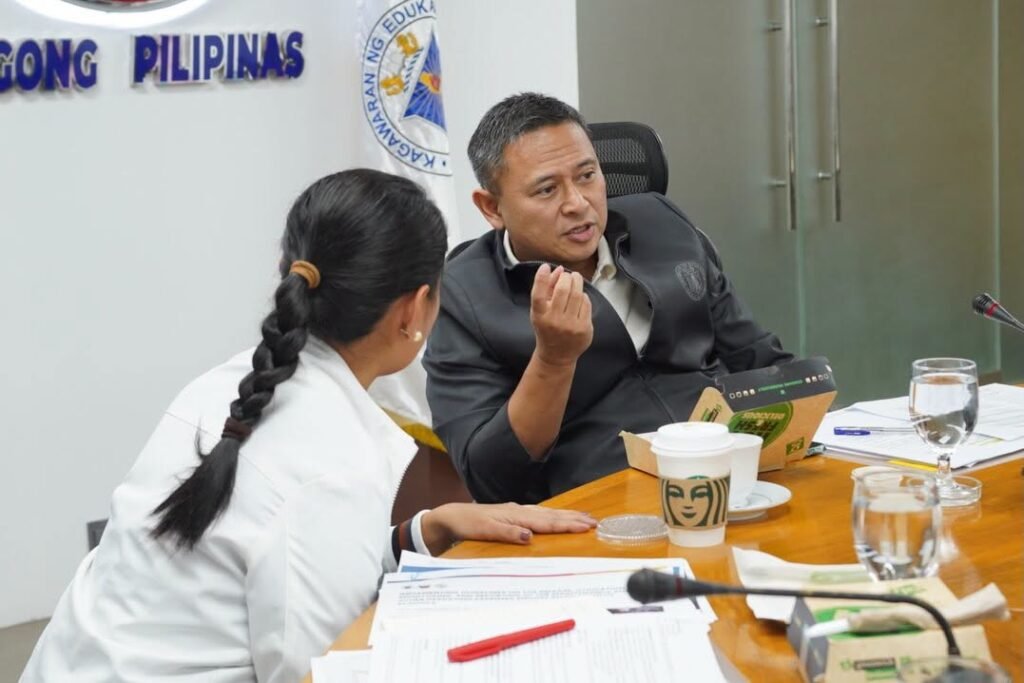
ZAMBOANGA CITY — For thousands of Filipino students struggling with anxiety, distress, bullying or problems at home, finding an adult to talk to at school could still depend on where they study.
The Department of Education (DepEd) needs about 48,000 school counselor associates to put one in every school nationwide, but its 2026 budget allows it to hire only 10,000, leaving a gap of roughly 38,000 positions, Education Secretary Sonny Angara said Wednesday.
The shortage has taken on greater urgency following a string of violent incidents in schools, including Tuesday’s shooting at Ateneo de Zamboanga University that left two students dead and another injured.
For Angara, the response to school violence cannot stop at gates, guards and metal detectors. Schools also need people who can notice when a child is struggling and provide a safe place to turn before problems escalate.
“Ang kailangan lang, may kakausapin ang bata, hindi niya nararamdaman na wala siyang mapuntahan o wala siyang matakbuhan,” Angara said.
One counselor, one school
DepEd’s goal is straightforward: put a school counselor associate in every school.
The problem is the cost.
Angara said the department’s 2026 allocation covers only 10,000 School Counselor Associate I positions. The national budget message identifies the positions as part of efforts to strengthen learner mental health support.
That leaves tens of thousands of schools without a dedicated counselor associate.
Angara said completing the hiring program would require billions of pesos and may have to be done gradually.
He suggested spreading the recruitment over one year or three to five years to make the additional funding requirement more manageable.
The figures expose a difficult reality: mental health support may be recognized as an essential component of school safety, but the personnel needed to deliver it remain severely limited.
A counselor is not a luxury
The shortage comes as schools face growing demands to address the emotional and psychological needs of children.
Students spend a significant portion of their lives inside schools. Teachers are often the first adults to notice changes in behavior, but they are not necessarily trained or positioned to provide specialized counseling.
DepEd has also struggled to fill positions for professional guidance counselors.
Under Republic Act 12080, registered guidance counselors and psychologists are subject to professional qualification requirements, including master’s-level education. School counselor associates, meanwhile, can qualify through specified bachelor’s-level education and training.
“That’s why we are hiring 10,000 school counselor associates because we cannot hire enough guidance counselors,” Angara said.
The distinction is important. Counselor associates are not simply substitutes for licensed guidance counselors and psychologists. Rather, they form part of a broader school-based support system intended to make help more accessible to students.
But without enough personnel, that system risks remaining unevenly available across the country.
A student in a well-resourced school may have several adults to approach. Another in a small or underfunded public school may have no dedicated mental health personnel at all.
The other security gap
The manpower problem extends beyond counselors.
Angara acknowledged that not all public schools have security guards, again citing budget limitations.
Some schools depend on local government units, private organizations and parent-teacher groups for additional security.
In smaller schools with around 100 students or fewer, barangay tanods may help monitor school entrances, particularly during arrival and dismissal.
Following the Zamboanga shooting, DepEd is also looking at stronger physical security measures, including CCTV cameras, metal detectors, improved gates and additional security guards.
But the department faces a difficult balancing act.
Schools need to be secure enough to protect children from physical threats without turning campuses into environments defined primarily by surveillance and fear.
Safety beyond the school gate
Angara’s remarks suggest that school safety must also include what happens inside a child’s mind and emotional life.
A metal detector may stop a weapon from entering a campus. A security guard may respond to a threat. A CCTV camera may record an incident.
But none of these can tell a child, “May mapupuntahan ka. May makikinig sa iyo.”
That is where counselors, teachers and other trusted adults become part of the safety net.
Angara said DepEd’s focus should go beyond academic instruction and include regularly checking on students’ well-being.
“Hindi lang yung pagtuturo ng mga nasa libro kundi ang pangangamusta sa bata at pagtingin na maayos ang kanilang pag-iisip at kalagayan, yan ang bibigyan natin ng mas pinaiting na focus,” he said.
The statement puts a human face on the 38,000-position gap.
Behind every unfilled post is a school where a child may be carrying a problem without a trained professional nearby to recognize it.
And while no counseling program can guarantee that school violence will never happen, providing children with accessible, trusted adults may help address the isolation, distress and problems that can otherwise remain invisible until they become crises.
For DepEd, the challenge is therefore not simply to hire more people.
It is to decide how urgently the country is willing to fund the people tasked with listening to its children.