JOSE ABAD SANTOS, Davao Occidental (September 3) — Keeping children out of hazardous work is emerging as a critical child-protection concern as families in Jose Abad Santos recover from the magnitude 7.8 earthquake and rebuild disrupted livelihoods.
While the municipality has reported no cases of children being forced to work because of the disaster, the Department of Labor and Employment (DOLE) XI and its partner agencies are strengthening prevention efforts before economic hardship puts children at greater risk.
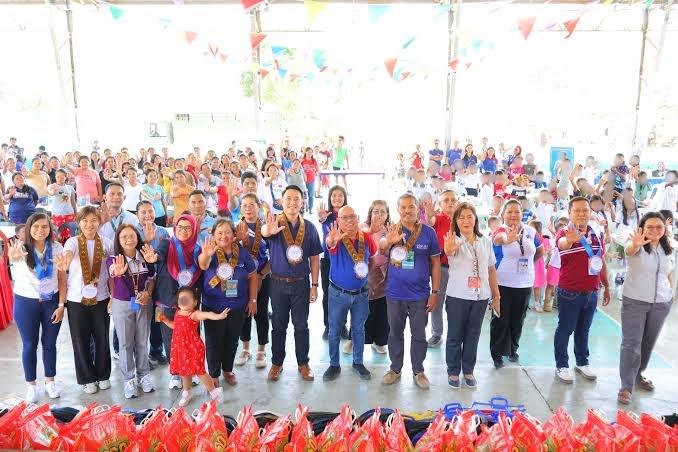
Around 150 children and their parents, including earthquake-affected families, received government services during the Child Labor Prevention and Elimination Program (CLPEP) Information and Service Caravan on August 20 at the Jose Abad Santos Central Elementary School.
Organized by DOLE XI through its Davao Occidental Provincial Office with the Regional Council Against Child Labor (RCACL) XI, the caravan provided families with access to education, health, social protection, livelihood and other government services.
Participating agencies included the Philippine Statistics Authority, PhilHealth, Philippine Army, Philippine National Police, Department of Health, Department of Education, Department of Social Welfare and Development, Department of Information and Communications Technology, Philippine Information Agency, and the provincial and municipal governments.
No reported cases, but risks remain
Jose Abad Santos Mayor Jason John A. Joyce said the municipality has not recorded children being forced into work as a result of the earthquake.
“I can really say, wala talagang bata na napilitang magtrabaho because of the earthquake,” Joyce said during an episode of Kapihan sa PIA in Davao Occidental.
He said children were instead affected by trauma and the temporary disruption of face-to-face classes.
The municipal government has continued providing daycare services, feeding programs, scholarships, financial assistance and protective services.
“We are very honored and happy to have been chosen as the venue for this activity para sa kabataan natin,” Joyce said.
He added: “Nayanig man ng lindol ang ating mga bahay, nayanig man ng lindol ang ating mga paaralan, pero hindi mayayanig ng lindol ang ating pag-asa, ang ating kinabukasan at ang magandang bukas para sa mga kabataan.”
Fishing communities face added risks
Eduardo Monreal, DOLE XI Labor and Employment Officer, said the caravan seeks to educate families about laws protecting children from exploitation and hazardous work, while identifying children who may already be engaged in child labor and connecting them with appropriate interventions.
Parents were reminded of their role in ensuring that children remain in school and are not exposed to work that threatens their health, safety or development.
The concern is particularly relevant in coastal communities such as JAS, where fishing is a major livelihood.
“Although fishing may be part of the family’s livelihood or a way of learning the family trade, children should not be taken into deep waters. They should instead be encouraged to return to school,” Monreal said.
Under Republic Act No. 9231, children are protected from the worst forms of child labor and other exploitative and hazardous work.
Children found in hazardous work may be referred to appropriate programs to help them leave dangerous working conditions and return to education. Their parents may also be referred to TESDA for skills training or DepEd’s Alternative Learning System.
Beyond removing children from work
The caravan reflects the broader challenge of eliminating child labor: addressing the conditions that can push children into work in the first place.
For families recovering from disasters, livelihood disruption can increase pressure on household members to contribute to income. This makes access to social protection, education, livelihood assistance and basic services an important part of child labor prevention.
The RCACL XI, chaired by DOLE with DSWD as co-chair, provides a platform for agencies to coordinate these interventions.
For JAS, the absence of reported earthquake-related child labor cases is encouraging, but sustained monitoring remains necessary as families continue to recover.
The real measure of child protection, after all, is not simply whether children are rescued from hazardous work—but whether families have enough support so children never have to enter it.