
DSWD launches mobile kitchens to strengthen disaster response, address hunger in evacuation centers

Date:

Share post:

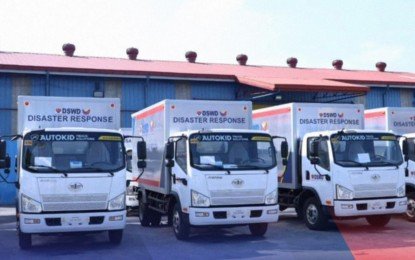
MOBILE KITCHEN. A total of 15 Department of Social Welfare and Development (DSWD) mobile kitchens are undergoing final inspection according to specifications at the agency’s National Resource Operations Center in Pasay City in this undated photo. The DSWD on Thursday (Jan. 23, 2025) said the mobile kitchens will soon be delivered to the different agency field offices to boost disaster response operations. (Photo courtesy of DSWD)

DAVAO CITY – The Department of Social Welfare and Development (DSWD) is set to roll out 15 state-of-the-art mobile kitchens to its regional field offices, enhancing the agency’s capacity to provide immediate, balanced, and sustained food relief during disasters. This initiative aims to improve disaster response and alleviate hunger among displaced families.

Special Assistant to the Secretary for Disaster Response Management Group and National Resource and Logistics Management Bureau Officer-in-Charge, Leo Quintilla, announced the launch during a media forum at the DSWD Central Office in Quezon City on Thursday.

“The mobile kitchen is an innovation aligned with DSWD Secretary Rex Gatchalian’s directive to ensure disaster-affected families receive not just adequate but compassionate and sustained relief,” Quintilla said.

The mobile kitchens, already delivered to the National Resource Operations Center (NROC) in Pasay City for final inspection, are fully equipped to serve hot meals to at least 500 individuals per meal. Each kitchen is built into a 4×4 six-wheeler truck and includes a generator, freezer, tabletop oven, four heavy-duty single-burner stoves, a 200-liter water tank, complete kitchen tools and utensils, and a stainless steel sink with grease tarp.

These units are specifically designed to complement traditional food pack distributions by addressing the need for balanced and nutritious hot meals. Quintilla noted that prolonged reliance on food packs alone can lead to “food pack fatigue” among evacuees. “Balanced meals, including vegetables and hot dishes, are crucial even in evacuation centers,” he added.

The mobile kitchens will be deployed to geographically isolated and disadvantaged areas (GIDA), including 4th and 5th class municipalities, evacuation centers, major ports, and airports where individuals may be stranded due to disasters. Deployment will be triggered by:

  • Agency disaster response needs
  • Directives from the DSWD Secretary
  • Requests from DSWD regional officers and partner agencies, including the Office of Civil Defense (OCD)


Each mobile kitchen will be operated by a regional Mobile Kitchen Deployment Team consisting of a safety officer, cook, kitchen worker, supply custodian, and driver, ensuring the efficiency of operations in disaster-affected areas.

Quintilla highlighted the significance of this innovation in addressing the needs of displaced families during both the preemptive evacuation phase and post-disaster recovery. “For example, during prolonged disasters like the situation at Mt. Kanlaon, we cannot rely solely on food packs for an entire month. The mobile kitchens allow us to provide hot, balanced meals, alternating with food packs to sustain evacuees,” he explained.

The mobile kitchens will also cater to stranded travelers in ports and airports, ensuring that no one is left behind during disaster response efforts.

Funded by the government and supported by partners like the World Food Programme (WFP), the mobile kitchen project exemplifies the DSWD’s commitment to innovative disaster response. The National Capital Region Field Office already operates a mobile kitchen donated by WFP, serving as a model for the rollout of the new units.

Quintilla shared that the DSWD is finalizing operational procedures, including staff training, meal planning, and supply logistics, to ensure seamless deployment once the mobile kitchens are transferred to regional offices.

The DSWD’s initiative is part of a broader effort to adapt to the challenges of the “new normal” in disaster response. With the deployment of these mobile kitchens, the agency hopes to set a higher standard for disaster relief in the Philippines, ensuring not only the physical survival of evacuees but also their dignity and well-being through balanced, compassionate food aid.

spot_img

Related articles

CCC cites youth as key partners in climate resilience in SOCCSKSARGEN

Photo courtesy: Climate Change Commission PH ISULAN, Sultan Kudarat (January 25) — The Climate Change Commission (CCC) highlighted the...

Shariff Aguak Mayor escapes death in ambush

SHARIFF AGUAK, Maguindanao del Sur — Shariff Aguak Mayor Datu Akmad B. Ampatuan Sr., al-Hadj narrowly escaped death...

4 bodies found in search for sunken Davao vessel

DAVAO CITY (January 24) — Four bodies believed to be from the sunken recreational vessel MBCA Amejara...

Ambassador Nina Cainglet Hails “Beneath the Badge” Award as a Triumph of Filipino Storytelling

DHAKA, Bangladesh (January 24) — The Philippine documentary Beneath the Badge (Sa Likod ng Tsapa), directed and produced...