MANILA (August 24) — The Department of Social Welfare and Development (DSWD) has shifted to a blue alert as a new tropical cyclone approaches the country, keeping millions of relief packs and hundreds of millions of pesos in standby funds ready as communities continue to recover from previous disasters.
The agency said Sunday it was closely tracking tropical cyclone Saudel, which could enter the Philippine Area of Responsibility (PAR) as early as Monday.
While the alert level has been lowered from red to blue, the move does not mean the disaster response is winding down.
Instead, the DSWD is keeping its relief network on standby as local governments cope with the lingering effects of recent typhoons and the enhanced southwest monsoon — conditions that could compound the impact of another weather disturbance.
DSWD-Disaster Response and Management Group Assistant Secretary Irene Dumlao said the agency continues to coordinate with local governments and other government agencies to ensure assistance can reach affected communities quickly.
“Bagamat may pagbaba sa alert status, patuloy pa rin ang pagbabantay at koordinasyon ng DSWD,” Dumlao said.
The scale of the preparations is substantial.
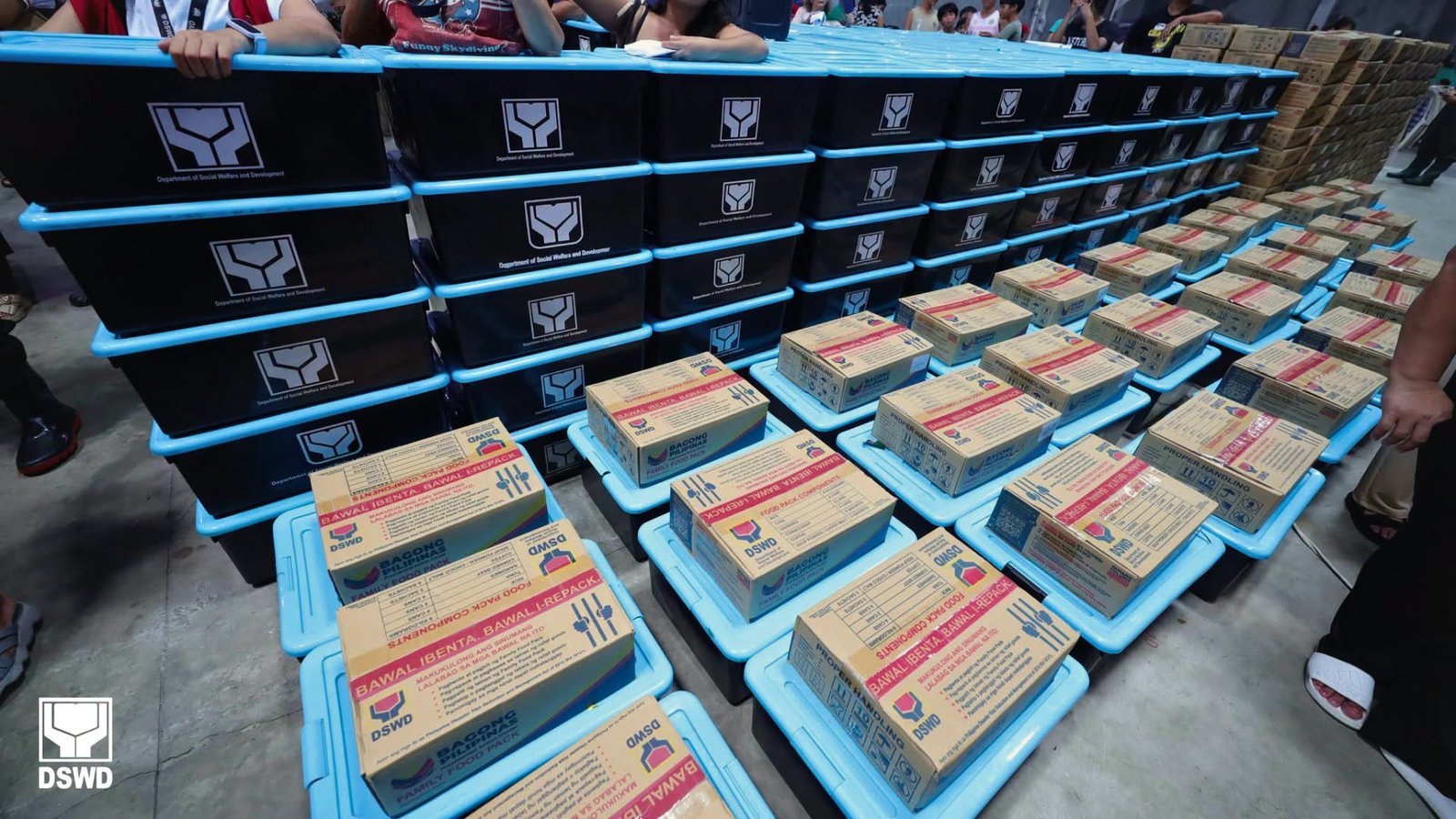
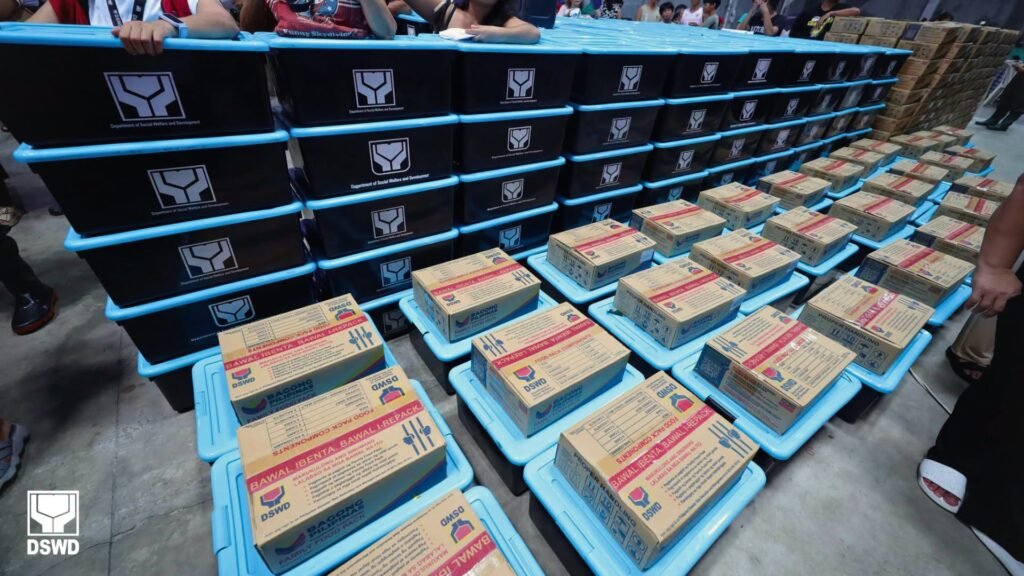
As of Saturday, the DSWD had more than 3.7 million boxes of family food packs (FFPs) positioned in strategic hubs, spokes and last-mile areas nationwide.
The stockpile includes more than 369,000 boxes at the Luzon Disaster Resource Center in Pasay City, over 512,000 boxes in Mandaue City for the Visayas, and more than 174,000 boxes at the Mindanao Disaster Resource Center in Butuan City.
The agency also has at least PHP667 million in standby funds for emergency response.
But the size of the stockpile also underscores a persistent reality in Philippine disaster management: preparedness is not only about having relief goods in warehouses, but getting them to families before roads become impassable, communities are isolated and needs multiply.
For disaster-prone areas, the critical test comes when logistics meet reality — damaged roads, flooded communities, disrupted communications and local governments already stretched by previous emergencies.
Dumlao said the DSWD is preparing to deploy logistical requirements to field offices in areas that could be affected and has response teams ready to move.
The agency’s continuing preparedness is particularly important as the new cyclone develops outside PAR. Its eventual track, rainfall and interaction with the southwest monsoon will determine which communities face the greatest risks.
For residents, the warning is familiar but urgent: another storm can quickly turn existing vulnerabilities into a new emergency.
The DSWD has urged the public to remain vigilant, particularly against flooding and landslides.
The blue alert, therefore, is less a signal to stand down than a reminder to stay ready. With communities still dealing with the fallout of earlier weather events, the country’s next disaster response may be measured not simply by how much aid is available — but by how quickly it reaches those who need it most.