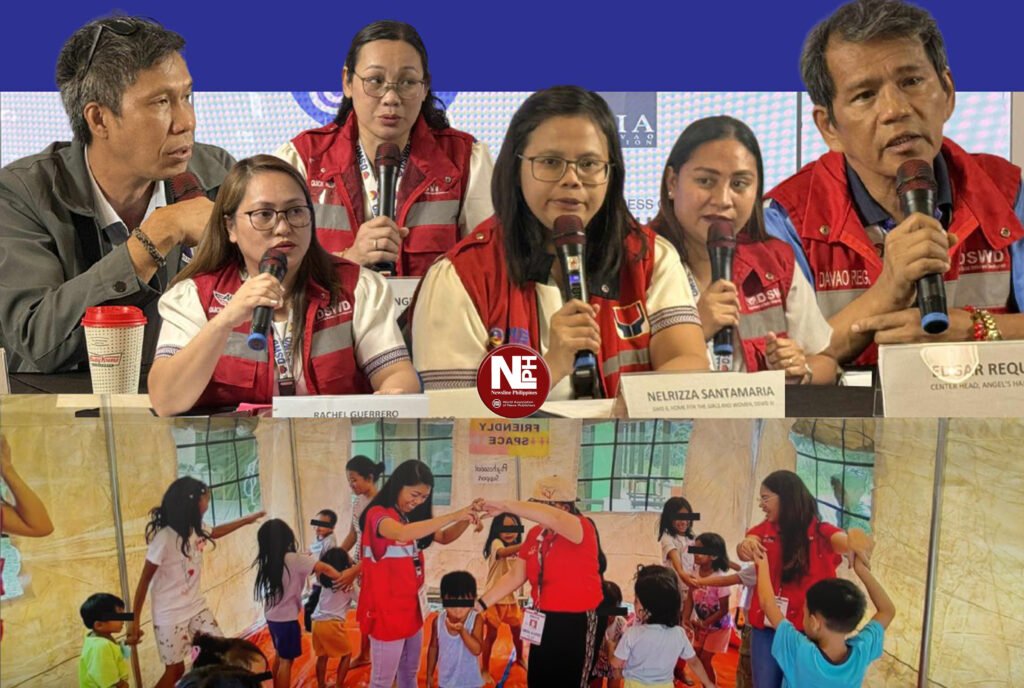
DAVAO CITY (November 5) — The Department of Social Welfare and Development (DSWD)–Davao Region is urging local government units to strengthen their Local Juvenile Intervention Programs (LJIP) to help prevent children from getting involved in crimes.
Jerome J. Gumbao, secretariat team leader of the Regional Juvenile Justice and Welfare Committee (RJJWC), said many barangays still lack organized intervention programs focused on prevention.
“We want our LGUs to establish LJIPs down to the barangay level because the focus is prevention,” Gumbao said during the Kapehan sa Dabaw forum.
The LJIP outlines key processes—from prevention, intervention, diversion, rehabilitation, reintegration, to aftercare—to help guide LGUs in handling children at risk and children in conflict with the law (CICL).
At the Regional Rehabilitation Center for Youth (RRCY) in Davao City, 92 CICLs are currently undergoing rehabilitation, mostly for drug- and rape-related cases, according to RRCY head Angelic Paña.
Paña noted that the youngest resident is only 14 years old, a case that should ideally have been handled at the community level.
“Most of the influences come from online platforms and dysfunctional families,” she said, adding that peer pressure often fills the gap left by lack of family guidance.
Inside the RRCY, children receive psychological counseling, education, and medical care, with 72 of them continuing their studies through a multigrade learning system in partnership with local schools.
Paña said the goal is not just rehabilitation but to prepare the youth for reintegration—“so they can return to their communities with a second chance at a better life.”