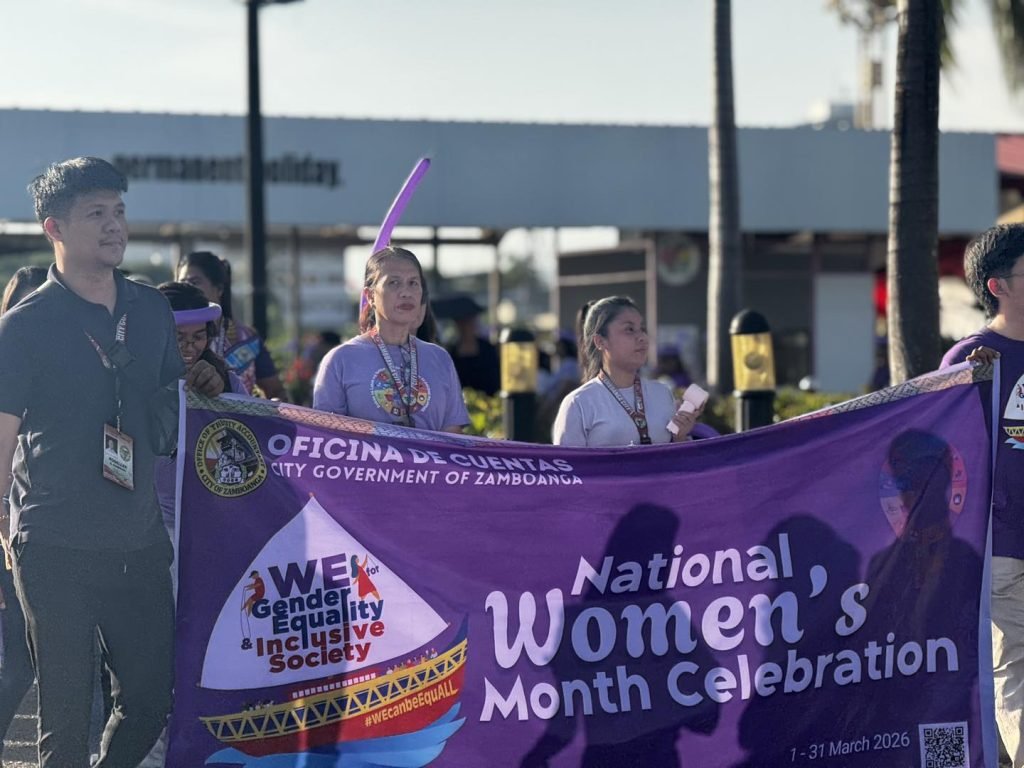
ZAMBOANGA CITY (March 25) — As Women’s Month unfolds, Zamboanga City is reframing its gender agenda with a sharper message: women’s empowerment will stall if men remain on the sidelines—or worse, part of the problem.
City officials are now leaning into male engagement, working with fathers’ groups under the Enhanced Reaffirmation of Paternal Abilities and Training (ERPAT) and eyeing the Men Opposed to Violence Everywhere to bring men into the frontlines of prevention. The pitch is simple but urgent: masculinity must be redefined from control to accountability.
But the shift comes against a stubborn backdrop. Cases under Republic Act 9262—ranging from physical to economic abuse—continue to surface. Officials point to rising reports as a sign of awareness. Advocates, however, warn it may also reflect how deeply rooted the violence remains.
“Gender equality is not about women alone,” said Gender and Development Office staffer Wilfredo Aporongao. “Men can become allies.” The question is whether these programs can move beyond seminars and slogans—and actually change behavior.
On paper, the city’s response system is intact. All 98 barangays operate Violence Against Women and Children (VAWC) desks. Social workers are deployed. A Women’s Crisis Center offers shelter and psychosocial care.
In practice, gaps often persist: underreporting in tightly knit communities, inconsistent enforcement at the barangay level, and survivors who still weigh safety against stigma.
Zamboanga has also widened its lens, extending support to solo parents and women in the informal sector, including domestic workers. These are critical steps—but they remain largely reactive, addressing the fallout rather than the roots of inequality.
That is where male engagement is being tested. Programs like ERPAT and MOVE aim to intervene earlier—inside homes, peer groups, and communities where harmful norms are formed and reinforced. Done right, they could shift the burden of “fixing” gender inequality away from women alone.
Still, the challenge is scale and sincerity. Will men show up beyond compliance? Will local leaders enforce policies with consistency? And can advocacy translate into fewer cases—not just better reporting?
As Women’s Month messaging fills public spaces, Zamboanga’s approach signals a necessary evolution. But the real measure won’t be participation numbers or campaign visibility. It will be whether women, across the city’s barangays, actually feel safer.
Because engaging men is no longer the bold idea. Making it work is.