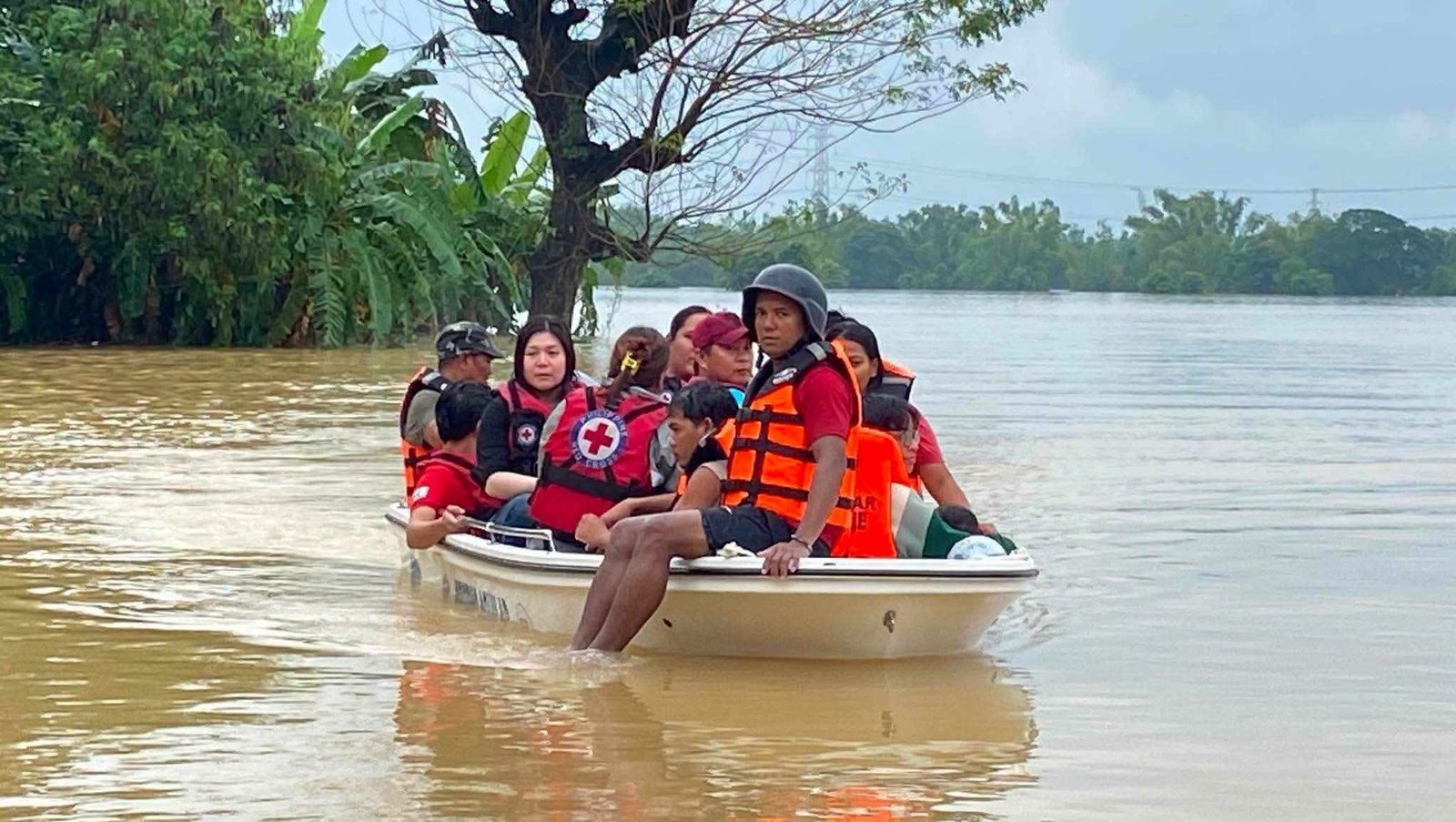
DAVAO CITY (September 19) — The European Union is releasing €150,000, or about P10.9 million, in humanitarian assistance to help more than 32,000 people affected by severe flooding in some of the hardest-hit parts of Luzon, including the Ilocos Region, Central Luzon, and Metro Manila. Delivered through the Philippine Red Cross, the assistance will provide families with sleeping kits, water containers, and hygiene supplies, while people in evacuation centers and affected communities will receive hot meals and safe drinking water. Mobile health teams will also provide medical consultations, medicines, health information and mental health support, while hygiene campaigns and disease monitoring will be carried out to reduce the risk of water-borne and vector-borne diseases that commonly rise after major flooding.
The assistance comes as the disaster’s scale continues to grow. According to the EU’s September 14 assessment, more than 10.5 million people across 11 regions were affected, more than 120,100 people were displaced to over 500 evacuation centers, and more than 4,500 homes were damaged. A total of 188 cities had been placed under a state of calamity. Since early August, the southwest monsoon, locally known as Habagat, has been intensified by several tropical cyclones and other weather systems, bringing prolonged heavy rains that triggered widespread flooding and landslides and damaged homes, roads, bridges, farms, water systems, and power lines.
But behind these numbers are families whose lives have been abruptly displaced. In many communities, leaving home is no longer simply a precaution but a necessity as floodwaters enter houses, roads become impassable, and electricity and water systems are disrupted. For families whose homes have been badly damaged or destroyed, evacuation is only the beginning of the ordeal. They must eventually confront the harder question of where to return, how to repair what remains, and how to recover the income that may have disappeared with the disaster.
In Barangay Santa Rita in Lubao, Pampanga, the destruction was particularly severe after heavy rains caused the Sto. Cristo Dam to breach, sending floodwaters into surrounding communities. Authorities reported that 201 families, or 649 people, were affected, prompting the national government to direct the National Housing Authority to provide permanent shelter for families who lost their homes. At evacuation centers, displaced residents received food, hygiene, and household assistance, but the need for long-term housing underscored the reality that relief goods alone cannot restore a family’s life.
In Pangasinan, the flooding also became a prolonged emergency. Provincial officials reported that as of September 4, 1.95 million people from more than 562,000 families had been affected, with flooding reported in hundreds of areas across 11 municipalities and two cities. Landslides and impassable roads further complicated access to communities and the delivery of assistance. By September 8, 906 families, or 2,885 people, were still staying in evacuation centers in Calasiao, Mangatarem, Lingayen, and Dagupan City.
For farmers, however, the flood is measured not only by the height of the water but by what happens when the water disappears. A submerged field can mean a lost harvest. For workers, a flooded or damaged road can mean days without wages. For small businesses, prolonged closure can erase what little savings and working capital a family has. In Central Luzon, the disruption has also reached schools. The Department of Education reported that 622 schools and 4,025 classrooms had been affected, including classrooms that sustained major or total damage, threatening to prolong interruptions in children’s education.
Health risks may worsen as floodwaters recede. In Central Luzon, health authorities have strengthened preparations against leptospirosis, a disease associated with exposure to water or soil contaminated by the urine of infected animals. The Department of Health has worked to ensure supplies, medicines, and hospital preparedness as communities remain exposed to contaminated floodwater.
This is why the European assistance is designed to cover more than immediate food relief. The Philippine Red Cross response will include clean water, hot meals, household and hygiene items, medical consultations, medicines, health information and mental health support. For people living in crowded evacuation centers, these services address some of the most basic needs created by displacement: clean water to drink, food to eat, medicine when illness strikes, and some measure of psychological support after the trauma of losing homes and livelihoods.
The disaster has also claimed lives. Earlier reports from the National Disaster Risk Reduction and Management Council documented fatalities linked to drowning, landslides, electrocution and falling trees amid the storms and monsoon rains. These incidents showed how rapidly a weather emergency can become a matter of life and death, particularly in communities already vulnerable to flooding and landslides.
The EU said the new €150,000 contribution is in addition to more than €2 million already allocated to humanitarian partners in the Philippines since the beginning of 2026. The funding forms part of the EU’s broader contribution to the International Federation of Red Cross and Red Crescent Societies’ Disaster Response Emergency Fund under a €16-million humanitarian delegation agreement intended to provide rapid financing when disasters strike, and national Red Cross or Red Crescent societies need immediate support.
For now, the immediate task is rescue, relief and keeping displaced families safe. But when the rain stops and the floodwater eventually recedes, another crisis will begin in many communities: rebuilding. For families who have lost homes, crops, belongings, income, or a sense of security, recovery will take much longer than the storm itself. The statistics may eventually fall as the water goes down, but for millions of Filipinos affected by the flooding, the real measure of this disaster will be how quickly they can return home, restore their livelihoods, and rebuild lives that were changed in a matter of days.-ezc with PR