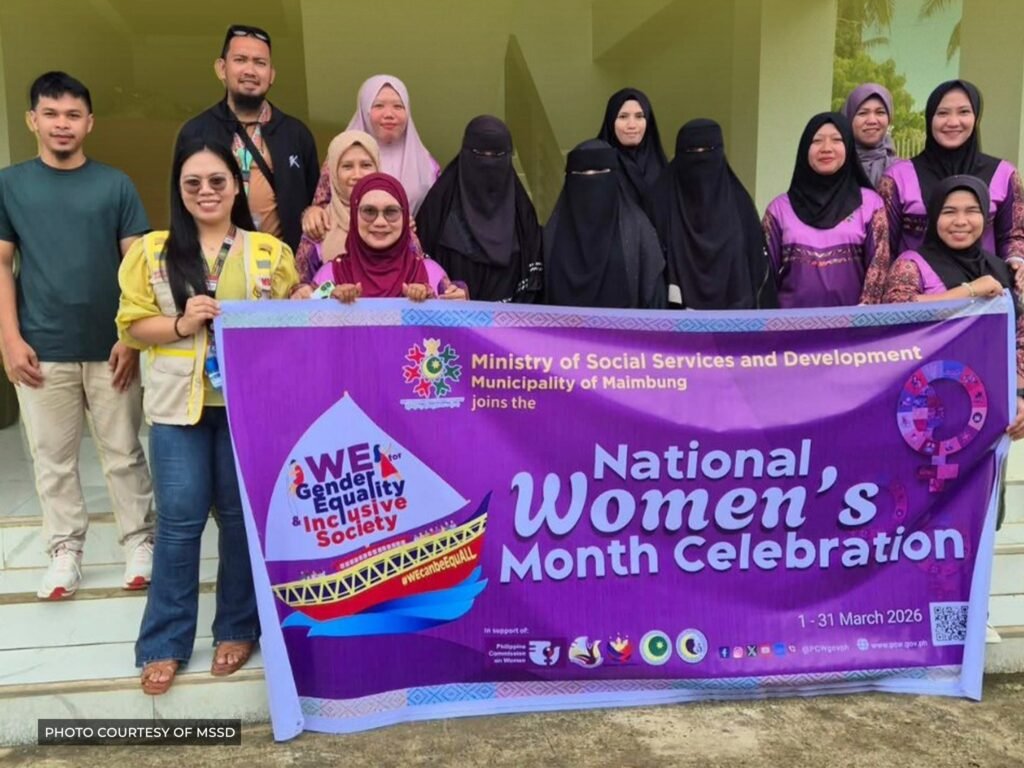
MAIMBUNG, Sulu (March 16) — A community session organized by the Ministry of Social Services and Development (MSSD) in a coastal barangay here highlighted the roles of Muslim women in family and society as part of activities marking National Women’s Month.
Held Wednesday in Barangay Laum in Maimbung, the session gathered 15 women for a discussion on “Wajib sin Kababaihan”—or the obligations of women in Islam—focusing on their responsibilities as daughters, wives, and mothers within the framework of Islamic teachings.
Organizers said the activity aimed to strengthen women’s understanding of their roles while encouraging self-development and stronger family relationships grounded in faith.
The discussion was led by Marry-Anne Sandami Nahato, an ustadza from Nurunnisah Madrasa, who emphasized that empowerment for Muslim women begins with a clear understanding of both religious duties and social responsibilities.
“Empowerment starts with knowledge of one’s identity and role,” Nahato told participants, adding that faith-based guidance can help women navigate family and community challenges.
Reaching Vulnerable Women
Among the participants were nine solo parents, four indigent women, and two senior citizens, reflecting the ministry’s focus on reaching vulnerable sectors in remote communities.
Aside from the lecture, the MSSD distributed hygiene kits and food packs to the participants to help address immediate household needs.
While modest in scale, such outreach activities have become common in parts of Sulu, where poverty levels remain among the highest in the country and access to social services is often limited, especially in rural villages.
Balancing Tradition and Empowerment
Programs like the MSSD session highlight the Bangsamoro government’s effort to frame women’s empowerment within cultural and religious contexts that resonate with local communities.
At the same time, development advocates note that women in many areas of Sulu continue to face structural challenges — including limited access to education, livelihood opportunities, and health services.
These realities make community-based programs that combine faith, social support, and welfare assistance an important entry point for reaching women who are often excluded from formal development programs.
The activity forms part of broader efforts by the Bangsamoro Autonomous Region in Muslim Mindanao government to promote women’s welfare while strengthening community resilience in some of the country’s most underserved areas.