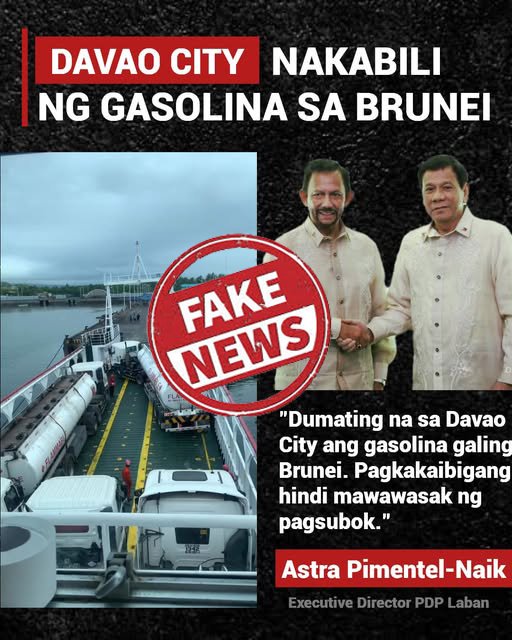
DAVAO CITY (March 25) — A viral claim that oil from Brunei was being shipped to Davao City has been flatly denied by the local government, exposing not just another case of online misinformation—but a deeper public anxiety over fuel security.
The City Information Office dismissed the posts as baseless, saying no discussions or agreements exist between the city and Brunei for any oil supply. The rumor, widely shared on social media, alleged a “treaty” that would see the oil-rich sultanate deliver fuel directly to Davao, even circulating a photo of a supposed tanker docking in the city.
“There is no truth to this,” the office said, urging the public to verify information and avoid amplifying unconfirmed claims.
But the speed and traction of the false narrative point to a larger issue: uncertainty over energy supply at a time of volatile global oil prices.
Even as the city debunks the claim, the Sangguniang Panlungsod of Davao City is moving to examine the situation more closely. Councilor Diosdado Mahipus Jr. has called for an assessment of local fuel reserves, seeking data that could guide contingency measures if supply disruptions worsen.
The council is set to consult the Department of Energy and the Land Transportation Franchising and Regulatory Board in an upcoming session—an acknowledgment that fuel stability is no longer just a national concern but a local governance issue.
The juxtaposition is striking: while officials deny a fabricated international oil deal, they are simultaneously scrambling for concrete answers about the city’s actual fuel situation.
This tension underscores how misinformation often thrives where transparency is thin or public concern is high. In this case, the idea of a direct oil pipeline from Brunei—though implausible—resonated with residents grappling with rising fuel costs and uncertain supply chains.
For the city government, the challenge now goes beyond fact-checking. It must also address the conditions that make such claims believable: limited public access to real-time fuel data, and a growing dependence on social media for information.
As Davao tightens its messaging against fake news, the unfolding response suggests a more pressing task—restoring public confidence not just in information, but in the systems that keep the city running.