BONGAO, Tawi-Tawi(June 18) — As vaping and smoking continue to attract young people across the country, health officials in Tawi-Tawi are stepping up efforts to stop the habit before it starts.
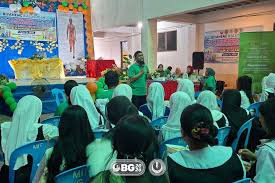
More than 80 junior high school students at Mahardika Institute of Technology, Inc. recently participated in an anti-smoking awareness campaign led by the Ministry of Health (MOH) and the Integrated Provincial Health Office (IPHO) of Tawi-Tawi as part of the observance of National No Smoking Month.
The activity may have lasted only a day, but it addressed a challenge that health advocates say requires sustained action: protecting young people from nicotine addiction at a time when cigarettes and vaping products remain accessible and increasingly marketed to youth.
During the session, students learned about the health risks associated with smoking and vaping, the provisions of Republic Act 9211 or the Tobacco Regulation Act of 2003, and local ordinances restricting tobacco sales near schools. Organizers also highlighted the Islamic perspective on smoking, connecting public health messages with values familiar to the predominantly Muslim community.
For health educators, adolescence remains a critical battleground.
MOH Health Education and Promotion Officer Saida Diocolano-Ali emphasized that teenage years are often when smoking and vaping habits begin, fueled by curiosity, peer influence, and the misconception that vaping is a safer alternative to traditional cigarettes.
“Huwag magpaloko sa vape at sigarilyo; protect your lungs and overall well-being,” she told students.
The warning comes as health experts worldwide continue to raise concerns over the growing popularity of electronic cigarettes among young people. While vaping products are often promoted as less harmful than tobacco smoking, medical professionals warn that they still expose users to nicotine and other substances that can affect brain development, respiratory health, and long-term well-being.
Beyond Awareness Campaigns
While students welcomed the activity, the event also highlights a broader question facing communities in Tawi-Tawi and across the Bangsamoro region: Are awareness campaigns enough to prevent youth smoking?
Public health advocates argue that information alone may not stop young people from experimenting with cigarettes or vape products if they remain easily accessible in communities. Effective prevention requires consistent enforcement of regulations, strong parental involvement, school-based interventions, and community support systems that help young people resist peer pressure.
The challenge is particularly significant in areas where enforcement resources are limited and where tobacco and vape products can still find their way into the hands of minors despite existing laws.
Officials also used the event to discuss the dangers of illegal drugs, underscoring the connection between health education and broader efforts to protect young people from risky behaviors.
Linking Health and Faith
One distinctive feature of the campaign was its integration of Islamic teachings into public health messaging. Organizers emphasized that smoking is considered harmful not only from a medical perspective but also from a moral and spiritual standpoint.
For Grade 10 student Riza A. Radjae, this approach made the message more meaningful.
“This kind of activity really helps us understand that smoking is Haram and has many bad effects on our health,” she said.
She also expressed hope that similar programs would continue, noting that students remain eager to learn from health professionals who engage them directly.
A Long-Term Commitment
The campaign forms part of the Bangsamoro government’s broader effort to bring health education closer to communities while ensuring programs are culturally responsive and locally relevant.
Yet the success of such initiatives will ultimately depend on whether awareness translates into behavior change.
As smoking and vaping continue to target younger demographics nationwide, the challenge for schools, families, religious leaders, and health authorities is not only to educate young people about the dangers but also to create environments where choosing a smoke-free life becomes the easier choice.
For students in Bongao, the campaign served as an important reminder that protecting one’s health begins with the decisions made today—long before addiction has a chance to take hold.