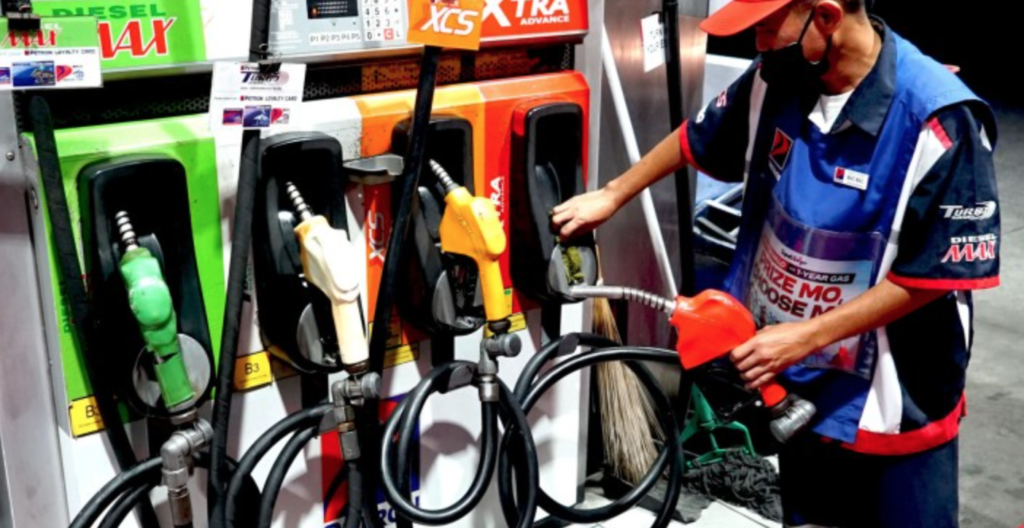
MANILA (August 18) — The relief motorists enjoyed from two consecutive weeks of fuel price rollbacks will be short-lived as pump prices rise by as much as P5.01 per liter beginning Tuesday, August 18.
The Department of Energy (DOE) announced increases of:
· Gasoline: P2.49 per liter
· Diesel: P3.84 per liter
· Kerosene: P5.01 per liter
The new prices will remain in effect through August 24.
For motorists, the increase means higher costs at the pump. For commuters, transport operators, farmers, delivery workers and businesses, the impact could spread much further as fuel is a cost built into nearly every movement of people and goods.
The increases come after motorists enjoyed significant rollbacks last week, when gasoline dropped by P4.70 per liter, diesel by P4.30 and kerosene by P4.90.
The sharp reversal shows how quickly international oil developments can translate into changes in household expenses in the Philippines.
Global tensions, local costs
The DOE attributed the latest increases to movements in the international oil market, where supply remains under pressure from geopolitical tensions and disruptions affecting major shipping routes.
The continuing US-Iran conflict and restricted traffic through the Strait of Hormuz, one of the world’s most important energy shipping routes, have heightened concerns over global oil supplies.
The International Energy Agency has also reduced its global supply forecast as disruptions in the Middle East continue.
For the Philippines, which depends heavily on imported petroleum products, developments thousands of kilometers away can quickly reach local fuel stations.
That vulnerability is felt most directly by people whose daily income depends on transportation.
The domino effect
A higher pump price does not stop at the gas station.
For jeepney, tricycle, taxi and motorcycle drivers, fuel is an everyday operating expense. A sharp increase can squeeze already limited earnings or create pressure for higher fares.
For delivery riders and small businesses, higher fuel costs can raise the expense of transporting products.
For farmers, fuel affects everything from operating machinery to transporting crops from farms to markets.
And for ordinary families, higher transportation and delivery costs can eventually contribute to more expensive food and other basic goods.
The effect may not appear immediately on every price tag, but fuel is embedded in the supply chain—from production and hauling to retail.
Another uncertainty ahead
The latest increase also comes amid continuing uncertainty over the conflict involving the United States and Iran.
A 60-day deadline under a June memorandum of understanding between the two countries passed Monday without a final peace agreement.
The interim arrangement had aimed to end hostilities and lead to broader negotiations, but the agreement deteriorated as both sides accused each other of violations.
Talks remain stalled, with disagreements involving the Strait of Hormuz among the major obstacles.
For Filipino consumers, this means another layer of uncertainty over fuel prices in the coming weeks.
The DOE said the country still has around 58 days’ worth of fuel supply, providing some buffer against immediate shortages.
But adequate supply does not necessarily mean affordable fuel.
From global conflict to the family budget
The latest price increase is a reminder of how exposed the Philippine economy remains to international oil markets.
A conflict abroad can translate into higher transportation expenses here. Higher transportation costs can push up the cost of moving food and goods. And when businesses face higher operating expenses, consumers can eventually feel the impact.
For households already carefully budgeting their daily expenses, even a few pesos added to fuel can matter.
The immediate question for motorists is how much more they will spend at the pump this week.
The bigger question for the country is how long Filipino households and businesses can remain vulnerable to global oil shocks—and whether efforts to develop alternative energy sources, improve public transportation and reduce dependence on imported fuel can provide greater protection from the next international crisis.